The jammy, sticky collapse of a warm fig against soft, melted goat cheese — that’s the whole point. Everything else is just logistics.
I wasn’t trying to create a recipe. I was standing in my kitchen with a carton of figs that were staring at me with that specific urgency — the kind where you have maybe one day before they go from perfect to past-it. And I had a log of goat cheese in the fridge that I bought on a whim because it was on sale and I have zero self-control at the cheese counter. So I did what any reasonable person would do: I cut them in half, drizzled them with honey and balsamic, and threw them in the oven. Honestly, I wasn’t expecting much. I thought, worst case, I’d have a weird sweet-and-savory snack that I’d eat standing over the sink.
But then the smell hit me. That honey-balsamic thing — it caramelizes in a way that makes your kitchen smell like a fancy restaurant kitchen, but without the stress. And when I pulled them out, the figs had softened into little jewel-like pockets, the cheese was all gooey and tangy, and there was this syrupy sauce pooled at the bottom of the dish. I ate three right off the tray, burned my tongue on the second one, and didn’t care one bit.
That’s the thing about this Easy Honey Balsamic Baked Figs with Goat Cheese. It’s not complicated. It’s not fussy. It’s just really, really good. And once you make it, you’ll start looking for excuses to serve it — because it’s the kind of thing that makes people close their eyes when they take a bite. And that’s a pretty nice feeling to have up your sleeve.
Why You’ll Love This Recipe
Look, I’ve tested a lot of appetizers in my time. Some are too fussy, some fall flat, and some are good but not memorable. This one? It’s the kind of recipe you remember. Here’s why I keep coming back to it:
- Comes together in 15 minutes. Seriously. From fridge to table in under a quarter of an hour. Perfect for when guests show up early or you just need something impressive fast.
- Only 5 simple ingredients. Figs, goat cheese, honey, balsamic vinegar, and a pinch of salt. That’s it. No weird grocery store scavenger hunts.
- Perfect for entertaining. It looks fancy — like, “I spent an hour on this” fancy — but you and I know the truth. It’s a crowd-pleaser that works for holiday parties, summer gatherings, or a random Tuesday when you want to feel fancy.
- Sweet, tangy, and savory all at once. That honey-balsamic glaze with the creamy goat cheese and the jammy figs? It’s a flavor combo that just works. Every single time.
- Naturally gluten-free and vegetarian. Most people don’t even notice because they’re too busy going back for seconds.
What makes this recipe different from the dozens of other fig appetizers out there? It’s the technique. Most recipes tell you to just drizzle and bake. But I’ve learned (through trial and error, and a few burnt trays) that the order matters. You want the figs cut-side up, the cheese nestled just so, and the honey-balsamic mixture brushed on at the right moment so it caramelizes without burning. Get those details right, and you’ve got something truly special.
This isn’t just another appetizer. It’s the one that makes people ask for the recipe before they’ve even finished eating. And honestly? That never gets old.
What Ingredients You Will Need
This recipe uses a short list of simple ingredients, but each one pulls its weight. Here’s what you’ll need and why it matters:
- Fresh figs (8-10, ripe but firm): Look for figs that give slightly when pressed but aren’t mushy. Black Mission, Brown Turkey, or Kadota varieties all work well. If the figs are too soft, they’ll turn into mush in the oven. Too hard, and they won’t soften enough. You want that sweet spot — slightly yielding, with a little give. I personally prefer Black Mission figs for their deep sweetness, but use whatever looks best at your market.
- Goat cheese (4 ounces, soft log style): Get a good quality soft goat cheese — the kind that comes in a log and crumbles easily. Avoid the pre-crumbled stuff; it doesn’t melt as smoothly. I like the brand Vermont Creamery for its tangy, creamy texture, but any soft, fresh goat cheese will work. Let it sit at room temperature for about 10 minutes before using — it’ll be easier to dollop onto the figs.
- Honey (3 tablespoons): Use a mild, runny honey — not the crystallized stuff. Wildflower or clover honey work beautifully. If you want a deeper flavor, try a chestnut or buckwheat honey. Avoid honey with strong floral notes (like lavender honey) as it can overpower the figs.
- Balsamic vinegar (2 tablespoons): Use a good quality balsamic — not the cheap stuff, but you don’t need the 20-year-aged bottle either. Look for one that’s thick, syrupy, and slightly sweet. If your balsamic is thin and watery, simmer it on the stove for a few minutes to reduce it before using. I’ve used both traditional Modena balsamic and a fig-infused balsamic — both work, but the fig version adds an extra layer of flavor.
- Flaky sea salt (a pinch): Don’t skip this. A tiny sprinkle of Maldon or fleur de sel right before serving balances the sweetness and makes the flavors pop. Regular table salt is too fine and can make things taste salty rather than seasoned.
- Fresh thyme or rosemary (optional, for garnish): A few small sprigs add color and a subtle herbal note that complements the honey and balsamic. Not essential, but nice if you have it.
- Extra-virgin olive oil (1 teaspoon, for drizzling): A light drizzle helps the figs caramelize without drying out. Use a mild olive oil — save the peppery, grassy stuff for salads.
Substitution notes: If figs aren’t in season, you can use halved fresh dates or even thick slices of ripe pear or apple. For a dairy-free version, use a plant-based cream cheese or a soft, tangy cashew cheese. If you’re out of honey, maple syrup works in a pinch — it’ll change the flavor slightly but still tastes great.
Equipment Needed
You don’t need much for this recipe, which is part of its charm. Here’s what you’ll want to have on hand:
- Baking dish or sheet pan: A small baking dish (8×8 or similar) works perfectly. You want something with a slight lip so the honey-balsamic syrup doesn’t run off. A rimmed baking sheet lined with parchment paper works too — just make sure the figs are nestled close together so the sauce pools around them.
- Sharp knife and cutting board: For halving the figs. A serrated knife works best — it cuts through the skin without squishing the fruit.
- Small bowl and whisk (or fork): For mixing the honey and balsamic together. A fork works fine if you don’t want to dirty another bowl.
- Pastry brush or spoon: For brushing the honey-balsamic mixture over the figs. A spoon works, but a brush gives you more even coverage.
- Serving platter: Something flat and wide to arrange the baked figs on. A wooden board or a white ceramic platter makes them look extra pretty.
- Optional: Kitchen torch: If you want to get fancy, you can torch the goat cheese before serving for a slightly browned, bubbly top. Not necessary, but fun.
I’ve made this in a cast iron skillet before — it works beautifully and looks gorgeous going straight from oven to table. Just be careful, because that handle gets hot.
Preparation Method
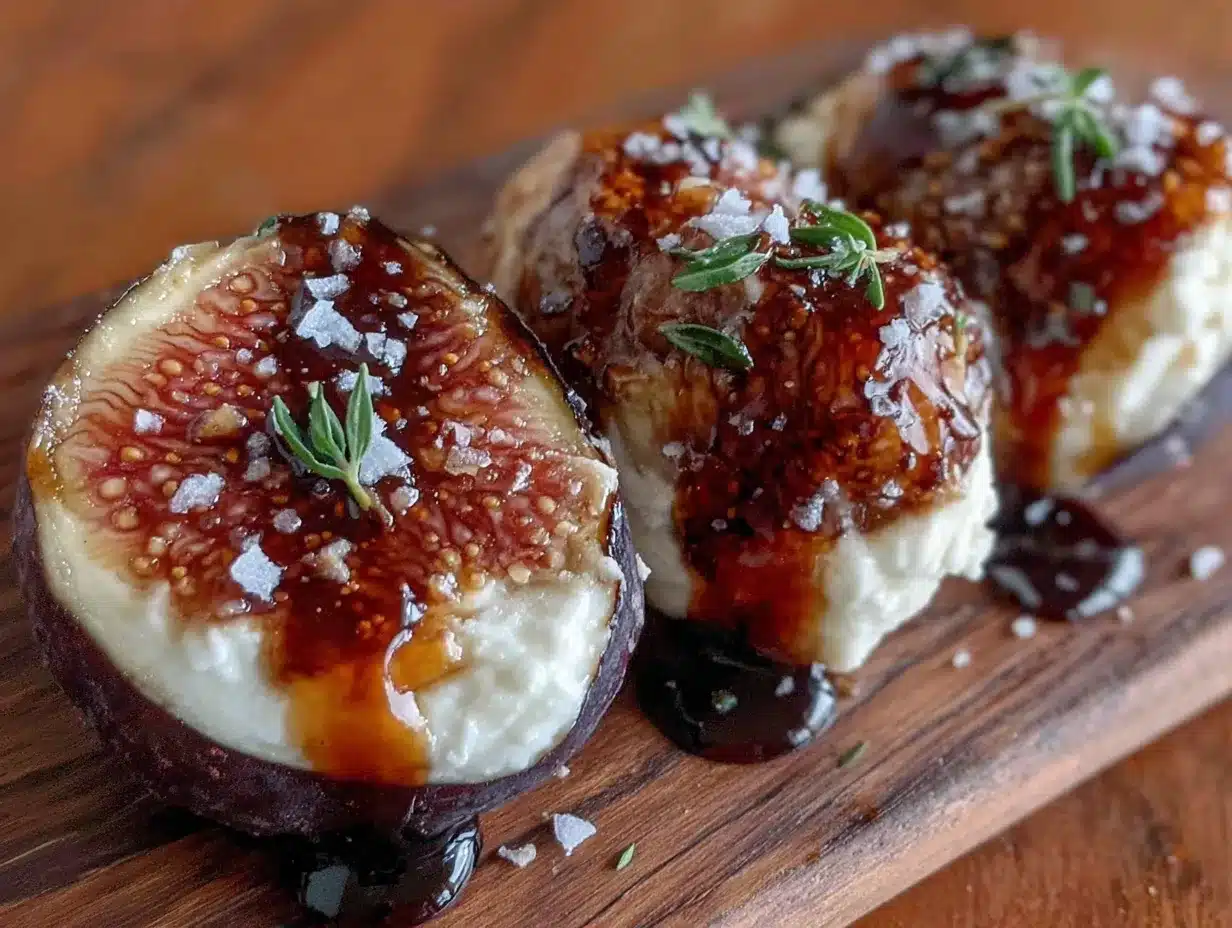
Let’s get to it. This is one of those recipes that’s almost embarrassingly easy, but the results are anything but. Follow these steps, and you’ll have a showstopper in 15 minutes flat.
- Preheat your oven to 400°F (200°C). Give it a good 10 minutes to come to temperature. While it’s heating, get your figs ready.
- Prepare the figs. Rinse the figs gently and pat them dry with a paper towel. Cut each fig in half lengthwise, from the stem end down through the bottom. You want two equal halves. If the stem is tough, trim it off with a small knife. Arrange the fig halves cut-side up in your baking dish, nestled close together but not overlapping. They’ll shrink a little as they bake, so a bit of crowding is fine — it helps the sauce stay concentrated.
- Dollop the goat cheese. Take small pieces of goat cheese (about a teaspoon each) and gently press them into the center of each fig half. Don’t overthink it — just a little blob in the middle. You don’t need to cover the entire fig; the cheese will soften and spread as it bakes. If the cheese is too cold to work with, let it sit at room temperature for 10 minutes first.
- Make the honey-balsamic mixture. In a small bowl, whisk together the honey and balsamic vinegar until smooth. It should look like a thick, dark syrup. Taste it — it should be sweet with a tangy kick. If it’s too sharp, add a little more honey. If it’s too sweet, add a splash more vinegar.
- Brush the figs. Using a pastry brush or a small spoon, drizzle the honey-balsamic mixture over the figs and cheese. Don’t drown them — you want a light, even coating. The goal is to glaze, not soak. Drizzle any remaining mixture around the bottom of the dish.
- Add a light drizzle of olive oil. Just a teaspoon or so, drizzled over the figs. This helps them caramelize without drying out and adds a subtle richness.
- Bake for 10-12 minutes. Place the dish in the preheated oven and bake until the figs are soft and jammy, the cheese is warm and slightly melted, and the honey-balsamic mixture is bubbling and syrupy. You’ll know they’re done when the figs look slightly collapsed and the edges are caramelized. Keep an eye on them — ovens vary, and you don’t want the honey to burn. At 10 minutes, check them. If they need more time, give them another 2 minutes.
- Remove and rest. Take the dish out of the oven and let it sit for 2-3 minutes. The figs will continue to soften as they cool slightly. Don’t skip this rest — it lets the flavors meld and makes the figs easier to handle.
- Season and garnish. Sprinkle a pinch of flaky sea salt over the top. If you’re using fresh thyme or rosemary, scatter a few small sprigs over the dish. The salt is non-negotiable — it balances the sweetness and makes everything taste more vibrant.
- Serve warm. Transfer the figs to a serving platter, spooning any extra syrup from the dish over the top. Serve immediately while the cheese is still warm and gooey. These are best eaten within 10-15 minutes of coming out of the oven.
Pro tip: If you’re making these for a party, you can prep the figs (steps 2-5) up to an hour ahead and keep them in the fridge. Just pop them in the oven when your guests arrive. Fresh out of the oven is the sweet spot.
Cooking Tips & Techniques
I’ve made this recipe more times than I can count, and I’ve learned a few things along the way — mostly from mistakes. Here’s what I wish someone had told me:
Don’t overbake. This is the biggest mistake people make. Figs are delicate, and they go from perfectly jammy to mushy in about 60 seconds. Start checking at the 10-minute mark. You want the figs to be soft but still hold their shape. If the honey starts to smell burnt, you’ve gone too far.
Room temperature cheese is your friend. Cold goat cheese straight from the fridge is hard to dollop and doesn’t melt as evenly. Let it sit out for 10-15 minutes before you start. It’ll spread more easily and melt into that creamy, dreamy texture you’re after.
The salt matters more than you think. I learned this the hard way. The first time I made these, I forgot the flaky salt, and they tasted flat — just sweet and tangy without any depth. That pinch of salt brightens everything and makes the flavors sing. Don’t skip it.
Use a rimmed dish. The honey-balsamic mixture will bubble up as it bakes. If you use a flat baking sheet without sides, it’ll run off and make a sticky mess in your oven. Trust me on this one. I’ve cleaned burnt honey off an oven floor, and it’s not fun.
Double the syrup if you like extra. Some people (me) love spooning that honey-balsamic syrup over everything — the figs, the cheese, maybe a little on the side for dipping bread. If that’s you, make 1.5x the honey-balsamic mixture and drizzle the extra over the figs halfway through baking.
Let them rest. I know it’s tempting to eat them straight out of the oven, but those 2-3 minutes of rest make a difference. The figs firm up slightly, the cheese sets a little, and the flavors have a chance to marry. You’ll get a better bite.
Variations & Adaptations
This recipe is a great base, but it’s also fun to play with. Here are a few variations I’ve tried and loved:
Savory herb version: Add a sprinkle of fresh rosemary or thyme before baking. The herbal notes cut through the sweetness and add a savory depth that’s lovely with the goat cheese. I’ve also tried it with a pinch of red pepper flakes for a tiny kick — unexpected but good.
Nutty crunch: Sprinkle chopped toasted walnuts or pecans over the figs before serving. The crunch contrasts beautifully with the soft figs and creamy cheese. Toast the nuts in a dry pan for 2-3 minutes first to bring out their flavor.
Balsamic reduction swap: If you have time, reduce the balsamic vinegar on the stove until it’s thick and syrupy before mixing it with the honey. It takes about 10 minutes but gives you a richer, more concentrated flavor. I do this when I’m feeling extra fancy.
Blue cheese alternative: Not a goat cheese fan? Swap in crumbled blue cheese or gorgonzola. The tangy, salty flavor works beautifully with the sweet figs and honey. Just use a little less — blue cheese is stronger than goat cheese.
Grilled version: In summer, try these on the grill. Cut the figs in half, brush them with the honey-balsamic mixture, and grill cut-side down for 2-3 minutes. Flip, add the goat cheese, and grill for another 2 minutes until the cheese is warm. The smoky char adds a whole new dimension.
Dairy-free adaptation: Use a plant-based cream cheese or a soft cashew cheese instead of goat cheese. Look for one that’s tangy and spreadable. I’ve tried it with a vegan feta, and it works — though the texture is a little different.
Spiced version: Add a pinch of cinnamon or a tiny dash of cardamom to the honey-balsamic mixture. It adds warmth and complexity, especially in fall or winter. I made this for a holiday party once, and people went crazy for it.
Serving & Storage Suggestions
These baked figs are best served warm, straight from the oven. But here’s how to make the most of them:
Serving temperature: Serve them warm — not piping hot, but warm enough that the cheese is still soft and the syrup is runny. They’re perfect within 10-15 minutes of coming out of the oven. If they cool down too much, the cheese firms up and the syrup thickens.
Presentation ideas: Arrange the figs on a wooden board or a white ceramic platter. Drizzle any remaining syrup from the baking dish over the top. Garnish with fresh thyme sprigs or a few edible flowers if you’re feeling fancy. Serve with small spoons or let people pick them up with their fingers — they’re that kind of food.
What to serve alongside: These figs are fantastic on their own, but they also pair beautifully with other dishes. Try them alongside a crispy herb-crusted roast chicken for a dinner that feels special without being fussy. Or serve them as part of a mezze spread with olives, cured meats, and crusty bread. They also go surprisingly well with a fresh quinoa and kale power salad — the sweetness of the figs balances the lemony dressing perfectly.
Storage: These are truly best eaten fresh, but if you have leftovers (unlikely, but possible), store them in an airtight container in the fridge for up to 2 days. The figs will soften more and the cheese will firm up, but they’re still tasty.
Reheating: To reheat, place the figs in a 350°F (175°C) oven for 5-7 minutes until warmed through. Don’t use the microwave — it’ll make the figs mushy and the cheese rubbery. If you’re in a hurry, you can reheat them in a toaster oven.
Flavor development: Interestingly, the honey-balsamic syrup gets even better after sitting overnight. If you’re making these for a party, you can bake them a few hours ahead and reheat just before serving. The flavors meld and deepen, and the syrup gets even more concentrated.
Nutritional Information & Benefits
While this is definitely an indulgent appetizer, it does have some redeeming qualities. Here’s a rough breakdown per serving (2-3 fig halves):
- Calories: Approximately 180-220 calories
- Protein: 6-8 grams (thanks to the goat cheese)
- Fat: 10-12 grams (mostly from the cheese)
- Carbohydrates: 20-25 grams (natural sugars from figs and honey)
- Fiber: 3-4 grams (figs are a good source of fiber)
- Calcium: 8-10% of daily value (from goat cheese)
Health highlights: Figs are packed with fiber, potassium, and antioxidants. They’re also naturally sweet, which means you don’t need much added sugar. Goat cheese is easier to digest than cow’s milk cheese for many people and contains beneficial probiotics. Honey provides antioxidants and has natural antibacterial properties. So while this isn’t health food, it’s not a total splurge either.
Dietary considerations: This recipe is naturally vegetarian and gluten-free. To make it dairy-free, swap the goat cheese for a plant-based alternative. It’s also relatively low in added sugar compared to many dessert-like appetizers.
Allergen note: Contains dairy (goat cheese). If you have a dairy allergy, use a dairy-free cheese alternative. Figs are generally well-tolerated, but some people with latex allergies may have cross-reactivity with figs.
Conclusion
Here’s the thing about this Easy Honey Balsamic Baked Figs with Goat Cheese: it’s one of those recipes that makes you look like you tried really hard, when really, you barely tried at all. And honestly? That’s my favorite kind of recipe.
It’s perfect for those moments when you want to serve something special — a holiday gathering, a dinner party, or just a random Tuesday when you need a little something beautiful on your plate. The combination of sweet, jammy figs, tangy melted goat cheese, and that sticky honey-balsamic glaze is just… right. It’s comfort food dressed up in its Sunday best.
I’d love to hear how these turn out for you. Did you try any variations? Serve them with something unexpected? Burn your tongue on the first one like I did? Drop a comment below and let me know. And if you’re looking for more easy, impressive appetizers, check out our full recipe collection — there’s plenty more where this came from.
Go make some figs. Your taste buds will thank you.
Frequently Asked Questions
Can I use dried figs instead of fresh?
You can, but the texture will be different. Dried figs are chewier and won’t soften as much in the oven. If using dried figs, rehydrate them in warm water for 10 minutes first, then pat dry before baking. Reduce the baking time to 6-8 minutes.
What if I can’t find goat cheese?
No problem! Cream cheese, feta, or even a soft brie work beautifully. Feta will give you a saltier, tangier result, while brie will be extra creamy and rich. Adjust the amount of salt based on your cheese choice.
Can I make these ahead of time?
You can prep the figs (cut, cheese, and honey-balsamic mixture) up to an hour ahead and keep them in the fridge. Bake just before serving. Leftover baked figs can be stored in the fridge for up to 2 days and reheated in the oven.
Are these figs supposed to be served hot or cold?
Warm is best — straight from the oven or within 15 minutes. The cheese is soft and creamy, the figs are jammy, and the syrup is runny. Cold, the cheese firms up and the syrup thickens, which isn’t as nice.
What do I serve with these baked figs?
They’re fantastic on their own as an appetizer, but they also pair well with crusty bread, crackers, cured meats, or a simple green salad. For a full meal, try them alongside crispy herb-crusted roast chicken or a fresh quinoa and kale power salad.
Pin This Recipe!
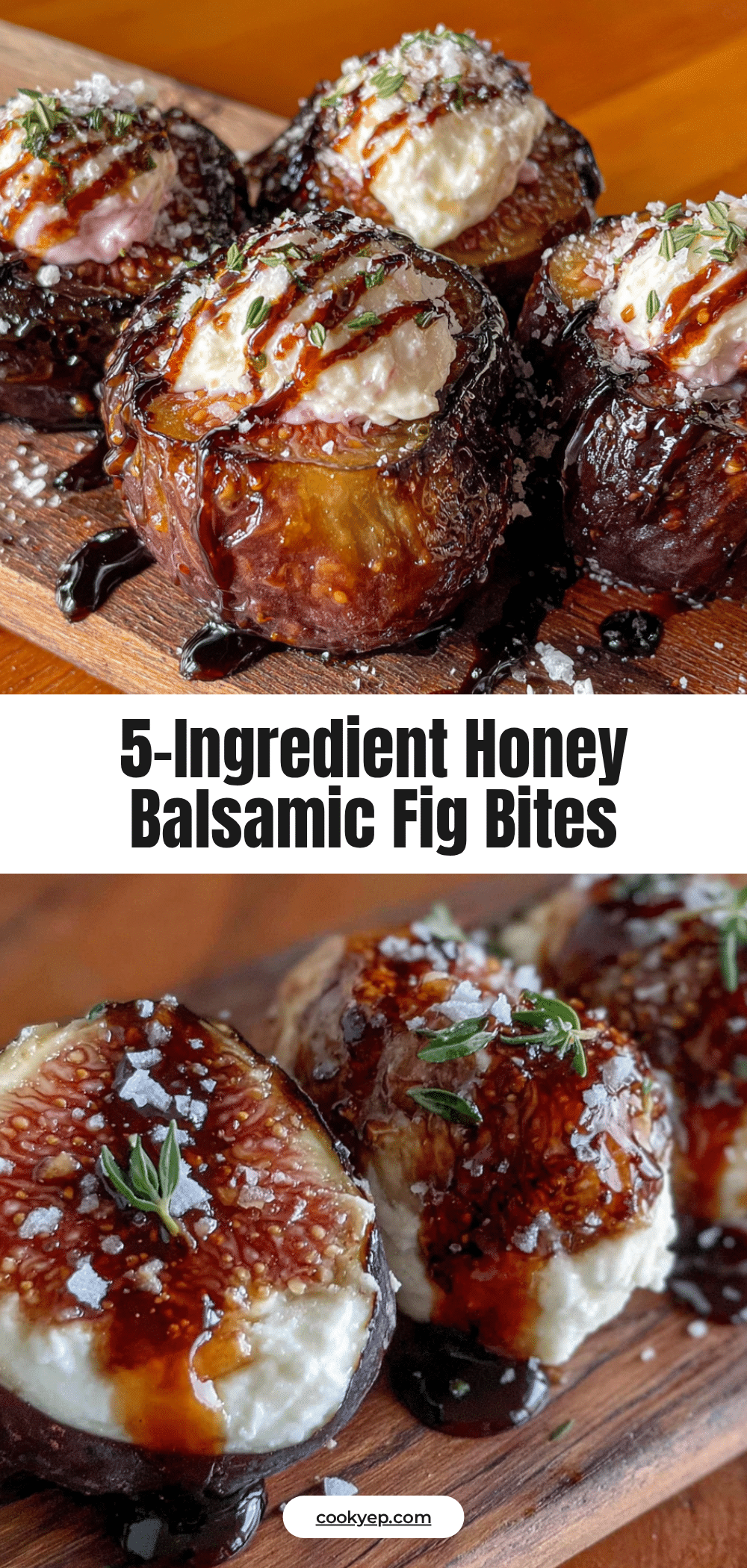
Easy Honey Balsamic Baked Figs with Goat Cheese
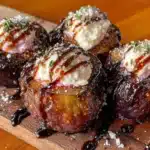
Jammy, sticky baked figs with melted goat cheese and a honey-balsamic glaze. A simple, elegant appetizer that comes together in 15 minutes with just 5 ingredients.
- Prep Time: 5 minutes
- Cook Time: 12 minutes
- Total Time: 17 minutes
- Yield: 4 servings 1x
- Category: Appetizer
- Cuisine: Mediterranean
Ingredients
- 8–10 fresh figs (ripe but firm, such as Black Mission, Brown Turkey, or Kadota)
- 4 ounces soft goat cheese (log style), at room temperature
- 3 tablespoons honey (mild, runny, such as wildflower or clover)
- 2 tablespoons balsamic vinegar (good quality, thick and syrupy)
- 1 teaspoon extra-virgin olive oil
- Flaky sea salt (such as Maldon or fleur de sel), for finishing
- Fresh thyme or rosemary sprigs (optional, for garnish)
Instructions
- Preheat oven to 400°F (200°C).
- Rinse figs gently and pat dry. Cut each fig in half lengthwise. Arrange cut-side up in a small baking dish (8×8 or similar), nestled close together.
- Dollop about 1 teaspoon of goat cheese onto the center of each fig half.
- In a small bowl, whisk together honey and balsamic vinegar until smooth.
- Brush or drizzle the honey-balsamic mixture evenly over the figs and cheese. Drizzle any remaining mixture around the bottom of the dish.
- Drizzle olive oil lightly over the figs.
- Bake for 10-12 minutes, until figs are soft and jammy, cheese is warm and slightly melted, and the honey-balsamic mixture is bubbling and syrupy.
- Remove from oven and let rest for 2-3 minutes.
- Sprinkle with flaky sea salt and garnish with fresh thyme or rosemary if desired.
- Serve warm, spooning any extra syrup from the dish over the top.
Notes
Don’t overbake – figs go from jammy to mushy quickly. Start checking at 10 minutes. Let goat cheese come to room temperature for easier dolloping and even melting. The flaky salt is essential for balancing sweetness. Use a rimmed dish to prevent sticky mess from bubbling syrup. For extra syrup, make 1.5x the honey-balsamic mixture and drizzle half over figs halfway through baking. Let figs rest 2-3 minutes before serving for best texture and flavor.
Nutrition
- Serving Size: 2-3 fig halves
- Calories: 200
- Sugar: 18
- Sodium: 180
- Fat: 11
- Saturated Fat: 6
- Carbohydrates: 22
- Fiber: 3.5
- Protein: 7
Keywords: baked figs, goat cheese, honey balsamic, easy appetizer, fig recipe, gluten-free appetizer, vegetarian appetizer