Sticky dough all over my fingers—that’s where this started. I was a good thirty minutes into what I thought would be a simple bread project, and my kitchen looked like a flour bomb had gone off. The starter I’d been nursing for weeks was finally bubbly and active, and I had this sudden, maybe slightly irrational need to prove it was worth all that feeding and discarding. So there I was, wrestling with a batch of dough that felt more like thick glue than anything resembling bread. I’d seen those glossy photos of focaccia online—golden, dimpled, glistening with oil—and honestly? Mine looked nothing like that. It was a sticky, slack mess that refused to hold a shape. I almost scraped it all into the trash.
But I didn’t. I remembered something a baker friend once told me: wet dough is your friend, especially with sourdough. So I let it be. I let it rest, stretch, and fold. I walked away, came back, and gave it another gentle turn. And then something shifted. That sticky mess started to feel alive, like it was breathing under my hands. By the time I dimpled it with my fingertips, drizzled it with olive oil, and scattered rosemary and flaky salt across the top, I knew this was going to be different. And it was. That first bite—crispy on the bottom, airy and chewy in the middle, with that unmistakable tang of fermented dough—it was the kind of moment that makes you forget all the mess. This perfect sourdough focaccia with rosemary and sea salt isn’t just a recipe. It’s proof that patience, even when you’re covered in flour, pays off in the most delicious way possible. Trust the sticky dough. It knows what it’s doing.
Why You’ll Love This Recipe
I’ve tested this perfect sourdough focaccia with rosemary and sea salt more times than I can count. I’ve made it with young starters and mature ones, in cold kitchens and hot ones, with different flours and hydration levels. Every batch taught me something new. Here’s why this version is the one you’ll come back to:
- Deep, Tangy Flavor: The sourdough starter gives this focaccia a complex, slightly tangy taste that commercial yeast just can’t replicate. It’s what makes this bread memorable, not just another flatbread.
- That Signature Texture: Crispy, almost crackly bottom crust with an airy, open crumb that’s soft and chewy. The olive oil-soaked top creates a golden, almost fried exterior that’s pure magic.
- Simple Ingredients: You probably already have everything in your kitchen. No fancy bread flour or specialty yeast—just flour, water, olive oil, salt, and your active starter.
- Forgiving Process: This is not a fussy bread. The wet dough is naturally forgiving. You can stretch the bulk fermentation time if life gets busy, and it still turns out beautifully.
- Perfect for Sharing: Focaccia is meant to be torn and shared. It’s the kind of bread that disappears at dinner parties, potlucks, or just a quiet evening with soup. I’ve brought it to gatherings where it vanished before the main course.
- Better the Next Day: Unlike some breads that dry out overnight, this focaccia actually improves. The flavors meld, and the texture stays soft and luscious. Toast it lightly, and it’s almost better than fresh.
This isn’t just another bread recipe. It’s the one that makes you feel like a real baker, even if you’re just starting out. It’s the recipe that turns a simple dinner into something special, that makes your kitchen smell like a bakery, that gives you that quiet pride of pulling something beautiful out of the oven.
What Ingredients You Will Need
This perfect sourdough focaccia with rosemary and sea salt relies on a short list of pantry staples, but each one plays a crucial role. Quality matters here, especially with the olive oil and salt.
- Active Sourdough Starter (100 g): This is the heart of the recipe. Use a starter that’s been fed within the last 4-6 hours and is bubbly and doubled in volume. A hungry or sluggish starter won’t give you the rise or flavor you’re after. I feed mine with a 1:1:1 ratio of starter, whole wheat flour, and water for best results.
- Bread Flour (400 g / about 3 cups): Bread flour has a higher protein content than all-purpose, which gives the focaccia its chewy structure and helps develop that open crumb. You can use all-purpose in a pinch, but the texture will be slightly softer and less airy.
- Warm Water (320 g / about 1 1/3 cups): The water should be lukewarm, around 85-90°F. Too hot, and it’ll kill the natural yeast in your starter. Too cold, and fermentation will slow to a crawl. I use filtered water to avoid any chlorine that might inhibit the starter.
- Extra-Virgin Olive Oil (60 ml / 1/4 cup, plus more for the pan and topping): Don’t skimp here. A good-quality olive oil adds fruity, peppery notes that infuse the dough. I use a robust Spanish or Italian oil for the dough and a milder one for the finishing drizzle. The oil in the pan is what creates that crispy, golden bottom crust.
- Fine Sea Salt (10 g / about 1 1/2 teaspoons): This goes into the dough itself. Fine salt dissolves more evenly than coarse salt. I prefer sea salt for its clean, mineral taste over table salt.
- Fresh Rosemary (2 tablespoons, finely chopped): Fresh rosemary is non-negotiable here. Dried rosemary just doesn’t have the same aromatic punch. Strip the leaves from the woody stems and chop them finely so they distribute evenly without being overwhelming.
- Flaky Sea Salt (for topping, like Maldon): This is your finishing salt. The large, delicate crystals add a satisfying crunch and a burst of salinity that contrasts beautifully with the olive oil and rosemary. It’s worth buying a good flaky salt for this.
- Optional Add-ins: Sometimes I add a teaspoon of dried oregano to the dough for an herby backbone, or a pinch of red pepper flakes for a subtle kick. You can also press cherry tomatoes or olives into the dough before baking.
Ingredient Tip: If your starter is new or weak, you can add a tiny pinch (like 1/8 teaspoon) of active dry yeast to the dough to help with the rise. It won’t affect the sourdough flavor much, but it’ll give you a more reliable result until your starter is stronger.
Equipment Needed
You don’t need a professional bakery setup for this perfect sourdough focaccia with rosemary and sea salt. Here’s what you’ll actually use:
- Large Mixing Bowl: A wide, deep bowl gives you room to mix and stretch the dough without flinging flour everywhere. I use a ceramic bowl because it doesn’t conduct heat, keeping the dough at a consistent temperature.
- Digital Kitchen Scale: This is the most important tool you’ll buy. Measuring flour by volume is wildly inconsistent. A scale ensures your hydration levels are precise, which is critical for wet doughs like this one. I’ve used the same OXO scale for years.
- Bench Scraper: A plastic or metal bench scraper makes handling sticky dough infinitely easier. Use it to fold the dough, divide it, and clean your work surface. It’s a ten-dollar tool that changes everything.
- 9×13-inch Baking Pan: A metal or dark non-stick pan works best. Dark pans absorb heat and give you a better bottom crust. Glass or ceramic pans don’t conduct heat as well, so your crust might be pale. I use a standard USA Pan for even browning.
- Plastic Bowl Scraper or Dough Scraper: This flexible scraper is perfect for getting every last bit of dough out of the bowl without making a mess. It’s also great for folding the dough during bulk fermentation.
- Plastic Wrap or a Shower Cap: You need to cover the dough during bulk fermentation and the final proof. A reusable shower cap is my favorite hack—it fits perfectly over the bowl and doesn’t waste plastic wrap.
- Cooling Rack: After baking, the focaccia needs to cool on a rack so the bottom doesn’t steam and get soggy. A wire rack allows air to circulate underneath.
Budget-Friendly Tip: If you don’t have a 9×13 pan, you can use a cast-iron skillet or a round cake pan. The shape will be different, but the recipe works just fine. Just adjust the baking time slightly—a thicker focaccia may need a few extra minutes.
Preparation Method
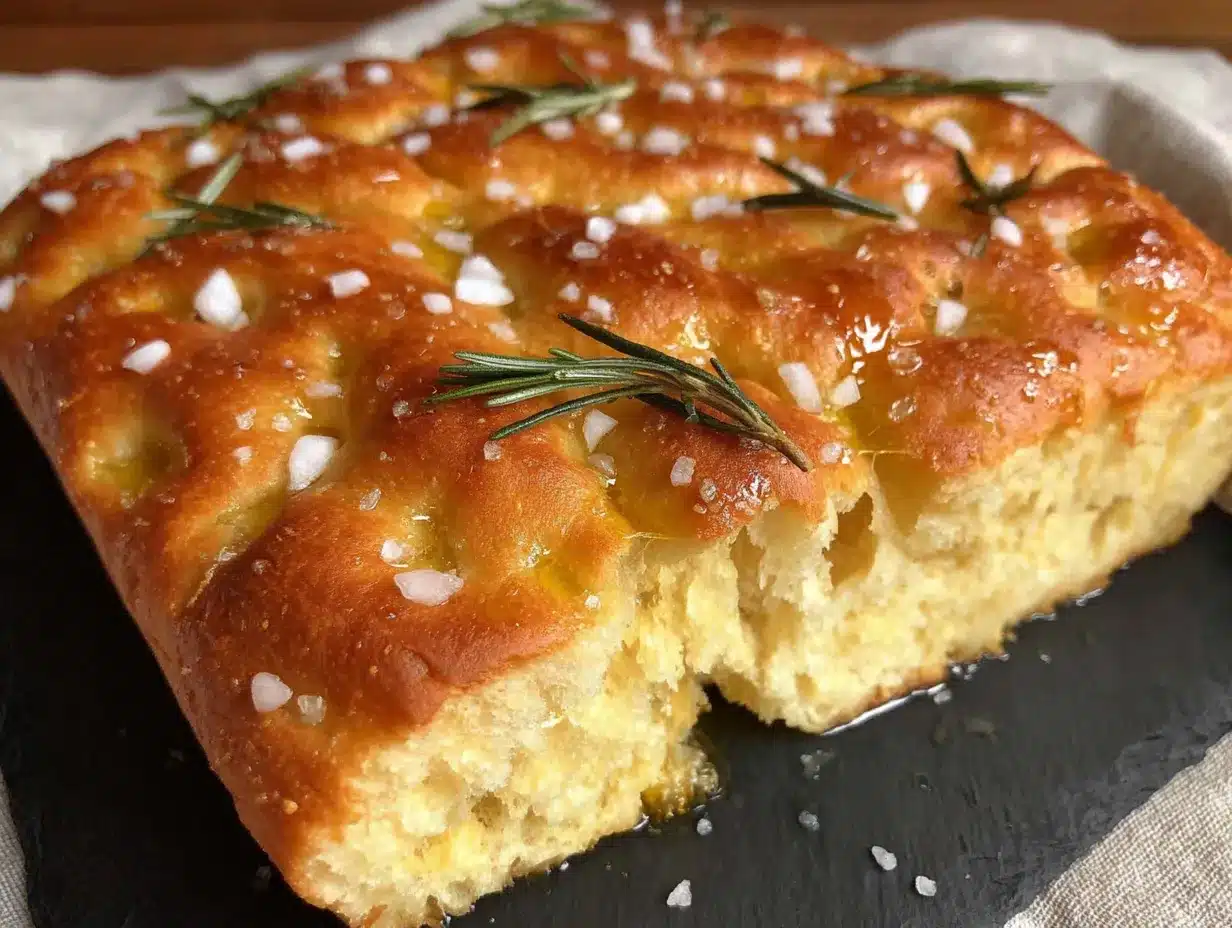
Making this perfect sourdough focaccia with rosemary and sea salt is a process, but it’s a relaxing one. There’s no frantic kneading or precise shaping. It’s more like a slow dance with your dough. Here’s how it goes:
- Mix the Dough (Day 1, Morning or Afternoon): In your large mixing bowl, combine the active sourdough starter and warm water. Whisk gently until the starter dissolves into the water—it should look milky and slightly bubbly. Add the bread flour and fine sea salt. Mix with a wooden spoon or your hand until a shaggy, sticky dough forms. It will look rough and lumpy. That’s exactly right. Cover the bowl with plastic wrap or a damp towel and let it rest for 30 minutes. This is called the autolyse, and it gives the flour time to absorb the water and start developing gluten without any work from you.
- Stretch and Fold (First 2 Hours): After the rest, it’s time for the stretch and folds. Wet your hand slightly to prevent sticking. Grab one side of the dough, stretch it up as high as it will go without tearing, and fold it over the center. Rotate the bowl 90 degrees and repeat. Do this 4 times total, working your way around the bowl. The dough will feel sticky and slack at first. Cover the bowl and let it rest for 30 minutes. Repeat this stretch and fold process 3 more times, every 30 minutes, for a total of 4 sets. By the last set, the dough should feel smoother, stronger, and slightly puffy. It will still be sticky, but it should hold its shape better.
- Bulk Fermentation (Remainder of Day 1): After the final stretch and fold, cover the bowl tightly with plastic wrap or a reusable cover. Let the dough ferment at room temperature (around 70-75°F) for 8-12 hours. The dough should double in size and be bubbly and domed on top. If your kitchen is cold, it might take longer. If it’s warm, check it earlier. You’re looking for a dough that jiggles when you gently shake the bowl. This is the stage where the sourdough develops its complex flavor.
- Cold Retard (Optional but Recommended, Overnight): For even better flavor and a more manageable dough, place the covered bowl in the refrigerator for 12-24 hours. This cold fermentation slows down the yeast activity while the bacteria continue to work, deepening that tangy sourdough flavor. It also stiffens the dough slightly, making it easier to handle when you’re ready to shape. I almost always do this step—the flavor difference is remarkable.
- Prepare the Pan (Day 2, About 3-4 Hours Before Baking): Generously coat your 9×13-inch baking pan with olive oil. Use a tablespoon or two, making sure the bottom and sides are well coated. If you’re using a metal pan, don’t be shy with the oil—it’s what creates that crispy, golden crust. Remove the dough from the refrigerator (if you did the cold retard) and gently coax it into the oiled pan. It won’t fill the pan yet. Use your oiled fingertips to gently stretch and press the dough toward the edges. Don’t force it—if it resists, let it rest for 10-15 minutes and try again. The dough should eventually cover the bottom of the pan.
- Final Proof (2-3 Hours): Cover the pan with plastic wrap or a damp towel and let the dough proof at room temperature until it’s puffy and has nearly doubled in thickness. This usually takes 2-3 hours, depending on your kitchen temperature. The dough should look billowy and feel airy when you gently poke it. It should not spring back quickly. If it’s still dense, give it more time.
- Dimple and Top (Just Before Baking): About 20 minutes before you’re ready to bake, preheat your oven to 425°F (220°C) with a rack in the middle position. Drizzle another tablespoon or two of olive oil over the top of the proofed dough. Then, using your fingertips, gently press dimples all over the surface of the dough. Press all the way down to the bottom of the pan. This isn’t just for looks—the dimples create pockets for the oil and toppings to pool in. Sprinkle the chopped fresh rosemary evenly over the top, followed by a generous pinch of flaky sea salt.
- Bake (25-30 Minutes): Place the pan in the preheated oven and bake for 25-30 minutes, until the focaccia is deep golden brown on top and sounds hollow when you tap it. The edges should be crispy and slightly darker than the center. If your oven has hot spots, rotate the pan halfway through baking. If the top is browning too quickly but the bottom isn’t done, tent the pan loosely with foil for the last 5-10 minutes.
- Cool and Serve: Remove the pan from the oven and let the focaccia cool in the pan for 5 minutes. Then, carefully transfer it to a wire rack. Don’t skip this step—if you let it cool completely in the pan, the bottom will steam and lose its crispiness. Let it cool for at least 15-20 minutes before slicing or tearing. The texture is best when it’s just warm, not piping hot. Serve it as is, or with a bowl of good olive oil for dipping.
Cooking Tips & Techniques
Over the many batches of this perfect sourdough focaccia with rosemary and sea salt, I’ve learned a few things the hard way. Here’s what I wish someone had told me:
Hydration is Your Friend: This is a high-hydration dough, around 80%. That means it’s very sticky and wet. Don’t be tempted to add more flour to make it easier to handle. The high hydration is what creates those beautiful, irregular air pockets and that soft, chewy crumb. Embrace the stickiness. Use wet hands or oiled hands when handling the dough.
The Stretch and Fold is Not Optional: I skipped this step once when I was in a hurry. The result was a flat, dense focaccia that lacked any structure. The stretch and folds build gluten strength without the aggressive kneading that would knock the air out of a wet dough. They also redistribute the yeast and nutrients, ensuring even fermentation. Don’t rush this step.
Watch Your Temperature: Sourdough is a living thing, and temperature controls its behavior. If your kitchen is cold (below 68°F), your bulk fermentation could take 16 hours or more. If it’s hot (above 80°F), it might be done in 6 hours. I use a proofing box or simply place the bowl in my oven with the light on (which keeps it around 78°F). A consistent temperature makes for predictable results.
The Dimpling Mistake: I used to be too gentle with the dimpling, barely pressing into the dough. The result was a flat, uninteresting top. You need to press firmly and confidently, all the way down to the pan. The dough will resist at first, but it will hold the dimples. This creates those iconic pools of olive oil and salt that make focaccia so irresistible.
Don’t Overbake: Focaccia is done when it’s deep golden brown and sounds hollow when tapped. But if you’re unsure, it’s better to underbake slightly than overbake. Overbaked focaccia becomes dry and hard. A slightly underbaked one will continue to cook from residual heat and will be softer. I pull mine out when the internal temperature reaches about 205°F (96°C).
Let It Cool: I know it’s tempting to tear into it the second it comes out of the oven. But cutting into hot bread compresses the crumb and releases steam that should be reabsorbed. Give it at least 15-20 minutes. The texture will be much better.
Variations & Adaptations
This perfect sourdough focaccia with rosemary and sea salt is a wonderful canvas for experimentation. Here are some variations I’ve tried and loved:
- Roasted Garlic and Thyme: Roast a head of garlic until soft and golden. Squeeze the cloves into a paste and swirl it into the dough during the final stretch and fold. Top with fresh thyme leaves instead of rosemary. The sweet, mellow garlic pairs beautifully with the tangy sourdough.
- Everything Bagel Focaccia: After dimpling, sprinkle the top with a generous amount of everything bagel seasoning (sesame seeds, poppy seeds, dried garlic, dried onion, and salt). It gives the focaccia a savory, crunchy topping that’s incredible with cream cheese or smoked salmon.
- Sun-Dried Tomato and Olive: Press halved cherry tomatoes and pitted Kalamata olives into the dimples before baking. The tomatoes burst and caramelize, while the olives add a briny pop. I sometimes add a sprinkle of dried oregano for an Italian-inspired twist.
- Cheese and Herb: Sprinkle grated Parmesan or crumbled feta over the top during the last 5 minutes of baking. The cheese melts and creates a crispy, savory crust. Pair it with fresh rosemary or thyme for a classic combination.
- Sweet Focaccia: For a dessert version, skip the salt and rosemary. Instead, dimple the dough and drizzle with honey or maple syrup. Top with fresh berries, a sprinkle of cinnamon, and a pinch of flaky salt. Bake as directed and serve warm with a dollop of whipped cream or mascarpone.
Dietary Adaptations: For a whole wheat version, substitute up to half the bread flour with whole wheat flour. The crumb will be denser, but the flavor will be nuttier and more complex. For a gluten-free option, use a good gluten-free bread flour blend and add 1 teaspoon of xanthan gum. The texture will be different—more cake-like—but still delicious.
Serving & Storage Suggestions
This perfect sourdough focaccia with rosemary and sea salt is incredibly versatile. Here’s how I like to serve and store it:
Serving Temperature and Presentation: Focaccia is best served warm or at room temperature. I like to cut it into squares or tear it into rustic pieces and arrange it on a wooden board. Serve it with a small bowl of extra-virgin olive oil for dipping, or alongside a bowl of soup or salad. It’s also fantastic as a base for sandwiches—split a piece horizontally and fill it with roasted vegetables, fresh mozzarella, and pesto. For a simple appetizer, top small pieces with a smear of ricotta and a drizzle of honey.
Complementary Dishes: This focaccia pairs beautifully with a hearty minestrone soup, a simple tomato and basil salad, or a bowl of fresh quinoa and kale power salad with lemon tahini dressing. It’s also the perfect side for a crispy herb-crusted roast chicken or a plate of roasted vegetables. For a lighter meal, serve it alongside a refreshing sparkling citrus ginger mojito mocktail for a complete, satisfying experience.
Storage Instructions: Store leftover focaccia in an airtight container or wrapped tightly in plastic wrap at room temperature for up to 3 days. Do not refrigerate it—the refrigerator dries out bread and makes it stale faster. If you need to keep it longer, freeze it.
Freezing: Focaccia freezes beautifully. Let it cool completely, then wrap it tightly in plastic wrap, followed by a layer of foil. Freeze for up to 3 months. To reheat, unwrap the focaccia and place it in a 350°F (175°C) oven for 10-15 minutes, or until warmed through and crispy. You can also reheat individual pieces in a toaster oven or air fryer.
Reheating Tips: The best way to revive leftover focaccia is to toast it. I place pieces directly on the oven rack at 350°F for 5-7 minutes. The bottom gets crispy again, and the inside stays soft. Avoid microwaving it, which makes the bread rubbery and tough.
Flavor Development: Interestingly, the flavor of this focaccia actually deepens after a day or two. The sourdough tang becomes more pronounced, and the olive oil soaks into the crumb, making it even more luscious. It’s one of those rare recipes that’s almost better the next day, especially when toasted.
Nutritional Information & Benefits
While this perfect sourdough focaccia with rosemary and sea salt is a treat, it also offers some nutritional benefits worth noting. Here’s a rough estimate per serving (based on 12 servings):
- Calories: Approximately 200-250 calories per serving
- Carbohydrates: 30-35g
- Protein: 5-7g
- Fat: 7-10g (mostly from olive oil)
- Fiber: 1-2g
- Sodium: 300-400mg (varies with salt topping)
Health Benefits: Sourdough fermentation offers some unique advantages. The fermentation process breaks down phytic acid, which can make the minerals in the flour more bioavailable. This means your body can better absorb nutrients like magnesium, zinc, and iron. The natural yeast and bacteria in sourdough also produce organic acids that may help with digestion and blood sugar regulation. Some studies suggest that sourdough bread has a lower glycemic index compared to conventional bread, meaning it causes a slower, more gradual rise in blood sugar.
Dietary Considerations: This recipe contains gluten from the bread flour, so it’s not suitable for those with celiac disease or gluten sensitivity. It is dairy-free and vegan, as written. The olive oil provides healthy monounsaturated fats, which are good for heart health. Rosemary is rich in antioxidants and anti-inflammatory compounds.
Personal Wellness Perspective: I don’t make this focaccia thinking of it as health food. I make it because it nourishes something deeper—the ritual of slowing down, the pleasure of sharing food, the simple joy of pulling a beautiful loaf from the oven. That kind of nourishment matters, too. But it’s nice to know that when I do indulge, the sourdough process adds a little something extra to the equation.
Conclusion
This perfect sourdough focaccia with rosemary and sea salt has become a staple in my kitchen for good reason. It’s the recipe that taught me to trust the process, to embrace the sticky mess, and to be patient with a dough that takes its own sweet time. The reward is a bread that’s deeply flavorful, beautifully textured, and endlessly adaptable. Whether you’re a seasoned sourdough baker or someone just starting to experiment with a starter, this focaccia is forgiving enough to welcome you and rewarding enough to make you feel like a pro.
I’d love to hear how it turns out for you. Did you try a variation? Did you serve it with something special? Drop a comment below and let me know. And if you’re looking for more recipes to pair with this bread, check out our full collection of recipes for more inspiration. Happy baking, and remember—the sticky dough is always worth it.
Frequently Asked Questions
Can I use all-purpose flour instead of bread flour?
Yes, you can. The focaccia will be slightly softer and less chewy, but it will still be delicious. Bread flour gives you a better structure and a more open crumb, but all-purpose is a fine substitute in a pinch.
My dough isn’t rising. What went wrong?
This is usually a sign that your starter isn’t active enough. Make sure you’re using a starter that’s been fed within the last 4-6 hours and is bubbly and doubled. Also, check your kitchen temperature—if it’s too cold, fermentation slows down significantly. Try placing the bowl in a warm spot, like your oven with the light on.
Can I make this focaccia without a sourdough starter?
This recipe is designed specifically for sourdough. If you don’t have a starter, you can find many excellent focaccia recipes that use commercial yeast. The flavor and texture will be different, but no less delicious.
How do I know when the focaccia is fully baked?
The focaccia should be deep golden brown on top and sound hollow when you tap the bottom. The internal temperature should be around 205°F (96°C). If you’re unsure, it’s better to err on the side of slightly underbaked, as it will continue to cook from residual heat.
Can I freeze the unbaked dough?
Yes, you can freeze the dough after the bulk fermentation and shaping into the pan. Wrap the pan tightly in plastic wrap and foil, and freeze for up to 3 months. When you’re ready to bake, thaw it in the refrigerator overnight, then let it come to room temperature and complete the final proof before baking.
Pin This Recipe!
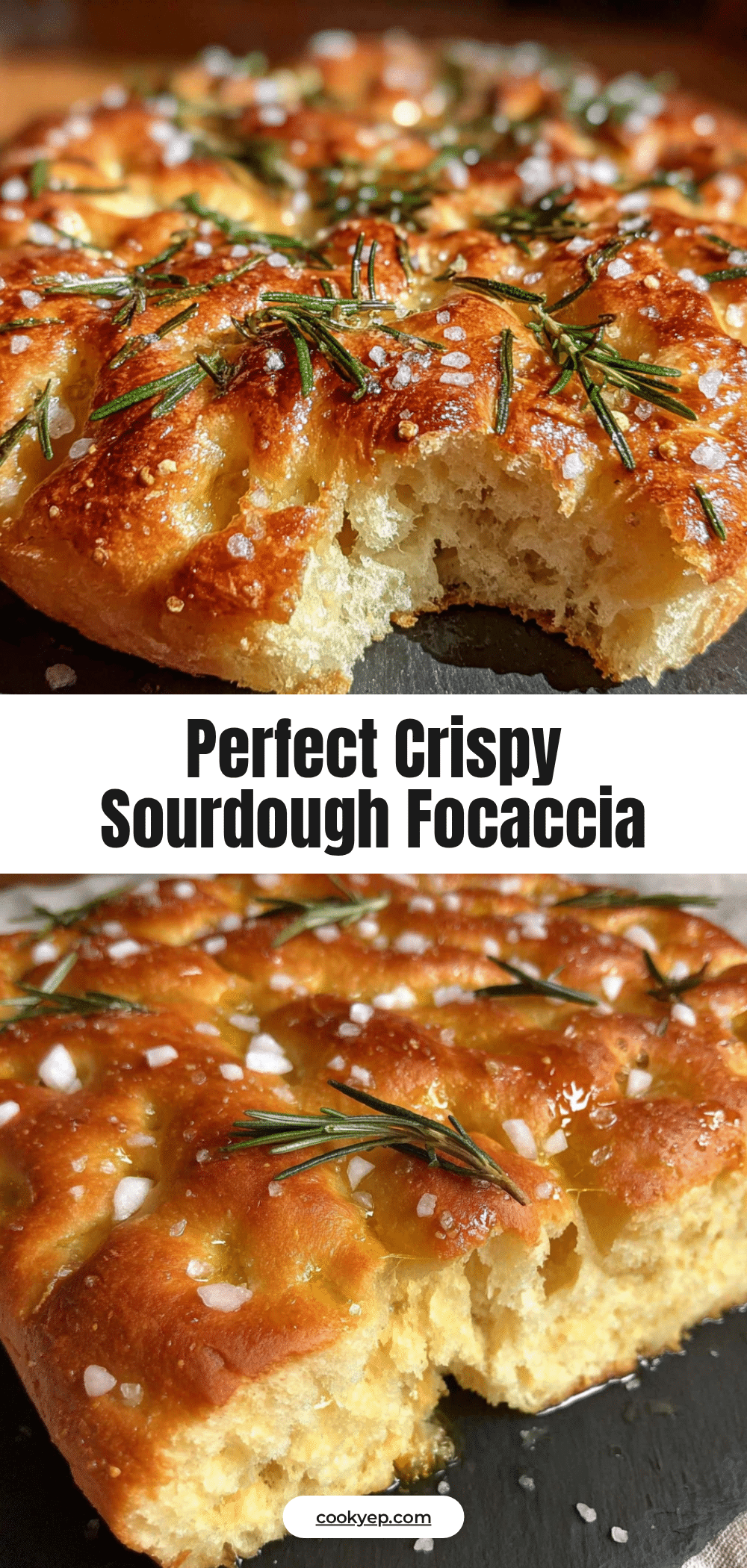
Perfect Sourdough Focaccia with Rosemary and Sea Salt

This perfect sourdough focaccia with rosemary and sea salt is a deeply flavorful, airy bread with a crispy bottom and golden, olive oil-soaked top. It’s a forgiving recipe that rewards patience with a tangy, chewy crumb and is perfect for sharing.
- Prep Time: 30 minutes
- Cook Time: 30 minutes
- Total Time: 14-24 hours (includes fermentation and proofing)
- Yield: 12 servings 1x
- Category: Bread
- Cuisine: Italian
Ingredients
- 100 g active sourdough starter
- 400 g bread flour (about 3 cups)
- 320 g warm water (about 1 1/3 cups, 85-90°F)
- 60 ml extra-virgin olive oil (1/4 cup, plus more for pan and topping)
- 10 g fine sea salt (about 1 1/2 teaspoons)
- 2 tablespoons fresh rosemary, finely chopped
- Flaky sea salt (for topping, like Maldon)
Instructions
- Mix the Dough (Day 1, Morning or Afternoon): In a large mixing bowl, combine the active sourdough starter and warm water. Whisk gently until the starter dissolves. Add the bread flour and fine sea salt. Mix with a wooden spoon or your hand until a shaggy, sticky dough forms. Cover and let rest for 30 minutes (autolyse).
- Stretch and Fold (First 2 Hours): After the rest, wet your hand slightly. Grab one side of the dough, stretch it up, and fold it over the center. Rotate the bowl 90 degrees and repeat. Do this 4 times total. Cover and let rest for 30 minutes. Repeat this stretch and fold process 3 more times, every 30 minutes, for a total of 4 sets.
- Bulk Fermentation (Remainder of Day 1): After the final stretch and fold, cover the bowl tightly and let the dough ferment at room temperature (70-75°F) for 8-12 hours, until doubled in size and bubbly.
- Cold Retard (Optional but Recommended, Overnight): For better flavor, place the covered bowl in the refrigerator for 12-24 hours.
- Prepare the Pan (Day 2, About 3-4 Hours Before Baking): Generously coat a 9×13-inch baking pan with olive oil. Remove the dough from the refrigerator and gently coax it into the oiled pan. Use oiled fingertips to gently stretch and press the dough toward the edges. Let rest if it resists.
- Final Proof (2-3 Hours): Cover the pan and let the dough proof at room temperature until puffy and nearly doubled in thickness (2-3 hours).
- Dimple and Top (Just Before Baking): Preheat oven to 425°F (220°C). Drizzle 1-2 tablespoons olive oil over the dough. Using your fingertips, press dimples all over the surface, all the way to the bottom of the pan. Sprinkle with chopped rosemary and flaky sea salt.
- Bake (25-30 Minutes): Bake for 25-30 minutes until deep golden brown and hollow-sounding when tapped. Rotate pan halfway if needed. Tent with foil if browning too quickly.
- Cool and Serve: Let cool in the pan for 5 minutes, then transfer to a wire rack. Cool for at least 15-20 minutes before slicing or tearing.
Notes
This is a high-hydration dough (around 80%). Embrace the stickiness; do not add extra flour. The stretch and fold steps are crucial for gluten development. For best flavor, do the cold retard overnight. Let the focaccia cool before slicing to maintain texture. Store at room temperature for up to 3 days; freeze for up to 3 months.
Nutrition
- Serving Size: 1 piece (1/12 of rec
- Calories: 225
- Sodium: 350
- Fat: 9
- Saturated Fat: 1
- Carbohydrates: 32
- Fiber: 1.5
- Protein: 6
Keywords: sourdough focaccia, rosemary focaccia, sea salt focaccia, homemade bread, sourdough bread, Italian bread, focaccia recipe