For years, I just accepted that crispy-skinned salmon was something you only got at restaurants. At home, no matter what I tried—pan-searing, baking, even broiling—the skin always turned out either rubbery or burnt, and the fish itself was usually overcooked by the time the skin was edible. I had pretty much given up on the idea of restaurant-quality crispy salmon coming out of my own kitchen. Then I bought an air fryer on a whim, mostly for frozen french fries, and discovered something I wasn’t expecting.
The first time I tried making salmon in it, I honestly wasn’t expecting much. I figured it would be fine, maybe a little dry, definitely not crispy. But when I pulled that fillet out after about eight minutes, the skin was this perfect, shatteringly crisp golden brown, and the flesh was still tender and flaky in the middle. I stood there in my kitchen, eating it straight off the cutting board, and realized I had finally found the answer to that long-standing crispy salmon problem. It wasn’t complicated. It didn’t require fancy techniques. It just needed the right tool and a simple method.
This crispy air fryer salmon with lemon dill sauce has become my go-to for busy weeknights when I want something that feels special but takes almost no effort. The sauce is bright and herby, the salmon is perfectly cooked every single time, and the whole thing comes together in about fifteen minutes. It’s one of those recipes that makes you wonder why you didn’t try it sooner.
Why You’ll Love This Recipe
Let me tell you why this particular version of crispy air fryer salmon with lemon dill sauce has earned a permanent spot in my weekly rotation. I’ve tested it more times than I care to admit, tweaking temperatures and timings, and this is the method that consistently delivers.
- Quick & Easy : From start to finish, you’re looking at about 15 minutes. No marinating, no complicated steps, just simple prep and let the air fryer do the work. Perfect for those nights when you’re staring at the fridge at 6 PM wondering what’s for dinner.
- Simple Ingredients : You probably already have most of these in your kitchen. Salmon, olive oil, salt, pepper, lemon, fresh dill, and Greek yogurt or sour cream. That’s it. No weird specialty items or expensive pantry additions.
- Restaurant-Quality Results : The skin gets genuinely crispy—like, crackly crispy—while the fish stays moist and tender. It’s the kind of texture contrast that makes you close your eyes after the first bite.
- Healthy Without Sacrifice : This recipe is packed with protein and healthy omega-3s, and the sauce uses yogurt instead of heavy cream. You get all the flavor without the guilt.
- Perfect for Any Occasion : It’s elegant enough for a dinner party but simple enough for a Tuesday night solo dinner. I’ve made it for guests and for myself when I needed a quick, nourishing meal.
What makes this recipe different from other salmon recipes is the technique. Most air fryer salmon recipes tell you to cook it skin-side down and call it a day. But I found that patting the skin completely dry, scoring it lightly, and using just the right amount of oil makes all the difference. It’s not revolutionary, but it works every time.
What Ingredients You Will Need
This recipe uses simple, fresh ingredients that work together to create something genuinely delicious. Here’s what you’ll need and why each one matters.
- Salmon fillets (6 oz each, skin-on) : Look for fillets that are roughly the same thickness so they cook evenly. I prefer wild-caught when I can find it, but farm-raised works perfectly too. The skin is non-negotiable here—that’s where the crispy magic happens.
- Olive oil (2 tablespoons) : You need just enough to coat the skin and flesh lightly. I use extra virgin for flavor, but regular olive oil works fine too. Don’t skip it—the oil helps the skin crisp up and prevents sticking.
- Kosher salt (1 teaspoon) : Salt is crucial for drawing out moisture from the skin, which helps it get crispy. I prefer kosher salt because it’s easier to distribute evenly, but sea salt works too.
- Black pepper (½ teaspoon, freshly ground) : Freshly ground pepper makes a noticeable difference here. The pre-ground stuff just doesn’t have the same punch.
- Garlic powder (½ teaspoon) : This adds a subtle savory note without overwhelming the fish. I’ve tried fresh garlic, but it burns in the air fryer, so stick with powder.
- Fresh dill (¼ cup, chopped) : Fresh dill is non-negotiable for the sauce. Dried dill just doesn’t have the same bright, fresh flavor. If you absolutely must substitute, use fresh parsley or chives instead.
- Plain Greek yogurt (⅓ cup) : Full-fat Greek yogurt gives the sauce a creamy texture without being heavy. You can use sour cream if that’s what you have, but I prefer the tanginess of yogurt.
- Fresh lemon juice (2 tablespoons) : Freshly squeezed is important here. Bottled lemon juice has a flat, almost metallic taste that doesn’t do this sauce justice.
- Lemon zest (1 teaspoon) : Don’t skip the zest—it adds a concentrated lemon flavor that juice alone can’t provide.
- Dijon mustard (1 teaspoon) : This is my secret ingredient. It adds a subtle tang and helps emulsify the sauce. You won’t taste mustard, I promise.
I recommend using your favorite brand of Greek yogurt—I’ve had great results with Fage and Chobani. For the salmon, if you’re buying frozen, make sure it’s fully thawed and patted extremely dry before cooking. Wet salmon skin will never get crispy.
Equipment Needed
You don’t need much for this recipe, which is part of why I love it so much.
- Air fryer : Any size works, but I use a 5.8-quart model. If yours is smaller, you may need to cook the fillets in batches to avoid overcrowding.
- Tongs : For flipping the salmon and transferring it to the serving plate. Silicone-tipped tongs are great for not damaging the skin.
- Small mixing bowl : For whisking together the lemon dill sauce.
- Paper towels : Absolutely essential for drying the salmon skin thoroughly. Don’t skip this step.
- Sharp knife : For scoring the skin lightly. A sharp knife makes clean cuts without tearing the flesh.
- Cutting board : Preferably one with a groove to catch any juices.
- Measuring spoons : For accurate seasoning.
If you don’t have an air fryer yet, I honestly think this recipe is worth buying one for. They’re relatively affordable now—I’ve seen good ones for under $50. But if you want to try this in a convection oven, it will work, just expect a slightly longer cooking time and less intense crispiness.
Preparation Method
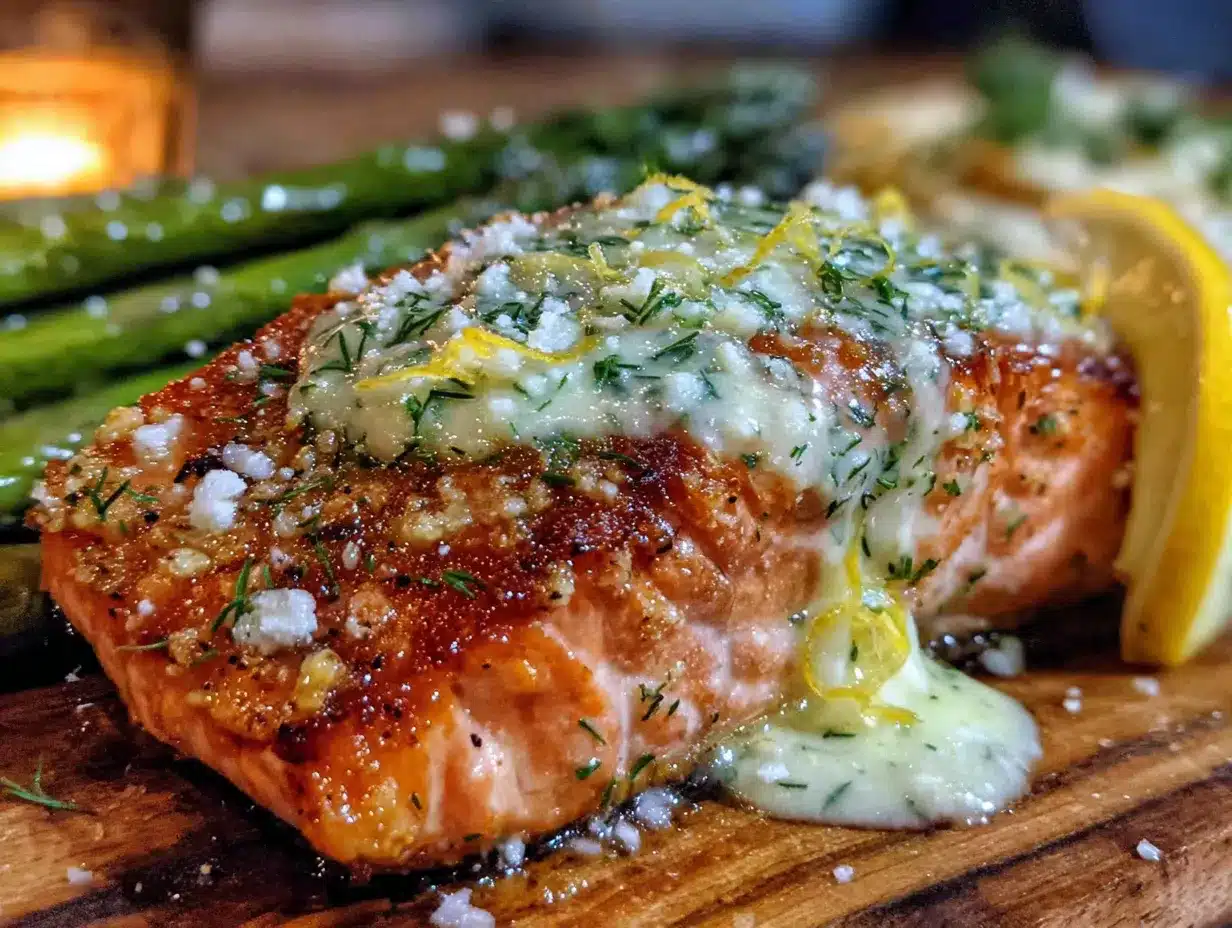
Here’s the step-by-step method that has never failed me. Follow these exactly, and you’ll get perfect results every time.
- Prep the salmon (5 minutes) : Start by patting your salmon fillets completely dry with paper towels. I mean really dry—press firmly and use multiple towels if needed. Any moisture on the skin will steam instead of crisp. Place the fillets on a cutting board and use a sharp knife to make three shallow slashes through the skin, about an inch apart. Don’t cut into the flesh, just through the skin. This helps the fat render and prevents the fillets from curling up as they cook.
- Season the salmon (2 minutes) : Drizzle the olive oil over both sides of each fillet and rub it in gently with your fingers. Sprinkle the kosher salt, black pepper, and garlic powder evenly over the skin side and the flesh side. Be generous with the salt on the skin—it helps draw out moisture. Let the seasoned fillets sit at room temperature for about 5 minutes while you preheat the air fryer.
- Preheat the air fryer (3 minutes) : Set your air fryer to 400°F (200°C) and let it preheat for at least 3 minutes. A hot air fryer is crucial for getting that immediate sear on the skin. Don’t skip this step, even if your model says it doesn’t need preheating.
- Arrange the fillets (1 minute) : Place the salmon fillets skin-side down in the air fryer basket. Make sure they’re not touching each other—leave at least an inch of space between them for proper air circulation. If your air fryer is small, cook in batches. Overcrowding will trap steam and ruin the crispiness.
- Cook the salmon (8-10 minutes) : Air fry at 400°F (200°C) for 6 minutes. Then, carefully flip the fillets using tongs and cook for another 2-4 minutes, depending on thickness. The salmon is done when it flakes easily with a fork and the internal temperature reaches 145°F (63°C) at the thickest part. The skin should be deep golden brown and crispy. If it needs more time, add 1-minute increments until it’s perfect.
- Make the lemon dill sauce (3 minutes) : While the salmon cooks, combine the Greek yogurt, chopped fresh dill, lemon juice, lemon zest, and Dijon mustard in a small bowl. Whisk until smooth and creamy. Taste and adjust seasoning with a pinch of salt and pepper. The sauce should be bright, tangy, and herbaceous—if it tastes flat, add another squeeze of lemon.
- Rest and serve (2 minutes) : Remove the salmon from the air fryer and let it rest for 2 minutes on a plate. This allows the juices to redistribute. Serve immediately with a generous drizzle of lemon dill sauce over the top.
One thing I learned the hard way: don’t walk away during the last few minutes of cooking. Air fryers vary wildly in temperature accuracy, and salmon can go from perfectly cooked to dry in about 60 seconds. Stay nearby and check it early.
Cooking Tips & Techniques
I’ve made this crispy air fryer salmon with lemon dill sauce at least twenty times, and I’ve learned a few things along the way. Here are the tips that make the biggest difference.
Dry the skin obsessively. This is the single most important step. I pat the skin dry, let it sit on a paper towel for a few minutes, then pat it dry again. Any moisture left on the skin will create steam, and steam is the enemy of crispiness. If you have time, leave the seasoned fillets uncovered in the fridge for 15 minutes—this dries out the skin even further.
Don’t overcrowd the basket. I know it’s tempting to cook all four fillets at once, but overcrowding drops the temperature and traps moisture. Cook in batches if you need to. The extra 10 minutes is worth it for perfectly crispy skin on every fillet.
Flip carefully. The skin is delicate after the first 6 minutes. Use a thin spatula or tongs and be gentle. If the skin sticks, it probably needs another minute—don’t force it. Let it release naturally.
Watch the thickness. Salmon fillets vary in thickness, especially at the tail end. If your fillet is much thinner on one side, tuck the thin end under itself so it cooks evenly. This is a trick I learned from a chef friend, and it works perfectly.
Make the sauce first. I used to make the sauce while the salmon was resting, but I found that letting it sit for 10-15 minutes allows the flavors to meld together beautifully. The dill infuses into the yogurt, and the lemon brightens everything up. Make it before you start cooking the salmon, and you’ll thank me later.
One mistake I made early on: I used too much oil, thinking it would help the skin crisp up. It didn’t. Too much oil actually makes the skin soggy. Just a light coating is all you need.
Variations & Adaptations
This recipe is incredibly flexible. Here are some variations I’ve tried and loved.
Herb Swap: If you don’t have fresh dill, try fresh parsley, chives, or even basil. Each gives the sauce a different personality. Parsley makes it brighter, chives add a mild onion flavor, and basil gives it an unexpected but delicious Italian twist.
Spicy Version: Add a pinch of cayenne pepper or red pepper flakes to the seasoning mix. For the sauce, stir in a teaspoon of sriracha or harissa paste. The heat pairs beautifully with the cool, creamy sauce.
Garlic Lover’s Variation: Add a minced garlic clove to the sauce instead of garlic powder on the salmon. Let it sit for 5 minutes before serving to mellow the raw garlic bite. This version is intensely flavorful.
Dairy-Free Adaptation: Use a dairy-free yogurt alternative like coconut yogurt or cashew-based yogurt. The sauce will be slightly thinner but still delicious. You can also make a simple vinaigrette with olive oil, lemon juice, and dill instead.
Different Cooking Methods: If you don’t have an air fryer, you can pan-sear the salmon skin-side down in a hot cast-iron skillet for 4 minutes, then finish in a 400°F oven for 4-6 minutes. It won’t be quite as crispy, but it’s still excellent. I’ve also grilled this salmon on a cedar plank with great results.
Citrus Variation: Swap half the lemon juice with fresh orange juice and add a pinch of orange zest. The sweetness of the orange complements the dill beautifully. This version feels almost tropical.
I personally love the spicy version—it wakes up the whole dish and makes it feel like a completely different meal. If you’re feeling adventurous, try it with a drizzle of honey mixed into the sauce for a sweet-heat combo.
Serving & Storage Suggestions
This crispy air fryer salmon with lemon dill sauce is best served immediately, while the skin is still crackly and the fish is warm. But here’s how to handle it if you have leftovers or want to plan ahead.
Serving Temperature: Serve the salmon warm, not piping hot. Letting it rest for 2-3 minutes after cooking allows the juices to settle and the flavor to deepen. The sauce should be served at room temperature or slightly chilled—cold sauce can mute the flavors.
Presentation: Place the salmon on a plate skin-side up to show off that beautiful crispy crust. Drizzle the sauce in a zigzag pattern over the top, or serve it on the side in a small bowl for dipping. A sprinkle of fresh dill and a lemon wedge on the side makes it look restaurant-worthy.
What to Serve With It: This salmon pairs beautifully with a light fresh quinoa and kale power salad for a complete, healthy meal. The lemon tahini dressing in that salad echoes the citrus notes in the salmon sauce. For something heartier, serve it over rice or with roasted asparagus and a side of creamy stuffed mushroom caps for an indulgent dinner. A refreshing sparkling citrus ginger mojito mocktail makes an excellent non-alcoholic pairing.
Storage: Store leftover salmon in an airtight container in the refrigerator for up to 2 days. Keep the sauce separate—if you mix them, the sauce will make the skin soggy. The sauce will keep for up to 4 days in the fridge.
Reheating: The air fryer is actually the best way to reheat leftover salmon. Place it in the air fryer at 350°F (175°C) for 3-4 minutes. The skin will crisp back up, and the fish will warm through without drying out. Avoid microwaving—it will turn the skin rubbery and overcook the fish.
Flavor Development: The lemon dill sauce actually gets better after sitting overnight. The flavors meld together, and the dill infuses the yogurt beautifully. Make the sauce a day ahead if you can—it’s a game-changer.
Nutritional Information & Benefits
This recipe isn’t just delicious—it’s genuinely good for you. Here’s a rough breakdown per serving (one fillet with about 2 tablespoons of sauce).
- Calories: Approximately 380-420 calories
- Protein: 35-40 grams (excellent for muscle repair and satiety)
- Healthy Fats: 22-25 grams (rich in omega-3 fatty acids)
- Carbohydrates: 4-6 grams (mostly from the yogurt and lemon)
- Fiber: Less than 1 gram
Health Benefits: Salmon is one of the best sources of omega-3 fatty acids, which support heart health, brain function, and reduce inflammation. The yogurt-based sauce adds probiotics for gut health, and fresh dill is packed with antioxidants. This meal is naturally gluten-free and low-carb, making it suitable for a variety of dietary needs.
Dietary Considerations: This recipe is naturally gluten-free, low-carb, and keto-friendly. For dairy-free, use a plant-based yogurt alternative. For paleo, swap the yogurt for a dairy-free option or use an avocado-based sauce.
Potential Allergens: Contains fish and dairy (if using yogurt). If you have a dairy allergy, the dairy-free adaptations work beautifully. Always check your yogurt label for hidden additives if you’re sensitive.
I love that this meal feels indulgent but is actually incredibly nutritious. It’s one of those rare recipes that checks every box—fast, delicious, and good for you.
Conclusion
This crispy air fryer salmon with lemon dill sauce has genuinely changed the way I think about cooking fish at home. It’s proof that you don’t need complicated techniques or fancy equipment to get restaurant-quality results. The air fryer does the heavy lifting, and the sauce adds that bright, fresh finish that makes the whole dish sing.
What I love most about this recipe is how reliable it is. After years of inconsistent salmon, I finally have a method I can count on. The skin is always crispy, the fish is always moist, and the sauce always delivers that perfect balance of tangy and creamy. It’s become my go-to for busy nights, lazy weekends, and everything in between.
I’d love to hear how yours turns out. Did you try any of the variations? Did you serve it with something unexpected? Drop a comment below and let me know—I read every single one, and your feedback helps me create better recipes for all of us. And if you loved this recipe, share it with a friend who needs a quick, healthy dinner idea. Happy cooking!
Frequently Asked Questions
Can I use frozen salmon for this recipe?
Yes, but you need to thaw it completely first. Place the frozen fillets in the refrigerator overnight, or submerge them in cold water for about 30 minutes. Once thawed, pat them extremely dry with paper towels before seasoning. Frozen salmon tends to release more moisture, so drying is even more important.
How do I know when the salmon is fully cooked?
The easiest way is to use an instant-read thermometer. Insert it into the thickest part of the fillet—it should read 145°F (63°C). If you don’t have a thermometer, look for the fish to flake easily with a fork and the flesh to be opaque all the way through. The center should still be slightly translucent when you take it out, as it will continue cooking from residual heat.
Can I make the lemon dill sauce ahead of time?
Absolutely! In fact, I recommend it. Make the sauce up to 2 days in advance and store it in an airtight container in the refrigerator. The flavors meld together beautifully over time. Just give it a good stir before serving, and add a splash of lemon juice if it seems too thick after chilling.
What if my air fryer doesn’t have a preheat setting?
No problem. Simply run your air fryer at 400°F (200°C) for 3-5 minutes empty before adding the salmon. This ensures the basket is hot enough to create that immediate sear on the skin. If your air fryer doesn’t have a temperature display, just run it for a few minutes and you’ll be fine.
Can I use dried dill instead of fresh?
You can, but I honestly don’t recommend it. Fresh dill has a bright, grassy flavor that dried dill just can’t replicate. If you’re in a pinch, use about 1 tablespoon of dried dill and let the sauce sit for at least 15 minutes to rehydrate. But for the best results, stick with fresh dill—it makes a noticeable difference in the final dish.
Pin This Recipe!
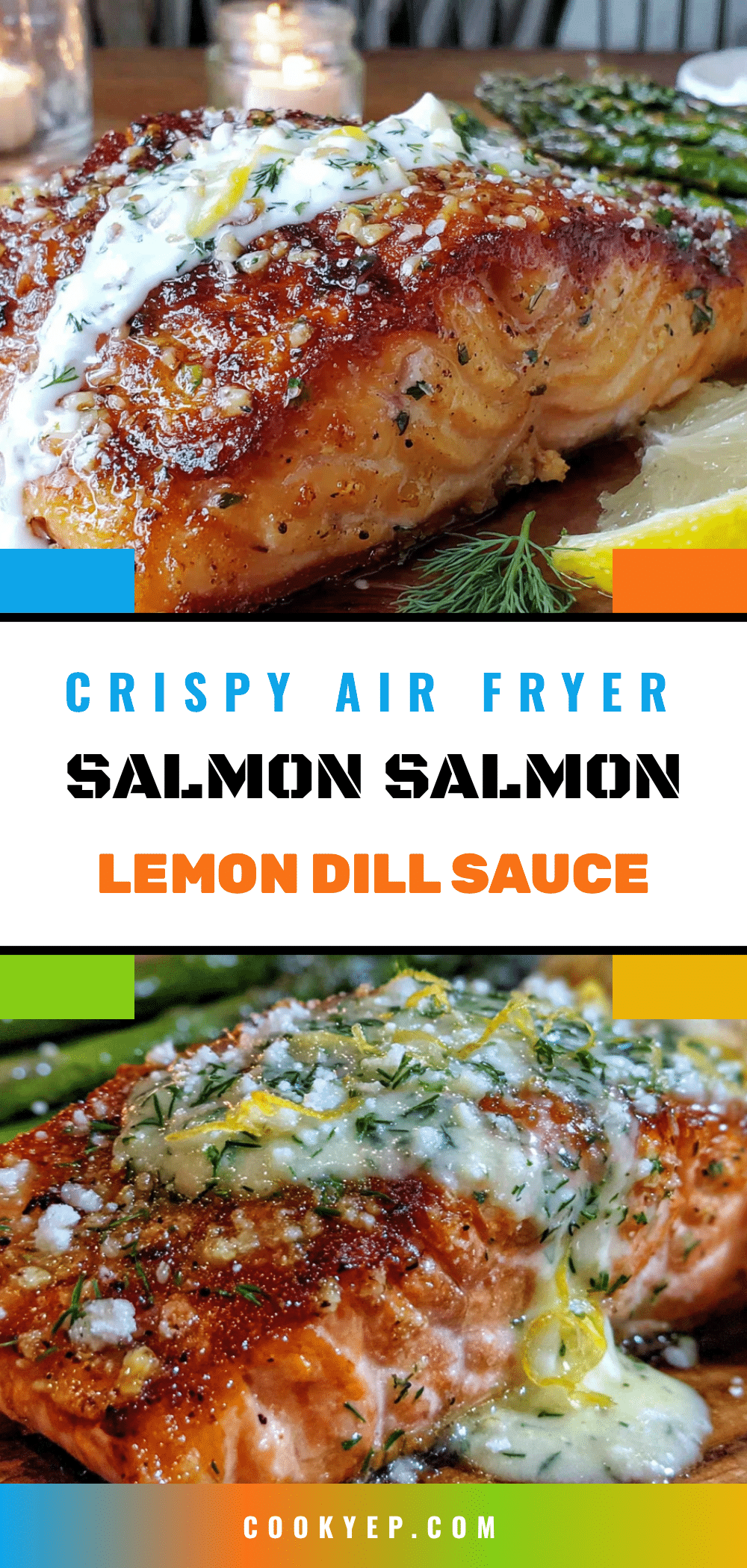
Crispy Air Fryer Salmon with Lemon Dill Sauce in 15 Minutes

This crispy air fryer salmon with lemon dill sauce is a quick and easy weeknight dinner that delivers restaurant-quality results in just 15 minutes. The skin gets perfectly crispy while the fish stays tender and flaky, all topped with a bright and herby sauce.
- Prep Time: 5 minutes
- Cook Time: 10 minutes
- Total Time: 15 minutes
- Yield: 4 servings 1x
- Category: Main Course
- Cuisine: American
Ingredients
- 4 salmon fillets (6 oz each, skin-on)
- 2 tablespoons olive oil
- 1 teaspoon kosher salt
- ½ teaspoon freshly ground black pepper
- ½ teaspoon garlic powder
- ¼ cup fresh dill, chopped
- ⅓ cup plain Greek yogurt
- 2 tablespoons fresh lemon juice
- 1 teaspoon lemon zest
- 1 teaspoon Dijon mustard
Instructions
- Pat the salmon fillets completely dry with paper towels. Use a sharp knife to make three shallow slashes through the skin, about an inch apart, without cutting into the flesh.
- Drizzle olive oil over both sides of each fillet and rub in gently. Sprinkle kosher salt, black pepper, and garlic powder evenly over both sides. Let sit at room temperature for 5 minutes while preheating the air fryer.
- Preheat the air fryer to 400°F (200°C) for at least 3 minutes.
- Place the salmon fillets skin-side down in the air fryer basket, leaving at least an inch of space between them. Do not overcrowd.
- Air fry at 400°F (200°C) for 6 minutes. Carefully flip the fillets using tongs and cook for another 2-4 minutes, depending on thickness, until the salmon flakes easily and the internal temperature reaches 145°F (63°C).
- While the salmon cooks, combine Greek yogurt, chopped fresh dill, lemon juice, lemon zest, and Dijon mustard in a small bowl. Whisk until smooth and creamy. Season with a pinch of salt and pepper to taste.
- Remove the salmon from the air fryer and let it rest for 2 minutes. Serve immediately with a generous drizzle of lemon dill sauce.
Notes
Pat the salmon skin extremely dry for maximum crispiness. Do not overcrowd the air fryer basket. Cook in batches if necessary. The lemon dill sauce can be made up to 2 days in advance and stored in the refrigerator. For reheating, use the air fryer at 350°F (175°C) for 3-4 minutes to re-crisp the skin.
Nutrition
- Serving Size: 1 fillet with about
- Calories: 400
- Sugar: 2
- Sodium: 650
- Fat: 23
- Saturated Fat: 4
- Carbohydrates: 5
- Protein: 38
Keywords: air fryer salmon, crispy salmon, lemon dill sauce, quick salmon recipe, healthy salmon, weeknight dinner, gluten-free, low-carb