I didn’t trust sun-dried tomatoes in a creamy pasta sauce. There, I said it. For years, I’d pick around them at restaurants, convinced they were just chewy, overly tangy distractions from what should have been a perfectly good plate of noodles. So when my sister-in-law raved about this Tuscan chicken pasta she’d made, I smiled and nodded, mentally filing it under “things I’ll probably never make.” But then she showed up at my door one Tuesday evening, holding a warm skillet wrapped in a dish towel, and said, “Just try one bite. If you don’t like it, I’ll eat the rest myself.”
The first forkful was, honestly, a surprise. The sun-dried tomatoes had softened into little bursts of concentrated sweetness, not the chewy, jarred things I remembered. They played off the rich, garlicky cream sauce in a way that made sense — like they’d finally found their purpose. And the chicken? Tender, seared, and soaking up all that saucy goodness. I finished my portion, then helped her finish hers. (She didn’t seem to mind.)
That skillet became my go-to weeknight dinner, and I’ve tweaked it over countless batches — adding a pinch more red pepper here, swapping in spinach for kale there — until it felt like mine. This creamy Tuscan chicken pasta skillet is the version I make when I need something that feels fancy but takes almost no effort. It’s the kind of meal that makes you slow down, twirl your fork, and actually taste what you’re eating. No pretense, just really good food.
Why You’ll Love This Recipe
Let me tell you why this one-pan meal has earned a permanent spot in my weekly rotation. It checks all the boxes without trying too hard.
- One-Pan Wonder: Everything cooks in a single skillet — the chicken, the sauce, the pasta. Less cleanup, more time on the couch. Honestly, that’s a win in my book.
- Quick & Easy: From start to table in about 35 minutes. No complicated techniques, no waiting around. Perfect for those nights when you’re hungry now.
- Simple Ingredients: No fancy grocery trips. You probably have garlic, cream, Parmesan, and pasta in your kitchen already. The sun-dried tomatoes are the only “special” item, and they keep forever in the pantry.
- Crowd-Pleaser: I’ve served this to my picky-eater nephew, my Italian grandmother-in-law, and a group of friends who claimed they were “watching carbs” (they all had seconds). It’s that universally good.
- Unbelievably Delicious: The sauce is velvety without being heavy, the chicken stays juicy, and every bite has that little tangy pop from the tomatoes. It’s comfort food that feels just a little bit elevated — but without the stress.
What makes this version different from the dozens of Tuscan chicken recipes out there? It’s the technique. I sear the chicken first for that golden crust, then build the sauce right in the same pan, scraping up all those browned bits (that’s where the flavor lives). And instead of boiling the pasta separately, I cook it directly in the cream and broth — so it absorbs all that savory goodness from the inside out. Trust me, it makes a difference.
This is the recipe you make when you want to impress someone — whether that’s a dinner guest or just yourself on a random Wednesday night.
What Ingredients You Will Need
This recipe relies on a handful of simple, flavorful ingredients that come together to create something truly special. Here’s what you’ll need and why each one matters.
- Boneless, skinless chicken breasts (1.5 lbs or about 2 large breasts): I prefer breasts here because they cook quickly and stay tender. Slice them in half horizontally if they’re thick, so they cook evenly. You could use thighs too, but adjust the cooking time slightly.
- Sun-dried tomatoes in oil (½ cup, drained and roughly chopped): These are non-negotiable. The oil-packed ones are softer and more flavorful than the dry kind. I like the Meadow brand from my local grocery store, but any good-quality jar works. Save a tablespoon of the oil for cooking — it’s liquid gold.
- Garlic (4 cloves, minced): Fresh garlic is key here. Don’t use the jarred stuff; it lacks that sharp, aromatic punch that makes the sauce sing.
- Heavy cream (1 cup): This gives the sauce its silky, luxurious texture. For a lighter version, you could use half-and-half, but the sauce won’t be as thick.
- Chicken broth (1 cup): Use low-sodium so you can control the salt level. The broth helps thin the cream just enough to cook the pasta without making it gluey.
- Pasta (8 oz, preferably short shapes like penne, fusilli, or farfalle): I love penne for this — the ridges catch the sauce beautifully. But any short pasta works. Avoid long noodles like spaghetti; they’re harder to eat with the chunky sauce.
- Fresh spinach (3 cups, roughly chopped): It wilts down to almost nothing, so don’t be shy. Spinach adds color and a subtle earthiness that balances the richness of the cream.
- Parmesan cheese (½ cup, freshly grated): Please, please buy a block and grate it yourself. The pre-shredded stuff has anti-caking agents that prevent it from melting smoothly. Your sauce will thank you.
- Dried oregano (1 teaspoon): A classic Italian herb that adds warmth and depth. You could use Italian seasoning in a pinch.
- Red pepper flakes (½ teaspoon, or to taste): This is optional but highly recommended. It cuts through the creaminess with a gentle heat that keeps you coming back for more.
- Salt and black pepper (to taste): Season everything as you go. Don’t wait until the end.
- Olive oil (2 tablespoons): For searing the chicken. Use a good-quality extra virgin olive oil for best flavor.
A quick note on substitutions: If you’re dairy-sensitive, you can swap the heavy cream for full-fat coconut milk (the kind in a can). The sauce will have a slight coconut flavor, but it’s surprisingly good. For a gluten-free version, use your favorite gluten-free pasta — just check the cooking time on the package, as it may vary.
Equipment Needed
You don’t need a fancy kitchen to make this recipe. Here’s what I use every time:
- Large skillet or frying pan (12-inch, with a lid): This is your main tool. A deep skillet with high sides works best because it holds all the sauce and pasta without spilling. I use a cast-iron skillet, but a stainless steel or non-stick pan works fine too.
- Cutting board and sharp knife: For chopping the chicken, sun-dried tomatoes, garlic, and spinach. A dull knife makes prep feel like a chore.
- Wooden spoon or spatula: For stirring the sauce and scraping up the browned bits from the bottom of the pan. A silicone spatula works too, but avoid metal if you’re using a non-stick pan.
- Measuring cups and spoons: For accurate ingredient portions. I’ve eyeballed it before, and the sauce was either too thin or too thick. Trust the measurements.
- Cheese grater: For grating fresh Parmesan. A microplane works beautifully for fine, fluffy shreds.
If you don’t have a lid for your skillet, a large sheet of aluminum foil works as a makeshift cover. And if you’re on a budget, a basic non-stick skillet from a discount store will do the job just fine — I started with one that cost $12, and it served me well for years.
Preparation Method
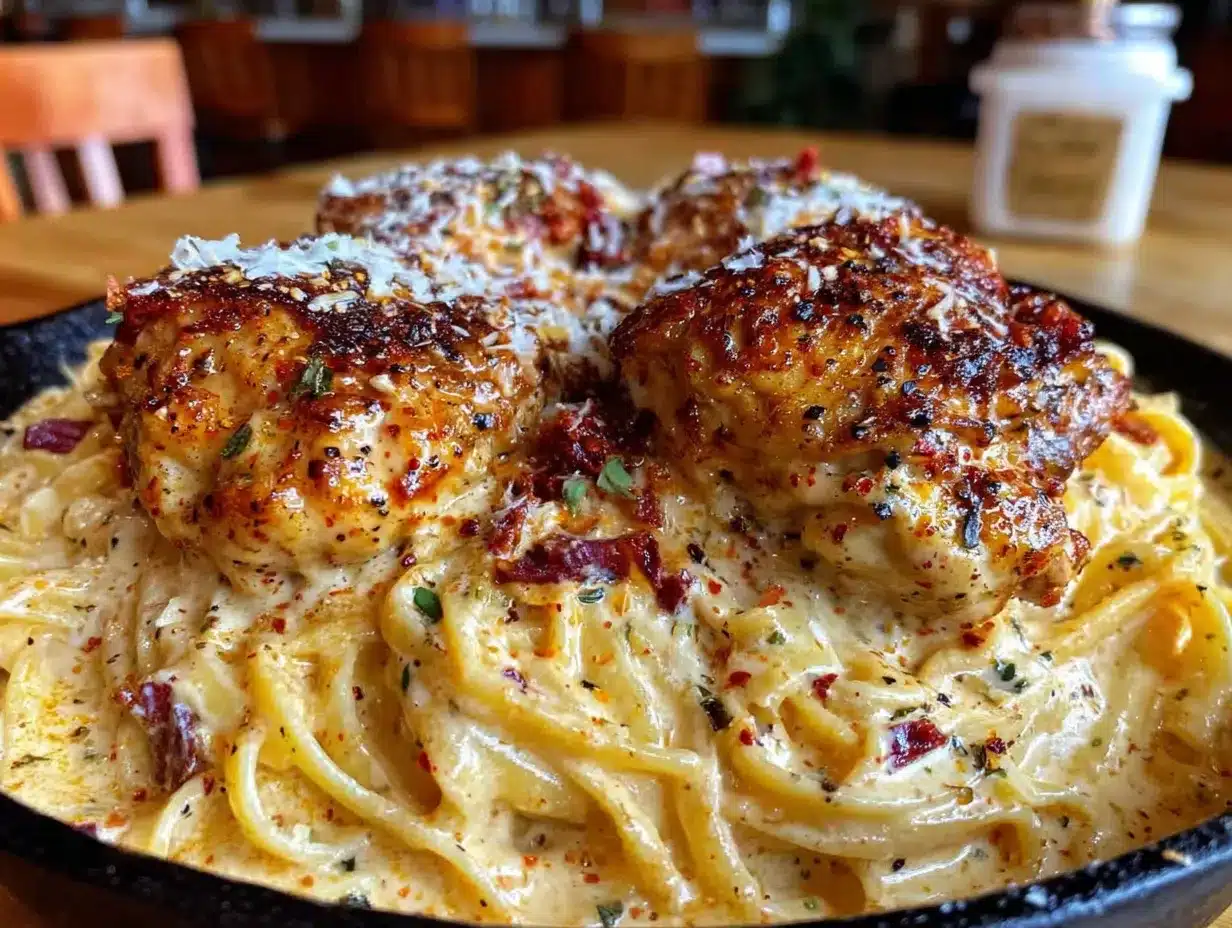
Alright, let’s get cooking. Follow these steps, and you’ll have a creamy, dreamy Tuscan chicken pasta skillet in no time.
- Prep the chicken: Pat the chicken breasts dry with paper towels. This is important — dry chicken browns better. Season both sides generously with salt, pepper, and ½ teaspoon of the dried oregano. If your breasts are thick, slice them in half horizontally to create two thinner cutlets. This helps them cook faster and more evenly.
- Sear the chicken: Heat 2 tablespoons of olive oil in your large skillet over medium-high heat. Once the oil shimmers (a drop of water should sizzle), carefully place the chicken in the pan. Don’t overcrowd — cook in batches if needed. Let it cook undisturbed for 5-6 minutes, until the bottom is golden brown and releases easily from the pan. Flip and cook for another 4-5 minutes, until the internal temperature reaches 165°F. Transfer the chicken to a plate and tent loosely with foil to keep warm. Don’t clean the pan!
- Sauté the aromatics: Reduce the heat to medium. Add 1 tablespoon of the reserved sun-dried tomato oil (or regular olive oil) to the pan. Add the minced garlic and cook for 30 seconds, stirring constantly, until fragrant. Be careful not to burn it — burnt garlic turns bitter. Add the chopped sun-dried tomatoes and cook for another minute, letting them soften and release their flavor.
- Build the sauce: Pour in 1 cup of chicken broth and 1 cup of heavy cream. Stir with your wooden spoon, scraping up all those browned bits from the bottom of the pan. This is called deglazing, and it’s where most of the flavor lives. Add the remaining ½ teaspoon of dried oregano and the red pepper flakes (if using). Bring the sauce to a gentle simmer.
- Cook the pasta: Add the 8 ounces of uncooked pasta directly to the simmering sauce. Stir to coat the pasta in the liquid. Cover the skillet with a lid (or foil) and reduce the heat to low. Let it cook for 12-15 minutes, stirring every 3-4 minutes to prevent sticking. The pasta will absorb the sauce as it cooks. If the sauce looks too thick before the pasta is done, add a splash of chicken broth or water.
- Add the spinach and chicken: Once the pasta is tender (al dente — slightly firm to the bite), remove the lid. Stir in the 3 cups of chopped spinach and let it wilt for about 2 minutes. The spinach will shrink dramatically, so don’t worry if it looks like a lot at first. Slice the rested chicken into strips or bite-sized pieces and return it to the skillet, along with any juices that accumulated on the plate.
- Finish with Parmesan: Remove the skillet from the heat. Sprinkle in ½ cup of freshly grated Parmesan cheese and stir gently until it melts into the sauce. The residual heat will do the work. Taste and adjust seasoning — you might want a pinch more salt or pepper. If the sauce seems too thick, stir in a tablespoon of warm water or broth to loosen it up.
- Rest and serve: Let the skillet sit for 2-3 minutes before serving. This allows the flavors to meld and the sauce to settle into the perfect consistency. Serve hot, garnished with extra Parmesan and a sprinkle of fresh parsley if you’re feeling fancy.
A few visual cues to watch for: The chicken should have a deep golden crust when you flip it. The sauce should bubble gently, not furiously. And when you stir the pasta, it should feel tender but still hold its shape — not mushy. You’ll know it’s ready when you can easily cut a piece of pasta with the edge of your spoon.
Cooking Tips & Techniques
After making this recipe more times than I can count, I’ve picked up a few tricks that make a real difference. Here are my best tips:
- Don’t skip the sear: That golden crust on the chicken isn’t just for looks. It adds a deep, savory flavor to the entire dish. If you rush this step and flip the chicken too early, it will stick to the pan and you’ll lose those precious browned bits. Patience pays off.
- Watch your heat: When you add the cream, keep the heat at a gentle simmer — not a rolling boil. Boiling cream can cause it to separate and turn grainy. If you see big bubbles, turn the heat down immediately.
- Stir the pasta often: Pasta cooking directly in the sauce needs more attention than pasta boiling in water. Give it a good stir every 3-4 minutes to prevent it from clumping or sticking to the bottom of the pan. I’ve learned this the hard way — burnt pasta is not fun to clean up.
- Grate your own cheese: I know I said it before, but it bears repeating. Pre-shredded Parmesan is coated in cellulose (wood pulp, basically) that stops it from melting smoothly. Freshly grated cheese dissolves into the sauce like a dream, creating that silky texture you’re after.
- Season as you go: Don’t wait until the end to add all the salt. Season the chicken before searing, add a pinch to the sauce, and taste again before serving. Layering the seasoning creates a more complex, balanced flavor.
- Use the sun-dried tomato oil: That flavorful oil in the jar is a gift. Use it to sauté the garlic and tomatoes instead of plain olive oil. It infuses the whole dish with that sweet, tangy tomato essence.
One mistake I made early on: I added the Parmesan too early, while the sauce was still bubbling. It clumped up into sad little bits instead of melting smoothly. Now I always remove the pan from the heat first, then stir in the cheese. Problem solved.
Variations & Adaptations
This recipe is wonderfully flexible. Here are some ways to make it your own:
- Vegetarian Version: Skip the chicken and add a can of drained chickpeas or white beans along with the pasta. You’ll still get that creamy, hearty texture, and the beans soak up the sauce beautifully. For extra protein, toss in some sautéed mushrooms.
- Spicy Kick: If you like heat, double the red pepper flakes or add a finely chopped Fresno chili along with the garlic. I once added a spoonful of Calabrian chili paste, and it was incredible — just the right amount of fire without overwhelming the cream.
- Seasonal Twist: In summer, swap the spinach for fresh basil and cherry tomatoes (halved). Add the tomatoes during the last 5 minutes of cooking so they soften but don’t burst completely. In fall, try adding roasted butternut squash cubes — they add sweetness and heft.
- Dairy-Free Adaptation: Use full-fat canned coconut milk instead of heavy cream and nutritional yeast instead of Parmesan. The coconut flavor is subtle and pairs surprisingly well with the sun-dried tomatoes. I’ve made this for a dairy-free friend, and she asked for the recipe on the spot.
- Protein Swap: Replace chicken with Italian sausage (casings removed, crumbled and browned) or shrimp (added during the last 3 minutes of cooking). Both work beautifully and change the flavor profile just enough to keep things interesting.
My personal favorite variation? I add a handful of chopped artichoke hearts along with the sun-dried tomatoes. The tangy, briny flavor cuts through the richness of the cream, and it makes the dish feel even more Tuscan. Try it once, and you might never go back.
Serving & Storage Suggestions
This dish is best served hot, straight from the skillet. Here’s how to make the most of it:
- Serving Temperature: Let it rest for 2-3 minutes after cooking, then serve immediately. The sauce will be at its creamiest, and the pasta will still have a slight bite. Garnish with extra Parmesan, a sprinkle of red pepper flakes, and a few fresh basil leaves if you have them.
- What to Serve With It: A simple green salad with lemon vinaigrette is the perfect side — the acidity cuts through the richness of the sauce. Crusty bread is also a must for sopping up every last drop. If you’re feeling fancy, serve it alongside some maple Dijon sheet pan chicken thighs for a double chicken dinner night (hey, no judgment here).
- Drink Pairings: A crisp Pinot Grigio or a light Chardonnay complements the creamy sauce beautifully. For beer lovers, a pale ale works well — the hoppy bitterness balances the richness.
- Storage: Store leftovers in an airtight container in the refrigerator for up to 3 days. The pasta will absorb some of the sauce as it sits, so don’t be alarmed if it looks less saucy the next day.
- Reheating: The best way to reheat is in a skillet over medium-low heat, with a splash of chicken broth or milk to loosen the sauce. Stir gently until warmed through. Microwaving works in a pinch, but the sauce can separate and the pasta can become mushy. If you must microwave, do it in 30-second bursts, stirring between each.
- Freezing: I don’t recommend freezing this dish. The cream sauce can separate upon thawing, and the pasta becomes soft and unappealing. It’s really best enjoyed fresh or within a couple of days.
One thing I’ve noticed: the flavors actually deepen overnight. The sun-dried tomatoes and garlic meld together, and the sauce becomes even more cohesive. So if you have leftovers, consider yourself lucky — tomorrow’s lunch will be even better.
Nutritional Information & Benefits
Here’s a rough estimate of the nutritional content per serving (based on 4 servings):
| Nutrient | Amount per Serving |
|---|---|
| Calories | ~580 |
| Protein | 38g |
| Fat | 32g |
| Carbohydrates | 35g |
| Fiber | 4g |
| Sugar | 6g |
| Sodium | 680mg |
While this isn’t a “light” meal, it does offer some solid nutritional benefits. Chicken provides lean protein for muscle repair and satiety. Spinach is packed with iron, vitamin K, and antioxidants. Sun-dried tomatoes are rich in lycopene, a powerful antioxidant linked to heart health. And the garlic? It’s known for its immune-boosting properties — perfect for cold and flu season.
If you’re watching your carb intake, you can reduce the pasta to 6 ounces and add extra vegetables like zucchini or bell peppers. For a lower-fat option, swap half the heavy cream for milk (though the sauce won’t be as thick). And if you’re gluten-sensitive, use gluten-free pasta — just adjust the cooking time as needed.
On a personal note, I love that this dish feels indulgent but still includes a generous serving of greens. It’s the kind of meal that satisfies a comfort food craving without leaving you feeling heavy or guilty. Balance, right?
Conclusion
This creamy Tuscan chicken pasta skillet has become my go-to for so many reasons. It’s quick enough for a busy weeknight, impressive enough for company, and comforting enough to make any ordinary evening feel a little special. The sauce is rich without being heavy, the chicken stays tender, and every bite has that perfect balance of creamy, tangy, and savory.
I hope you give it a try — and more than that, I hope you make it your own. Add extra spinach if you like. Throw in some mushrooms. Double the garlic. This recipe is forgiving and flexible, just like the best comfort food should be.
If you’re in the mood for other one-pan dinners, you might also enjoy this cozy crockpot pumpkin chili for those extra chilly nights, or these easy sheet pan sausage and pepper sandwiches when you want something hearty but hands-off.
I’d love to hear how it turns out for you. Did you make any tweaks? Discover a new favorite variation? Drop a comment below — I read every single one, and your ideas might just inspire my next batch. Until then, happy cooking, and don’t forget the crusty bread for sopping up that sauce. You’ll thank me later.
Frequently Asked Questions
Can I use milk instead of heavy cream?
You can, but the sauce won’t be as thick or creamy. Whole milk works best, but even then, you might need to add a cornstarch slurry (1 tablespoon cornstarch mixed with 2 tablespoons cold water) to help thicken it. Add it during the last 5 minutes of cooking.
What if I don’t have sun-dried tomatoes?
You can substitute with ½ cup of tomato paste mixed with 1 tablespoon of olive oil and a pinch of sugar. It won’t have the same texture, but the flavor will be in the right ballpark. Roasted cherry tomatoes also work in a pinch.
Can I make this ahead of time?
You can prep the ingredients ahead — chop the sun-dried tomatoes, mince the garlic, and grate the cheese. But I recommend cooking the dish fresh. The pasta absorbs the sauce over time, so leftovers are fine, but the texture is best right after cooking.
How do I make sure the chicken stays juicy?
Don’t overcook it! Use a meat thermometer to check for 165°F. Also, letting the chicken rest for 5 minutes after searing (while the pasta cooks) allows the juices to redistribute. Slicing it against the grain also helps keep it tender.
Can I use a different type of pasta?
Absolutely. Short, sturdy shapes like rigatoni, ziti, or campanelle work great. Avoid delicate pastas like angel hair or orzo, which can become mushy. If you use whole wheat pasta, add an extra ¼ cup of broth since it absorbs more liquid.
Pin This Recipe!
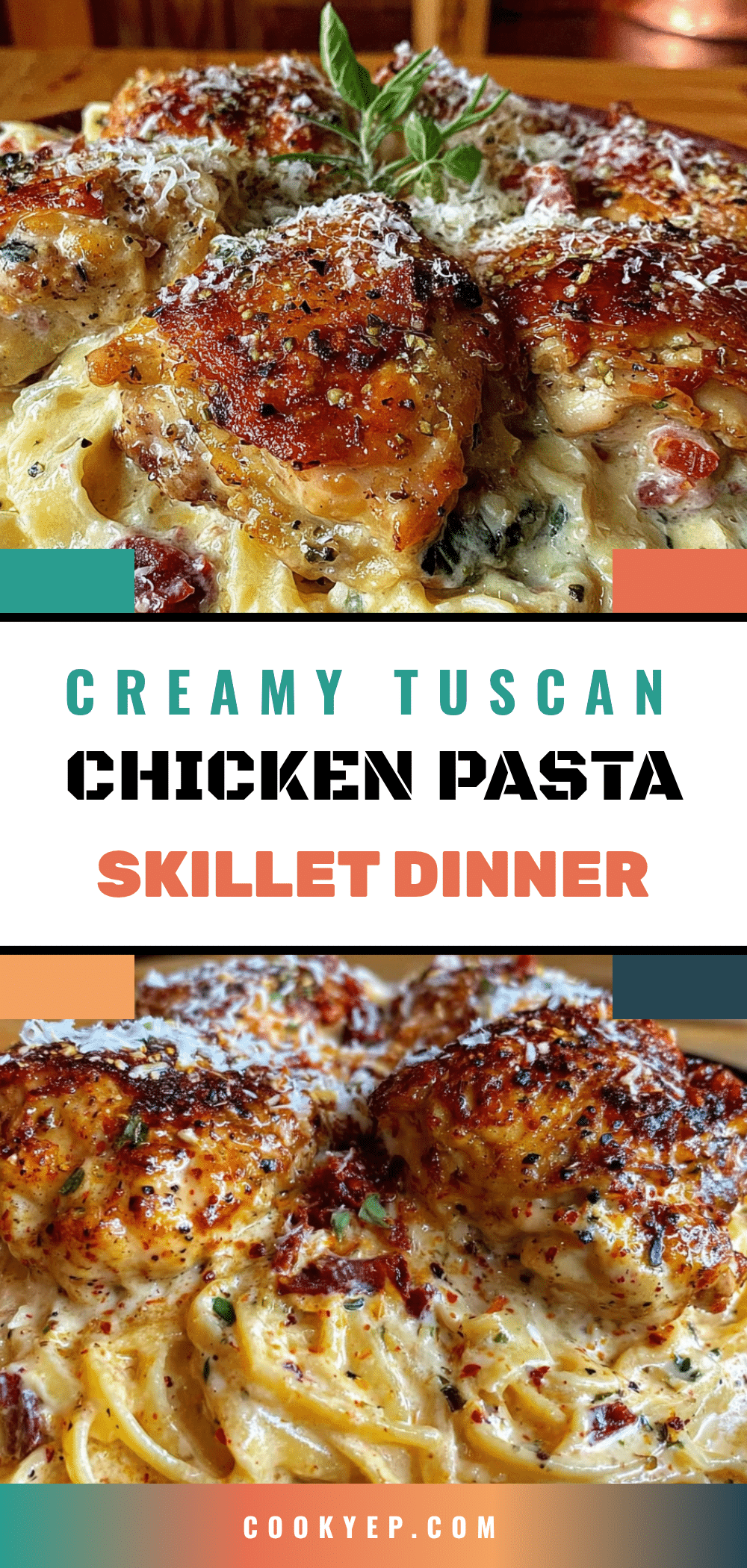
Easy Creamy Tuscan Chicken Pasta Skillet: One-Pan Dinner
A quick and easy one-pan dinner featuring tender chicken, sun-dried tomatoes, and spinach in a rich, creamy Parmesan sauce, with pasta cooked directly in the sauce for maximum flavor.
- Prep Time: 10 minutes
- Cook Time: 25 minutes
- Total Time: 35 minutes
- Yield: 4 servings 1x
- Category: Main Course
- Cuisine: Italian
Ingredients
- 1.5 lbs boneless, skinless chicken breasts (about 2 large breasts)
- ½ cup sun-dried tomatoes in oil, drained and roughly chopped (reserve 1 tablespoon oil)
- 4 cloves garlic, minced
- 1 cup heavy cream
- 1 cup low-sodium chicken broth
- 8 oz short pasta (penne, fusilli, or farfalle)
- 3 cups fresh spinach, roughly chopped
- ½ cup freshly grated Parmesan cheese
- 1 teaspoon dried oregano, divided
- ½ teaspoon red pepper flakes (optional, or to taste)
- Salt and black pepper to taste
- 2 tablespoons olive oil
Instructions
- Pat chicken breasts dry with paper towels. Season both sides generously with salt, pepper, and ½ teaspoon dried oregano. If thick, slice horizontally into two thinner cutlets.
- Heat 2 tablespoons olive oil in a large skillet over medium-high heat. Sear chicken for 5-6 minutes per side until golden brown and internal temperature reaches 165°F. Transfer to a plate and tent with foil; do not clean the pan.
- Reduce heat to medium. Add 1 tablespoon reserved sun-dried tomato oil to the pan. Add minced garlic and cook for 30 seconds until fragrant. Add chopped sun-dried tomatoes and cook for 1 minute.
- Pour in chicken broth and heavy cream. Stir, scraping up browned bits from the pan. Add remaining ½ teaspoon oregano and red pepper flakes. Bring to a gentle simmer.
- Add uncooked pasta to the simmering sauce, stirring to coat. Cover and reduce heat to low. Cook for 12-15 minutes, stirring every 3-4 minutes, until pasta is tender. Add a splash of broth or water if sauce becomes too thick.
- Remove lid. Stir in chopped spinach and cook for 2 minutes until wilted. Slice rested chicken into strips and return to skillet with any accumulated juices.
- Remove skillet from heat. Sprinkle in grated Parmesan and stir until melted. Taste and adjust seasoning.
- Let rest for 2-3 minutes before serving. Garnish with extra Parmesan and fresh parsley if desired.
Notes
For best results, use freshly grated Parmesan and avoid boiling the cream. The pasta absorbs the sauce as it cooks, so stir often. Leftovers keep for up to 3 days in the refrigerator; reheat with a splash of broth or milk.
Nutrition
- Serving Size: 1 serving (about 1.5
- Calories: 580
- Sugar: 6
- Sodium: 680
- Fat: 32
- Saturated Fat: 16
- Carbohydrates: 35
- Fiber: 4
- Protein: 38
Keywords: Tuscan chicken pasta, one-pan dinner, creamy pasta, chicken skillet, easy weeknight dinner