I wasn’t supposed to be at Mark’s house last Tuesday. I’d stopped by to grab a ladder I’d borrowed weeks ago, and honestly, I was planning to be in and out in under five minutes. But then I opened the screen door to his back porch, and this smell hit me before I even got inside. It wasn’t just beef cooking. It was something deeper, warmer, like the whole house had been slow-cooking along with whatever was in that pot. Mark was standing at the stove in an old t-shirt, stirring this massive Dutch oven with a wooden spoon, and he barely looked up. “Grab a bowl,” he said. “It’s almost done.” No fuss. No “wait till you taste this.” Just a guy making dinner on a random Tuesday.
So I grabbed a bowl. And let me tell you, that first spoonful stopped me mid-conversation. The beef was so tender it barely needed chewing, the carrots were sweet and soft, and the broth had this velvety richness that I still can’t fully explain. I asked him what he put in it, and he just shrugged and said, “You know, the usual stuff.” The usual stuff! I mean, I’ve been cooking for years, and my stew had never tasted like that. It was the kind of meal that makes you close your eyes after the first bite, and he was acting like he’d just boiled pasta.
I pestered him for the recipe for weeks. He finally wrote it down on a napkin, and I’ve been making it ever since. Maybe you’ve been in a similar spot, watching someone cook something extraordinary and thinking, “How do they do that?” Well, this is that recipe. It’s the classic Dutch oven beef stew that steals the show every single time, whether it’s a quiet Sunday dinner or a table full of your most opinionated friends. And the best part? It’s not complicated. Mark proved that. He just let the pot do the work.
Why You’ll Love This Recipe
This isn’t just another beef stew recipe. I’ve tested this version more times than I can count, tweaking the sear temperature, the cooking time, and the ratio of wine to broth until it was absolutely perfect. It’s the kind of dish that makes you look like a hero in the kitchen with surprisingly little effort.
- Perfect for Hosting: This stew is made for a crowd. It scales beautifully, and you can prep almost everything before your guests arrive. No last-minute scrambling.
- One-Pot Wonder: Everything happens in a single Dutch oven. Less cleanup means more time to actually enjoy the people around your table.
- Unbelievably Tender Beef: The low-and-slow cooking method breaks down the meat until it’s fork-tender. It’s the texture that keeps people coming back for seconds.
- Rich, Deep Flavor: Between the seared beef, the red wine, and the aromatic vegetables, every spoonful is packed with layers of savory goodness.
- Make-Ahead Magic: This stew actually tastes better the next day. Make it a day ahead, and the flavors meld together into something truly special.
- Crowd-Pleaser: I’ve served this at dinner parties, holiday gatherings, and casual weeknight dinners. It gets rave reviews every single time.
This recipe is different because I’ve dialed in the technique. The key is a proper sear on the beef, a good deglaze with wine, and enough patience to let it simmer until it’s perfect. It’s not just another stew—it’s the one that will become your go-to for any occasion where you want to impress without the stress.
What Ingredients You Will Need
This recipe uses simple, hearty ingredients to build layers of flavor. Most of these are pantry staples, and the few special ones are worth seeking out for the depth they add.
For the Beef and Sear
- 2 ½ pounds beef chuck roast, cut into 1 ½-inch cubes (chuck is ideal—it has enough marbling to stay tender during long cooking)
- 2 teaspoons kosher salt (I prefer Diamond Crystal; it’s less salty by volume, so adjust if using another brand)
- 1 teaspoon black pepper, freshly ground
- 3 tablespoons olive oil or avocado oil (use an oil with a high smoke point for a good sear)
For the Aromatics and Vegetables
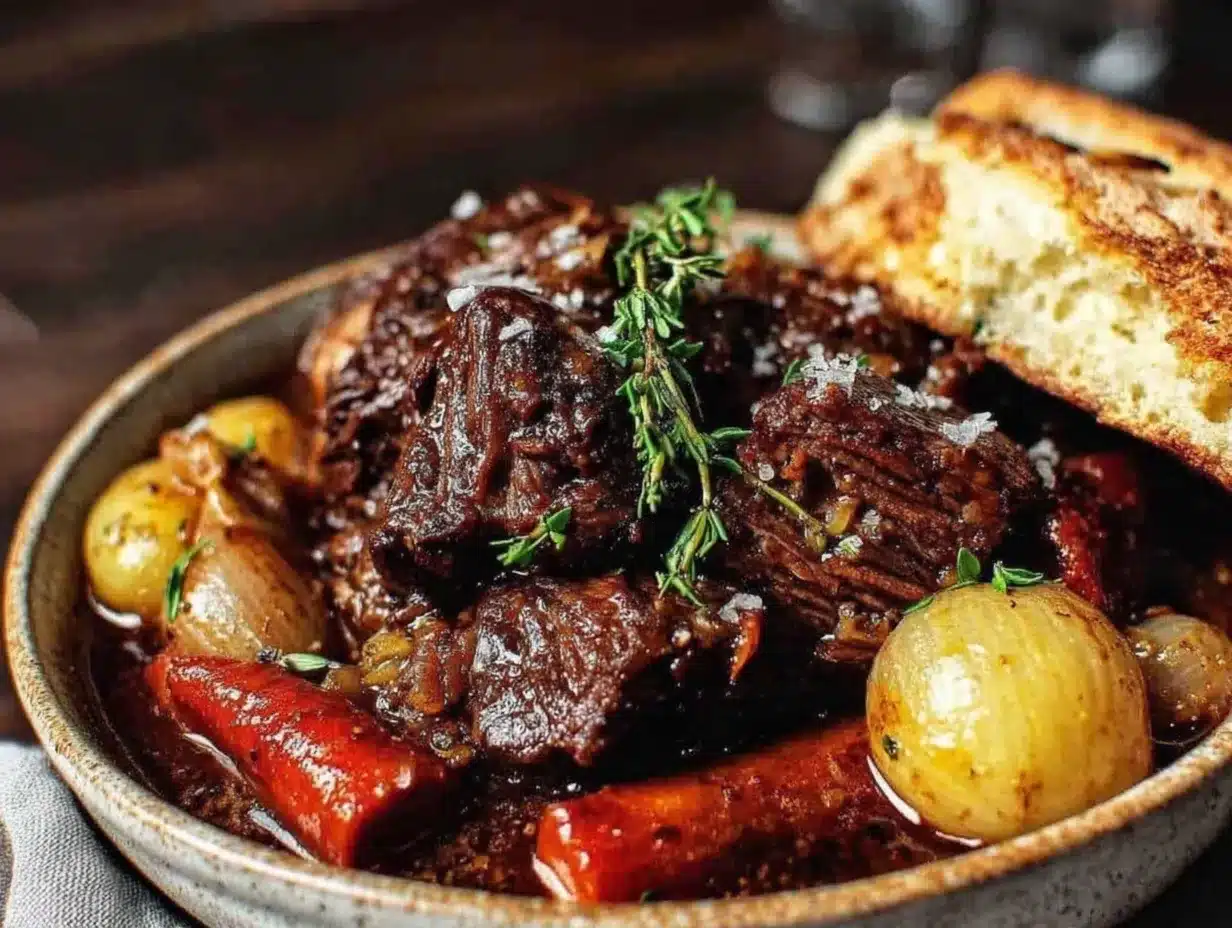
- 1 large yellow onion, diced (about 2 cups)
- 4 cloves garlic, minced (fresh garlic is non-negotiable here—skip the jarred stuff)
- 4 medium carrots, peeled and cut into 1-inch chunks
- 3 celery stalks, sliced into ½-inch pieces
- 1 ½ pounds Yukon Gold potatoes, peeled and cut into 1-inch cubes (they hold their shape better than russets)
- 8 ounces cremini mushrooms, halved (optional, but I love the earthy depth they add)
For the Broth and Seasoning
- ¼ cup tomato paste (double-concentrated in a tube is best—it’s richer than the canned stuff)
- 1 cup dry red wine (something you’d drink, like a Cabernet Sauvignon or Merlot; never cook with wine you wouldn’t sip)
- 4 cups beef broth, low-sodium (I recommend Better Than Bouillon roasted beef base—it’s my secret weapon for deep flavor)
- 2 tablespoons Worcestershire sauce
- 2 bay leaves
- 3 sprigs fresh thyme (or 1 teaspoon dried thyme)
- 1 tablespoon balsamic vinegar (adds a subtle sweetness and brightness at the end)
For Thickening
- 3 tablespoons all-purpose flour (for coating the beef and thickening the stew)
If you’re gluten-free, swap the all-purpose flour for a 1:1 gluten-free flour blend or use 2 tablespoons of cornstarch mixed with ¼ cup cold water added at the end. For a dairy-free option, skip the butter (if using) and stick with olive oil for the whole process.
Equipment Needed
You don’t need a fancy kitchen for this recipe, but a few key tools make a big difference.
- Dutch Oven: A 6 to 7-quart heavy-bottomed pot is ideal. I use a Le Creuset that I saved up for years ago, and it’s worth every penny. A Lodge enameled cast iron pot is a more budget-friendly option that works just as well.
- Sharp Chef’s Knife: A good knife makes cutting the beef and vegetables safer and easier. I use a Wüsthof 8-inch, but any sharp knife will do.
- Cutting Board: A large wooden or plastic board for prepping everything.
- Wooden Spoon or Silicone Spatula: For stirring and scraping up the browned bits from the bottom of the pot.
- Measuring Cups and Spoons: For accuracy, especially with the wine and broth.
- Tongs: For turning the beef cubes while searing.
If you don’t have a Dutch oven, you can use a heavy-bottomed stockpot or a large oven-safe skillet with a lid. The key is even heat distribution, so avoid thin pots that might scorch the bottom.
Preparation Method
- Prep the Beef (10 minutes): Pat the beef cubes dry with paper towels. This is crucial—wet beef won’t sear properly. In a large bowl, toss the beef with the salt, pepper, and flour until evenly coated. Let it sit at room temperature for 15 minutes while you prep the vegetables.
- Sear the Beef (15 minutes): Heat your Dutch oven over medium-high heat and add 2 tablespoons of olive oil. When the oil shimmers, add the beef in a single layer—work in batches if needed. Don’t crowd the pot, or the beef will steam instead of sear. Cook for 3-4 minutes per side until deeply browned. Use tongs to turn the pieces. Transfer the seared beef to a plate and set aside. Pro tip: Those brown bits stuck to the bottom of the pot are pure flavor. Don’t clean the pot yet!
- Sauté the Aromatics (8 minutes): Reduce the heat to medium. Add the remaining 1 tablespoon of oil to the pot. Add the diced onion and cook for 5 minutes, stirring occasionally, until softened and translucent. Add the minced garlic and cook for 1 minute more until fragrant. Scrape up any browned bits from the bottom as you stir.
- Bloom the Tomato Paste (2 minutes): Add the tomato paste to the pot and stir constantly for 1-2 minutes. It will darken in color and smell richer. This step deepens the overall flavor of the stew.
- Deglaze with Wine (3 minutes): Pour in the red wine and use your wooden spoon to scrape up every last bit of fond from the bottom of the pot. Let the wine simmer for 2-3 minutes until it reduces slightly and the alcohol cooks off.
- Add the Broth and Beef (5 minutes): Return the seared beef to the pot, along with any accumulated juices. Pour in the beef broth and Worcestershire sauce. Add the bay leaves and thyme sprigs. Stir everything together, then bring the stew to a gentle simmer. You should see small bubbles breaking the surface, not a rolling boil.
- Simmer the Stew (1 ½ hours): Reduce the heat to low, cover the pot with the lid slightly ajar, and let it simmer gently for 1 hour. Stir occasionally to prevent sticking. After 1 hour, add the carrots, celery, potatoes, and mushrooms (if using). Stir to combine, cover again, and continue simmering for another 30-45 minutes, or until the vegetables are tender and the beef is fork-tender.
- Finish and Adjust (5 minutes): Remove the bay leaves and thyme sprigs (the leaves will have fallen off; that’s fine). Stir in the balsamic vinegar. Taste the stew and adjust the seasoning with more salt and pepper if needed. The vinegar brightens everything without making it taste sour.
- Rest and Serve (10 minutes): Let the stew sit off the heat for 10 minutes before serving. This allows the flavors to settle and the broth to thicken slightly. Serve hot, garnished with fresh parsley if you like.
Visual Cue: The broth should be thick enough to coat the back of a spoon. If it’s too thin, simmer uncovered for an additional 10-15 minutes. If it’s too thick, add a splash of beef broth or water to reach your desired consistency.
Cooking Tips & Techniques
I’ve made this stew more times than I can count, and I’ve learned a few things the hard way. Here’s what I wish someone had told me.
Don’t Skip the Sear: I know it’s tempting to just dump everything in the pot and walk away, but that sear is where the magic starts. The browning creates the Maillard reaction, which gives the beef its deep, savory flavor. If you skip it, you’ll end up with a stew that tastes flat. I once rushed this step when I was short on time, and the result was noticeably less delicious.
Pat the Beef Dry: Wet beef steams instead of sears. I learned this after a particularly frustrating batch where my beef turned gray instead of brown. Take the extra minute to pat it dry with paper towels. It makes a huge difference.
Low and Slow Wins the Race: This isn’t a stew you can rush. Simmering gently over low heat allows the collagen in the beef to break down into gelatin, which gives the broth that silky, luxurious texture. If you boil it, the meat will become tough and stringy. Trust the process—your patience will be rewarded.
Make It Ahead: This stew tastes even better the next day. The flavors have time to meld and deepen overnight. I often make it a day before a dinner party, then reheat it gently on the stove while I prep the rest of the meal. It’s a total game-changer for hosting.
Don’t Overcrowd the Pot: When searing the beef, work in batches. If you add all the meat at once, the temperature drops, and the beef releases moisture instead of browning. I use a 6-quart pot and sear the beef in three batches. It takes a few extra minutes, but the flavor payoff is worth it.
Variations & Adaptations
One of the best things about this stew is how adaptable it is. Here are some of my favorite variations.
Herb and Mushroom Version: For an earthier flavor, add an extra 8 ounces of mushrooms and swap the thyme for rosemary and sage. I tried this during the fall, and the aroma was absolutely intoxicating. The mushrooms soak up all the rich broth and become little flavor bombs.
Red Wine-Free Option: If you don’t cook with wine, replace the red wine with an equal amount of beef broth and add 1 tablespoon of balsamic vinegar at the beginning instead of the end. You’ll lose a little depth, but the stew will still be delicious. I’ve made it this way for friends who don’t drink alcohol, and no one noticed the difference.
Root Vegetable Swap: In the winter, I love swapping the potatoes for parsnips, turnips, or sweet potatoes. Each root vegetable brings its own sweetness and texture. Just cut them into similar-sized cubes so they cook evenly.
Slow Cooker Adaptation: If you want to set it and forget it, sear the beef and sauté the aromatics on the stove first, then transfer everything to a slow cooker. Cook on low for 8 hours, adding the vegetables in the last 2 hours. The flavor won’t be quite as deep as the Dutch oven version, but it’s still fantastic for busy days.
Gluten-Free Thickening: Instead of coating the beef in flour, use 2 tablespoons of cornstarch mixed with ¼ cup cold water. Stir it into the stew during the last 15 minutes of cooking and let it simmer until thickened.
Serving & Storage Suggestions
This stew is a meal in itself, but the right accompaniments can make it truly unforgettable.
Serving: Ladle the stew into wide, shallow bowls so you get plenty of broth with each serving. I like to garnish with a sprinkle of fresh parsley and a crack of black pepper. Serve it with crusty bread or warm dinner rolls for soaking up every last drop of that glorious broth. For a dinner party, I sometimes serve it over creamy mashed potatoes or buttered egg noodles.
What to Serve Alongside: A simple green salad with a tangy vinaigrette cuts through the richness of the stew beautifully. I also love serving roasted Brussels sprouts or steamed green beans on the side. For drinks, a full-bodied red wine like a Zinfandel or a dark beer like a stout pairs perfectly.
Storage: Let the stew cool completely before transferring it to an airtight container. It will keep in the refrigerator for up to 5 days. The flavors actually improve over the first two days, so don’t hesitate to make it ahead.
Freezing: This stew freezes beautifully. Portion it into freezer-safe containers or zip-top bags, leaving about an inch of headroom for expansion. It will keep for up to 3 months. Thaw overnight in the refrigerator before reheating.
Reheating: Reheat the stew gently on the stovetop over medium-low heat, stirring occasionally. Add a splash of beef broth or water if it’s too thick. You can also reheat individual portions in the microwave, but the stovetop gives a better texture. Don’t boil it, or the vegetables may become mushy.
Nutritional Information & Benefits
This stew is hearty and satisfying, but it also packs some surprising nutritional benefits.
Estimated Nutritional Values (per serving, based on 8 servings):
| Nutrient | Amount |
|---|---|
| Calories | 425 |
| Protein | 38g |
| Fat | 18g |
| Carbohydrates | 28g |
| Fiber | 4g |
| Sugar | 8g |
| Sodium | 720mg |
Health Highlights: Beef chuck is an excellent source of high-quality protein, iron, and zinc, which support muscle health and immune function. The carrots and potatoes provide vitamin A and potassium, while the mushrooms offer B vitamins and antioxidants. The slow cooking process also makes the nutrients more bioavailable, meaning your body can absorb them more easily.
Dietary Considerations: This recipe is naturally dairy-free and can be made gluten-free with a simple substitution. It’s also low in added sugar, with only the natural sugars from the vegetables and the small amount in the wine and balsamic vinegar.
Personal Note: I love that this stew feels indulgent but is actually a balanced meal. It’s the kind of comfort food that nourishes you from the inside out, and knowing it’s packed with good ingredients makes every bowl even more satisfying.
Conclusion
This classic Dutch oven beef stew is more than just a recipe—it’s the kind of dish that brings people together. Whether you’re hosting a dinner party, feeding your family on a cold winter night, or just looking for a meal that feels like a hug in a bowl, this stew delivers every single time.
I’ve made this recipe for birthdays, holidays, and random Tuesdays, and it never disappoints. The beef turns out perfectly tender, the broth is rich and velvety, and the vegetables soak up all that incredible flavor. It’s the kind of meal that makes you look like you spent hours in the kitchen, even though most of the work is hands-off.
So go ahead and make it your own. Swap in your favorite root vegetables, adjust the herbs to your taste, or double the batch for a crowd. And when you do, I’d love to hear about it. Drop a comment below and let me know how it turned out, or share your own twist on this recipe. Trust me, once you make this stew, it’ll become a staple in your kitchen too. Happy cooking!
Frequently Asked Questions
Can I use a different cut of beef for this stew?
Absolutely. While chuck roast is my top choice for its marbling and tenderness, you can also use brisket, bottom round, or even stew meat from the store. Just keep in mind that leaner cuts may need a slightly shorter cooking time to avoid drying out.
Do I have to use red wine?
Not at all. If you prefer not to cook with wine, simply replace it with an equal amount of beef broth and add an extra tablespoon of balsamic vinegar for acidity. The stew will still be rich and flavorful.
Can I make this stew in a slow cooker?
Yes! Sear the beef and sauté the aromatics on the stove first, then transfer everything to a slow cooker. Cook on low for 8 hours, adding the vegetables in the last 2 hours. The flavor won’t be quite as deep, but it’s a great hands-off option.
How do I thicken the stew if it’s too thin?
If your stew is thinner than you’d like, simmer it uncovered for 10-15 minutes to let some of the liquid evaporate. You can also mix 2 tablespoons of cornstarch with ¼ cup of cold water and stir it into the stew, then let it simmer for 5 minutes to thicken.
Can I freeze leftovers?
Definitely! This stew freezes wonderfully. Let it cool completely, then portion it into freezer-safe containers. It will keep for up to 3 months. Thaw overnight in the fridge and reheat gently on the stovetop for best results.
Pin This Recipe!
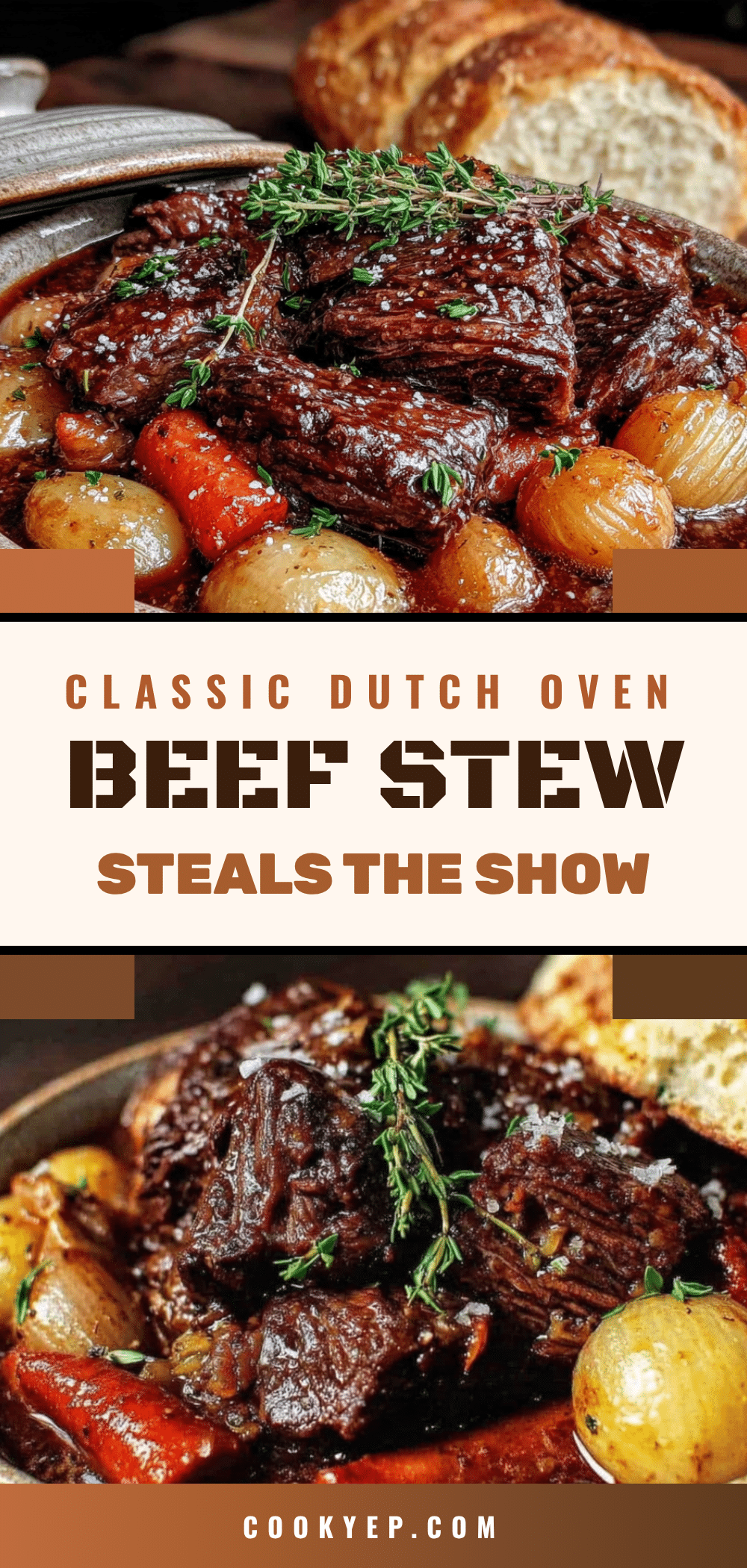
Classic Dutch Oven Beef Stew: Best Easy One-Pot Dinner
This classic Dutch oven beef stew is the ultimate one-pot comfort food, featuring fork-tender beef, sweet carrots, and a velvety rich broth. Perfect for hosting or a cozy weeknight dinner, it’s surprisingly simple to make and tastes even better the next day.
- Prep Time: 15 minutes
- Cook Time: 2 hours 15 minutes
- Total Time: 2 hours 30 minutes
- Yield: 8 servings 1x
- Category: Main Course
- Cuisine: American
Ingredients
- 2 ½ pounds beef chuck roast, cut into 1 ½-inch cubes
- 2 teaspoons kosher salt
- 1 teaspoon black pepper, freshly ground
- 3 tablespoons olive oil or avocado oil
- 1 large yellow onion, diced (about 2 cups)
- 4 cloves garlic, minced
- 4 medium carrots, peeled and cut into 1-inch chunks
- 3 celery stalks, sliced into ½-inch pieces
- 1 ½ pounds Yukon Gold potatoes, peeled and cut into 1-inch cubes
- 8 ounces cremini mushrooms, halved (optional)
- ¼ cup tomato paste
- 1 cup dry red wine (such as Cabernet Sauvignon or Merlot)
- 4 cups low-sodium beef broth
- 2 tablespoons Worcestershire sauce
- 2 bay leaves
- 3 sprigs fresh thyme (or 1 teaspoon dried thyme)
- 1 tablespoon balsamic vinegar
- 3 tablespoons all-purpose flour
Instructions
- Prep the Beef (10 minutes): Pat the beef cubes dry with paper towels. In a large bowl, toss the beef with the salt, pepper, and flour until evenly coated. Let it sit at room temperature for 15 minutes while you prep the vegetables.
- Sear the Beef (15 minutes): Heat your Dutch oven over medium-high heat and add 2 tablespoons of olive oil. When the oil shimmers, add the beef in a single layer—work in batches if needed. Cook for 3-4 minutes per side until deeply browned. Use tongs to turn the pieces. Transfer the seared beef to a plate and set aside.
- Sauté the Aromatics (8 minutes): Reduce the heat to medium. Add the remaining 1 tablespoon of oil to the pot. Add the diced onion and cook for 5 minutes, stirring occasionally, until softened and translucent. Add the minced garlic and cook for 1 minute more until fragrant. Scrape up any browned bits from the bottom as you stir.
- Bloom the Tomato Paste (2 minutes): Add the tomato paste to the pot and stir constantly for 1-2 minutes. It will darken in color and smell richer.
- Deglaze with Wine (3 minutes): Pour in the red wine and use your wooden spoon to scrape up every last bit of fond from the bottom of the pot. Let the wine simmer for 2-3 minutes until it reduces slightly and the alcohol cooks off.
- Add the Broth and Beef (5 minutes): Return the seared beef to the pot, along with any accumulated juices. Pour in the beef broth and Worcestershire sauce. Add the bay leaves and thyme sprigs. Stir everything together, then bring the stew to a gentle simmer.
- Simmer the Stew (1 ½ hours): Reduce the heat to low, cover the pot with the lid slightly ajar, and let it simmer gently for 1 hour. Stir occasionally to prevent sticking. After 1 hour, add the carrots, celery, potatoes, and mushrooms (if using). Stir to combine, cover again, and continue simmering for another 30-45 minutes, or until the vegetables are tender and the beef is fork-tender.
- Finish and Adjust (5 minutes): Remove the bay leaves and thyme sprigs. Stir in the balsamic vinegar. Taste the stew and adjust the seasoning with more salt and pepper if needed.
- Rest and Serve (10 minutes): Let the stew sit off the heat for 10 minutes before serving. Serve hot, garnished with fresh parsley if you like.
Notes
For a gluten-free version, swap the all-purpose flour for a 1:1 gluten-free flour blend or use 2 tablespoons of cornstarch mixed with ¼ cup cold water added at the end. For a dairy-free option, skip the butter and stick with olive oil. The stew tastes even better the next day—make it ahead for deeper flavor.
Nutrition
- Serving Size: 1 serving (about 1 ½
- Calories: 425
- Sugar: 8
- Sodium: 720
- Fat: 18
- Saturated Fat: 6
- Carbohydrates: 28
- Fiber: 4
- Protein: 38
Keywords: beef stew, Dutch oven, one-pot dinner, comfort food, beef chuck, winter recipe