Linda wasn’t trying to impress anyone. I’d stopped by her house on a Tuesday afternoon in early November to drop off a book she’d lent me, and the smell hit me before I even got through the screen door. It was warm and sweet, but not in a dessert way—more like someone had captured autumn itself and roasted it in a pan. She waved me into the kitchen, completely unfazed, stirring a massive sheet pan full of vegetables while her kids ran circles around the island. “Oh, that’s just what I’m bringing to the neighborhood potluck,” she said when I asked. Just. She said it like she hadn’t just created the most intoxicating aroma I’d ever encountered in a home kitchen. I stood there for a solid ten minutes, maybe longer, watching her toss carrots and Brussels sprouts with this gorgeous amber glaze, and she kept talking about school pickup schedules like what she was doing was completely ordinary. It wasn’t until she pulled the pan out of the oven and the vegetables had this caramelized, almost glassy sheen that I realized I’d been staring. She offered me one—just a single roasted Brussels sprout—and honestly, I think I made a noise that embarrassed us both. That was five years ago, and I’ve been making this maple roasted Thanksgiving vegetable medley for every holiday gathering since. Maybe you’ve been there, standing in someone else’s kitchen, watching them make something special without even realizing it, and thinking, I need to learn how to do that. Well, here’s your chance. This recipe feeds a crowd, costs next to nothing, and tastes like you spent hours fussing when you really just tossed everything together and let the oven do the work.
Why You’ll Love This Recipe
Let me tell you why this maple roasted Thanksgiving vegetable medley has become my go-to dish for every holiday gathering, family dinner, and potluck I’ve attended since that day in Linda’s kitchen. I’ve tested this recipe at least a dozen times—tweaking the temperature, adjusting the glaze ratio, experimenting with different vegetable combinations—and what I’m sharing with you is the version that works every single time.
- Feeds a Crowd Without Breaking the Bank: You can stretch a few pounds of seasonal vegetables to serve 10 to 12 people easily. Thanksgiving sides can get expensive, but this one keeps your grocery bill reasonable while still feeling special.
- Simple Ingredients, Maximum Flavor: You probably already have maple syrup, olive oil, salt, and pepper in your kitchen. The vegetables themselves are the stars here, and they don’t need much dressing up to shine.
- Make-Ahead Friendly: You can prep the vegetables the night before, toss them with the glaze, and pop them in the fridge. On Thanksgiving morning, you just spread them on a sheet pan and roast. That’s it.
- Picky Eater Approved: My own kids used to push Brussels sprouts to the side of their plates. The first time I made this medley, my youngest asked for seconds. The maple glaze does something magical—it sweetens the vegetables just enough to make them irresistible without turning them into candy.
- One Pan, Minimal Cleanup: Everything roasts together on a single sheet pan. No multiple pots, no complicated steps, no sink full of dishes while you’re trying to get the turkey carved.
This isn’t just another roasted vegetable recipe. The technique here—roasting at a high enough temperature to get real caramelization while the maple syrup creates this sticky, almost lacquered coating—is what sets it apart. You get edges that are crispy and browned, centers that are tender but not mushy, and a sweetness that complements the savory richness of a Thanksgiving turkey perfectly. It’s comfort food that feels both familiar and fresh, and honestly, it’s the dish people ask me to bring every single year.
What Ingredients You Will Need
This recipe uses simple, wholesome ingredients that work together to create something truly special. Most of these are pantry staples or easy to find at any grocery store, especially during the fall season. Here’s what you’ll need:
For the Vegetable Medley
- 1 pound Brussels sprouts, trimmed and halved (look for bright green, firm sprouts with tightly packed leaves—they roast better)
- 1 pound carrots, peeled and cut into 2-inch chunks (I prefer thicker carrots for roasting; they hold their shape and get beautifully tender)
- 1 pound sweet potatoes, peeled and cut into 1-inch cubes (choose medium-sized sweet potatoes with orange flesh for the best natural sweetness)
- 1 large red onion, cut into 1-inch wedges (the wedges should be thick enough that they don’t fall apart during roasting)
- 2 cups butternut squash, peeled and cut into 1-inch cubes (pre-cut squash from the store works great if you’re short on time)
- 3 tablespoons olive oil (use a good quality extra virgin olive oil for the best flavor)
- 1 teaspoon salt (I use kosher salt—it distributes more evenly and helps draw out moisture for better caramelization)
- ½ teaspoon black pepper, freshly ground (freshly ground pepper makes a real difference here)
For the Maple Glaze
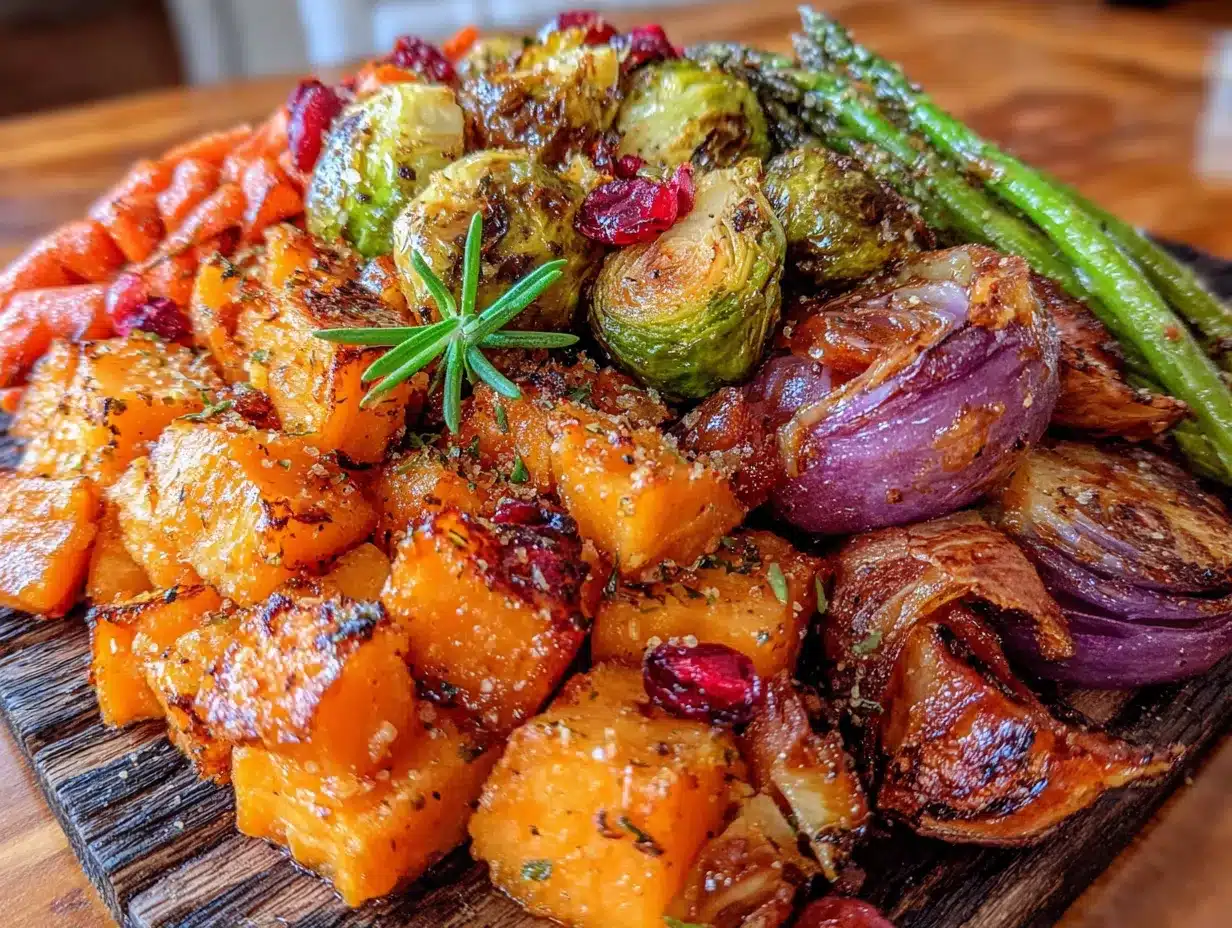
- ⅓ cup pure maple syrup (please don’t use pancake syrup—real maple syrup is worth the extra cost here because it thickens and caramelizes properly)
- 2 tablespoons unsalted butter, melted (adds richness and helps the glaze stick to the vegetables)
- 1 tablespoon apple cider vinegar (this brightens the sweetness and prevents the dish from being one-note)
- 1 teaspoon dried thyme (I recommend dried thyme over fresh for roasting—it holds up better to the high heat)
- ½ teaspoon garlic powder (not fresh garlic, which can burn at high roasting temperatures)
- ¼ teaspoon cinnamon (optional, but it adds a warm, cozy note that fits the Thanksgiving theme perfectly)
For the Garnish (Optional but Recommended)
- ¼ cup dried cranberries (adds a pop of color and a tart contrast to the sweet glaze)
- ¼ cup pecans, roughly chopped (toasted pecans add crunch—toast them in a dry pan for 2-3 minutes before adding)
- Fresh parsley or rosemary, chopped (for a fresh finish right before serving)
Ingredient Substitution Notes: If you’re feeding someone with dietary restrictions, this recipe is easy to adapt. Use coconut oil or a plant-based butter substitute to make it dairy-free. You can swap the maple syrup for honey or agave nectar, though the flavor will change slightly. For a lower-sugar option, reduce the maple syrup to ¼ cup and add an extra tablespoon of olive oil. And if you don’t have butternut squash, use an extra sweet potato or add parsnips instead—they roast beautifully with the same glaze.
Equipment Needed
You don’t need a lot of fancy equipment to make this maple roasted Thanksgiving vegetable medley, which is part of what makes it so great for busy holiday cooking. Here’s what you’ll need:
- Two large rimmed baking sheets (half-sheet pans, about 18×13 inches, work perfectly. If you only have one, you can roast in batches, but the vegetables need space to brown properly)
- Parchment paper or aluminum foil (lining your pans makes cleanup even easier—I use parchment paper because it prevents sticking without affecting the caramelization)
- A sharp chef’s knife (a good 8-inch knife makes quick work of chopping all those vegetables)
- A large mixing bowl (for tossing the vegetables with the glaze)
- A small saucepan or microwave-safe bowl (for melting the butter and warming the maple syrup)
- A whisk or fork (for mixing the glaze ingredients together)
- A spatula (for stirring the vegetables halfway through roasting)
- A vegetable peeler (for the carrots and sweet potatoes—a Y-shaped peeler is my favorite because it’s faster and more comfortable to hold)
If you don’t have two baking sheets, don’t worry. You can roast the vegetables in batches, or you can use one sheet and just give the vegetables plenty of space. Crowding the pan is the biggest mistake you can make—the vegetables will steam instead of roast, and you won’t get that beautiful caramelization. I learned this the hard way my first Thanksgiving hosting, when my vegetables came out soggy and pale. Now I always use two pans, and I never look back.
Preparation Method
Let me walk you through this step by step. The whole process takes about 15 minutes of active prep time and 35 to 40 minutes of roasting. Here’s how it goes:
- Preheat your oven to 425°F (220°C). This high temperature is key—it’s hot enough to caramelize the natural sugars in the vegetables and the maple syrup without burning them. While the oven heats, line two large rimmed baking sheets with parchment paper.
- Prepare all your vegetables. Trim the tough ends off the Brussels sprouts and cut them in half through the stem. Peel the carrots and cut them into 2-inch chunks—try to make them roughly the same size so they cook evenly. Peel the sweet potatoes and butternut squash and cut them into 1-inch cubes. Cut the red onion into 1-inch wedges, keeping the root end intact so the wedges hold together during roasting.
- Make the maple glaze. In a small saucepan over low heat, combine the maple syrup, melted butter, apple cider vinegar, dried thyme, garlic powder, and cinnamon if using. Whisk until everything is well combined and warmed through, about 1 to 2 minutes. You can also do this in a microwave-safe bowl—just heat for 30 seconds, whisk, and repeat until smooth. Set the glaze aside.
- Toss the vegetables with olive oil and seasoning. Place all the prepared vegetables in a large mixing bowl. Drizzle with the olive oil, then sprinkle with salt and pepper. Toss everything together with your hands or a spatula until every piece is lightly coated. This step ensures the vegetables roast properly—the oil helps them brown, while the salt draws out moisture for better caramelization.
- Divide the vegetables between the two prepared baking sheets. Spread them in a single, even layer. Make sure there’s some space between the pieces—if they’re crowded, they’ll steam instead of roast. If you need to use more than two sheets, that’s fine. The key is not to overcrowd.
- Roast the vegetables for 20 minutes. Place both sheets in the oven, one on the top rack and one on the bottom rack. After 20 minutes, remove the pans from the oven and stir the vegetables with a spatula, rotating the pans from top to bottom and front to back for even cooking.
- Drizzle with half the maple glaze. After stirring, drizzle about half the maple glaze evenly over the vegetables. Use your spatula to toss them gently, making sure every piece gets some of that sweet, sticky coating.
- Return to the oven and roast for another 15 to 20 minutes. The vegetables should be tender when pierced with a fork and deeply caramelized on the edges. The glaze should be sticky and slightly darkened. Keep an eye on them in the last 5 minutes—if the glaze starts to look too dark or the edges are burning, remove them immediately.
- Drizzle with the remaining glaze and garnish. Transfer the roasted vegetables to a serving platter. Drizzle with the remaining maple glaze, then sprinkle with dried cranberries, toasted pecans, and fresh herbs if using. Serve immediately while they’re warm and the glaze is still glossy.
Visual Cues: At the 20-minute mark, the vegetables should be starting to brown on the edges but still feel firm when poked with a fork. After the full roasting time, they should be golden-brown with some darker caramelized spots, and the glaze should look sticky and almost lacquered. A fork should slide into the sweet potato and butternut squash with little resistance, but the vegetables shouldn’t be falling apart.
Cooking Tips & Techniques
I’ve made this maple roasted Thanksgiving vegetable medley enough times to know exactly where things can go wrong. Here are the lessons I’ve learned—some of them the hard way:
Don’t skip the high heat. I used to roast vegetables at 375°F because that’s what most recipes called for, and they always came out okay but never great. The switch to 425°F was a game-changer. That extra heat creates real caramelization, which means deeper flavor and better texture. Trust me on this one.
Give them space. This is the number one mistake I see home cooks make. If you pile all the vegetables onto one sheet pan, they release steam and essentially braise themselves instead of roasting. You end up with soft, pale vegetables instead of crispy, caramelized ones. Use two pans, or even three if you need to. It’s worth the extra dirty dish.
Cut vegetables to similar sizes. I learned this lesson when I made a batch where some sweet potato chunks were twice as big as others. The small ones burned while the big ones were still hard in the middle. Now I take an extra minute to make sure everything is roughly the same size—about 1 inch for the dense vegetables like sweet potatoes and squash, and halved for the Brussels sprouts.
Add the glaze in stages. If you add all the maple glaze at the beginning, it can burn before the vegetables are fully cooked. The sugars in maple syrup caramelize quickly at high heat, so adding half halfway through and the rest at the end gives you that perfect sticky coating without the burnt flavor. I learned this after one particularly sad batch that smelled like a campfire.
Toast your pecans separately. I used to throw the pecans onto the sheet pan with the vegetables during the last few minutes of roasting, but they always got a little too dark or absorbed too much moisture. Now I toast them in a dry skillet over medium heat for 2 to 3 minutes, shaking the pan frequently, until they’re fragrant and lightly browned. Then I sprinkle them on right before serving so they stay crunchy.
Variations & Adaptations
One of the things I love most about this recipe is how flexible it is. Here are some variations I’ve tried and loved:
Dietary Adaptations: To make this recipe vegan, simply substitute the butter with coconut oil or a plant-based butter alternative. The coconut oil adds a subtle flavor that actually works beautifully with the maple and cinnamon. For a gluten-free version, just make sure your dried cranberries are certified gluten-free—most are, but it’s worth checking. This recipe is naturally gluten-free as written, so you’re good to go.
Seasonal Variations: In the fall, stick with the Brussels sprouts, sweet potatoes, and butternut squash. In the winter, swap in parsnips, turnips, or celery root for a different flavor profile. In the spring, try asparagus, radishes, and baby carrots with the same maple glaze—just reduce the roasting time since these vegetables cook faster. I’ve even made a summer version with zucchini, bell peppers, and red onion, and it was fantastic with a squeeze of lemon at the end.
Flavor Twists: If you want to change up the flavor profile, try adding a pinch of cayenne pepper or red pepper flakes to the glaze for a sweet-and-spicy kick. A tablespoon of balsamic vinegar instead of apple cider vinegar adds a deeper, more complex sweetness. And if you’re a garlic lover, you can add whole garlic cloves to the sheet pan—they’ll roast and soften into sweet, buttery morsels that are absolutely delicious.
Method Variations: If you’re short on oven space on Thanksgiving, you can cook this in an air fryer. Work in batches, cooking at 375°F for 12 to 15 minutes, shaking the basket halfway through. The texture is even crispier, though you lose the visual appeal of a big platter of mixed vegetables. You can also make this on the grill in a cast-iron skillet or a grill basket—just keep the heat medium-high and stir frequently.
Serving & Storage Suggestions
This maple roasted Thanksgiving vegetable medley is best served warm, right after it comes out of the oven, when the glaze is still glossy and the edges are at their crispiest. But it’s also surprisingly good at room temperature, which makes it perfect for buffets and potlucks.
Serving Suggestions: Transfer the roasted vegetables to a large, shallow serving platter so they stay in a single layer and don’t steam each other. Drizzle with the reserved maple glaze just before serving, then sprinkle with the dried cranberries, toasted pecans, and fresh herbs. The red and green garnishes against the golden vegetables make a beautiful presentation that looks like you spent way more time than you actually did. This dish pairs beautifully with roasted turkey, glazed ham, or even a simple roast chicken. It also works well alongside mashed potatoes, stuffing, and cranberry sauce—basically, it fits right into a traditional Thanksgiving spread without competing with any of the classics.
Storage Instructions: Leftovers can be stored in an airtight container in the refrigerator for up to 4 days. The vegetables will soften as they sit, but the flavor actually gets better as the glaze soaks in. To reheat, spread them on a baking sheet and warm them in a 350°F oven for 8 to 10 minutes. You can also microwave them in 30-second bursts, but the texture won’t be as good. I don’t recommend freezing this dish—the vegetables become watery and mushy when thawed.
Make-Ahead Tip: You can prep all the vegetables and make the glaze up to 24 hours in advance. Store the chopped vegetables in a sealed bag or container in the fridge, and keep the glaze in a separate container. When you’re ready to cook, just toss everything together and roast. This is my go-to strategy for Thanksgiving—it saves so much time on the day itself.
Nutritional Information & Benefits
Here’s a rough estimate of the nutritional content per serving (based on 10 servings):
| Nutrient | Amount per Serving |
|---|---|
| Calories | 185 |
| Total Fat | 8g |
| Saturated Fat | 2.5g |
| Carbohydrates | 28g |
| Fiber | 5g |
| Sugar | 14g |
| Protein | 3g |
| Vitamin A | 180% DV |
| Vitamin C | 45% DV |
| Potassium | 15% DV |
This dish is packed with nutrients. Sweet potatoes and carrots are loaded with beta-carotene, which your body converts to vitamin A for healthy vision and immune function. Brussels sprouts are a great source of vitamin C and fiber, and they contain compounds that support detoxification. Butternut squash adds more vitamin A and potassium, which helps regulate blood pressure. The maple syrup provides quick energy, while the olive oil and pecans offer healthy fats that help your body absorb the fat-soluble vitamins from the vegetables. It’s a side dish that actually contributes to your overall nutrition, not just empty calories.
Dietary Considerations: This recipe is naturally gluten-free, nut-free if you omit the pecans, and can easily be made vegan by using coconut oil instead of butter. It’s also relatively low in calories for a Thanksgiving side dish, which means you can enjoy a generous serving without guilt. The main allergens to note are tree nuts (pecans) and dairy (butter), so if you’re serving someone with allergies, just adjust the garnishes and fat source accordingly.
Conclusion
I’ve made this maple roasted Thanksgiving vegetable medley for six Thanksgivings in a row now, and it never gets old. Every time I pull that sheet pan out of the oven and see those glossy, caramelized vegetables, I think back to Linda’s kitchen and that moment when a simple Tuesday afternoon turned into a recipe I’d make for years. That’s the thing about good food—it doesn’t have to be complicated to be memorable. Sometimes the best dishes come from someone who wasn’t trying to impress anyone, who was just making dinner for their family and happened to create something extraordinary.
I hope you give this recipe a try, whether it’s for Thanksgiving, a holiday gathering, or just a regular Tuesday night dinner. Customize it with whatever vegetables you have on hand, adjust the glaze to your taste, and make it your own. That’s what cooking is all about—taking something simple and making it special in your own way. And if you do make it, I’d love to hear how it turned out. Drop a comment below and let me know what variations you tried, or share a photo of your beautiful roasted vegetables. Happy cooking, and here’s to the dishes that bring us together around the table.
Frequently Asked Questions
Can I make this maple roasted vegetable medley ahead of time?
Absolutely. You can prep the vegetables and make the glaze up to 24 hours in advance. Store them separately in the fridge, then toss and roast when you’re ready. The vegetables might release a little moisture overnight, but they’ll still roast beautifully.
What if I don’t have all the vegetables listed?
No problem at all. This recipe is very flexible. Use whatever root vegetables and hardy greens you have on hand. Parsnips, turnips, cauliflower, and even green beans work well. Just make sure to cut them to similar sizes so they cook evenly.
Can I use frozen vegetables instead of fresh?
I don’t recommend it. Frozen vegetables release a lot of water as they thaw, which will prevent the caramelization you’re looking for. If you’re in a pinch, thaw the vegetables completely and pat them very dry before tossing with oil and roasting.
How do I prevent the maple glaze from burning?
The key is adding the glaze in stages and keeping an eye on the vegetables during the last 10 minutes of roasting. If you notice the glaze getting too dark before the vegetables are tender, cover the pan loosely with foil for the remaining cooking time.
Can I double this recipe for a larger crowd?
Yes, easily. Just make sure to use multiple sheet pans and don’t overcrowd them. You can double all the ingredients and adjust the roasting time slightly—you might need an extra 5 to 10 minutes since the oven will be fuller. Rotate the pans halfway through for even cooking.
Pin This Recipe!
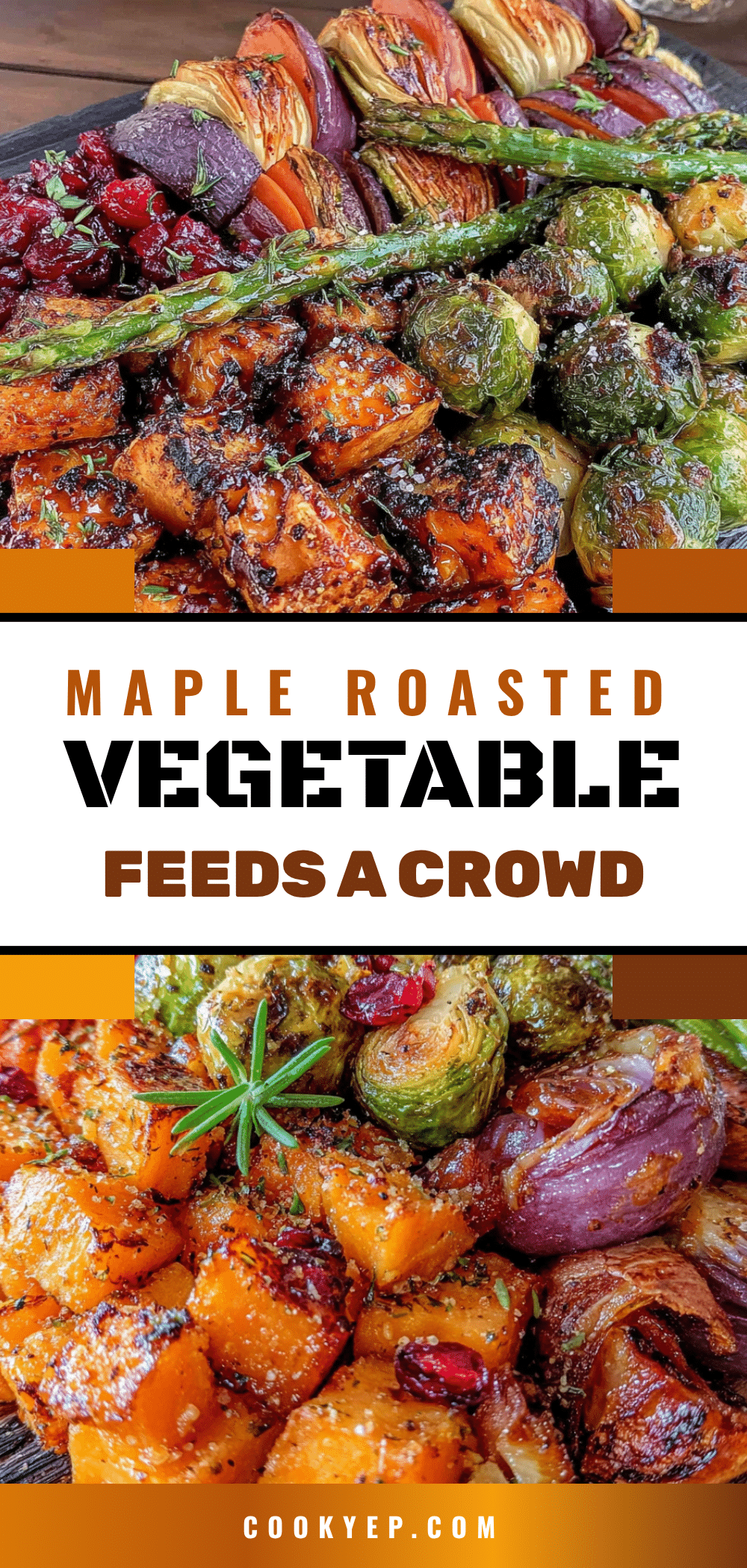
Easy Maple Roasted Thanksgiving Vegetable Medley for a Crowd
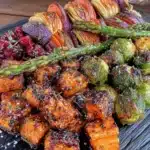
A simple yet stunning side dish featuring a medley of seasonal vegetables coated in a sweet maple glaze and roasted until caramelized. Perfect for feeding a crowd at Thanksgiving or any holiday gathering.
- Prep Time: 15 minutes
- Cook Time: 35-40 minutes
- Total Time: 50-55 minutes
- Yield: 10-12 servings 1x
- Category: Side Dish
- Cuisine: American
Ingredients
- 1 pound Brussels sprouts, trimmed and halved
- 1 pound carrots, peeled and cut into 2-inch chunks
- 1 pound sweet potatoes, peeled and cut into 1-inch cubes
- 1 large red onion, cut into 1-inch wedges
- 2 cups butternut squash, peeled and cut into 1-inch cubes
- 3 tablespoons olive oil
- 1 teaspoon salt
- ½ teaspoon black pepper, freshly ground
- ⅓ cup pure maple syrup
- 2 tablespoons unsalted butter, melted
- 1 tablespoon apple cider vinegar
- 1 teaspoon dried thyme
- ½ teaspoon garlic powder
- ¼ teaspoon cinnamon (optional)
- ¼ cup dried cranberries (optional)
- ¼ cup pecans, roughly chopped (optional)
- Fresh parsley or rosemary, chopped (optional)
Instructions
- Preheat your oven to 425°F (220°C). Line two large rimmed baking sheets with parchment paper.
- Prepare all your vegetables: trim and halve Brussels sprouts, peel and cut carrots into 2-inch chunks, peel and cut sweet potatoes and butternut squash into 1-inch cubes, cut red onion into 1-inch wedges.
- Make the maple glaze: In a small saucepan over low heat, combine maple syrup, melted butter, apple cider vinegar, dried thyme, garlic powder, and cinnamon (if using). Whisk until well combined and warmed through, about 1-2 minutes. Alternatively, microwave in 30-second bursts, whisking between each.
- Place all prepared vegetables in a large mixing bowl. Drizzle with olive oil, sprinkle with salt and pepper, and toss until evenly coated.
- Divide the vegetables between the two prepared baking sheets in a single, even layer, ensuring they are not crowded.
- Roast for 20 minutes. Remove pans from the oven, stir vegetables, and rotate pans from top to bottom and front to back.
- Drizzle half the maple glaze over the vegetables and toss gently to coat.
- Return to the oven and roast for another 15-20 minutes, until vegetables are tender and deeply caramelized.
- Transfer to a serving platter, drizzle with remaining glaze, and garnish with dried cranberries, toasted pecans, and fresh herbs if using. Serve immediately.
Notes
For best results, don’t overcrowd the pans—use two sheets to ensure proper caramelization. Add the glaze in stages to prevent burning. Toast pecans separately for crunch. Vegetables can be prepped up to 24 hours in advance.
Nutrition
- Serving Size: 1 serving (based on
- Calories: 185
- Sugar: 14
- Sodium: 240
- Fat: 8
- Saturated Fat: 2.5
- Carbohydrates: 28
- Fiber: 5
- Protein: 3
Keywords: maple roasted vegetables, Thanksgiving side dish, roasted vegetable medley, holiday vegetables, maple glaze, Brussels sprouts, sweet potatoes, butternut squash, crowd-pleaser, easy side dish