That sharp, nutty smell of butter browning on the stove — the kind that fills your whole kitchen before you even realize you’re hungry — still takes me straight to my first Thanksgiving hosting disaster. I was twenty-three, my apartment was the size of a shoebox, and I had somehow convinced myself I could pull off a full turkey dinner for twelve people. The turkey came out fine. The mashed potatoes were lumpy but edible. The stuffing? It was a dry, sad box mix that I’d added too much celery to in a panic. Everyone was polite, but I knew. I sat there thinking, there has to be a stuffing that actually tastes like something. That’s when I started messing around with brown butter. And sage. And the idea that you could make it ahead, so you’re not losing your mind on the actual holiday. This Best Brown Butter Sage Thanksgiving Stuffing became my thing — the dish people ask for by name. It’s not fancy. It just tastes like someone actually cared.
Why You’ll Love This Recipe
Let me tell you why this stuffing is different. I’ve tested it more times than I care to admit — dry versions, soggy versions, versions that tasted like nothing but bread. This one is the winner. It’s the one I bring to Friendsgiving, the one my mom requests for our family dinner, and the one that actually gets finished (which, if you’ve ever made stuffing, you know is rare).
- Make-Ahead Friendly: You can assemble this stuffing up to two days in advance. On Thanksgiving morning, you just pop it in the oven. That’s it. No last-minute chopping, no frantic measuring.
- Deep, Nutty Flavor: Brown butter is the secret weapon here. It adds a toasty, almost caramelized richness that regular melted butter just can’t touch. Paired with fresh sage, it’s a flavor combo that feels both cozy and sophisticated.
- Perfect Texture: The outside gets golden and slightly crisp, while the inside stays soft and custard-like. It’s the best of both worlds — no sad, dry crumbs.
- Simple Ingredients: You probably already have most of these in your pantry. No weird specialty items, no hunting down obscure spices. Just good, honest food.
- Guaranteed Crowd-Pleaser: I’ve served this to picky eaters, health-conscious friends, and traditionalists who swear by box stuffing. Every single person has asked for the recipe. It’s that good.
Honestly, this stuffing is the kind of dish that makes you close your eyes after the first bite. It’s comfort food reimagined — richer, more flavorful, but with the same soul-soothing satisfaction. And because you can make it ahead, you get to actually enjoy the holiday instead of stressing in the kitchen.
What Ingredients You Will Need
This recipe uses simple, wholesome ingredients to deliver bold flavor and satisfying texture without the fuss. Most of these are pantry staples, but a few key players make all the difference.
- 1 large loaf (about 1 lb) crusty sourdough bread (stale or day-old is ideal; it soaks up the custard without turning to mush)
- 1 cup unsalted butter (for browning — this is where the magic happens)
- 1/4 cup fresh sage leaves (roughly chopped; don’t use dried here, it’s just not the same)
- 2 cups yellow onion (finely diced; about 1 large onion)
- 1 1/2 cups celery (finely diced; about 3 ribs)
- 3 cloves garlic (minced)
- 2 cups low-sodium chicken or vegetable broth (I prefer Swanson or Kitchen Basics for consistent flavor)
- 2 large eggs (room temperature; they help bind the stuffing)
- 1/2 cup fresh parsley (chopped; adds freshness)
- 1 teaspoon kosher salt (plus more to taste)
- 1/2 teaspoon black pepper (freshly ground)
- 1/2 teaspoon dried thyme (or 1 teaspoon fresh)
- 1/4 teaspoon nutmeg (freshly grated if you have it; it’s subtle but important)
Substitution Notes: If you need a gluten-free version, use a good quality gluten-free sourdough or rustic bread. For a dairy-free option, swap the butter with a high-quality vegan butter (I like Miyoko’s for browning). You can also add cooked Italian sausage or crumbled bacon for a heartier version — just reduce the salt slightly.
Equipment Needed
You don’t need a fancy kitchen to make this stuffing. Here’s what you’ll need:
- Large skillet or sauté pan (for browning the butter and cooking the vegetables)
- 9×13-inch baking dish (glass or ceramic works best for even heat distribution)
- Large mixing bowl (for combining everything)
- Whisk (for the egg and broth mixture)
- Chef’s knife and cutting board
- Wooden spoon or spatula
- Aluminum foil (for covering during baking)
If you don’t have a 9×13 dish, you can use a similar-sized casserole dish or even a cast-iron skillet. Just adjust the baking time slightly — cast iron tends to cook faster on the bottom.
Preparation Method
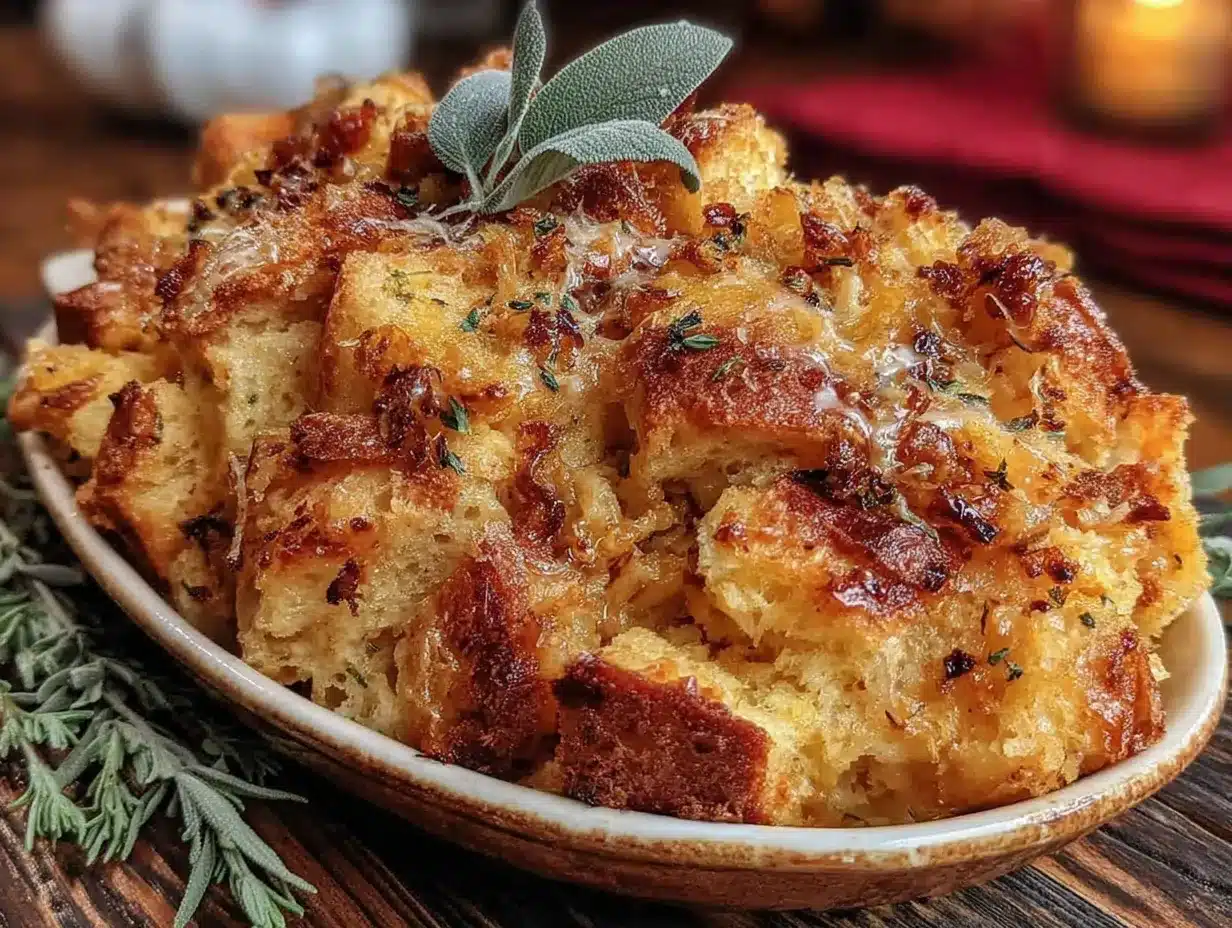
This stuffing comes together in stages, but it’s all very doable, even for a beginner. Here’s how to do it:
- Prep the bread: Cut your sourdough into 1-inch cubes (about 8 cups). Spread them on a baking sheet and let them sit out overnight to stale. If you’re short on time, toast them in a 300°F oven for 10-15 minutes until dry but not browned. Set aside.
- Brown the butter: In a large skillet over medium heat, melt the butter. Swirl the pan occasionally. After about 5-7 minutes, you’ll see golden brown specks forming at the bottom and the butter will smell nutty and amazing. Immediately add the fresh sage leaves — they’ll sizzle and crisp up in about 30 seconds. Remove from heat and set aside. Don’t walk away during this step; brown butter can go from perfect to burnt in seconds.
- Cook the vegetables: In the same skillet (no need to wipe it out), add the diced onion and celery. Cook over medium heat for 6-8 minutes, until softened and translucent. Add the minced garlic and cook for one more minute until fragrant. Season with a pinch of salt and pepper.
- Make the custard: In a large measuring cup or bowl, whisk together the chicken broth, eggs, remaining salt, pepper, thyme, and nutmeg. Whisk until the eggs are fully incorporated — you don’t want any streaks of egg white.
- Combine everything: In your large mixing bowl, add the dried bread cubes, cooked vegetables, the brown butter with sage (reserve about 2 tablespoons for the top), and the chopped parsley. Pour the custard over the top and gently fold everything together with a spatula. The bread should be evenly coated but not swimming in liquid. Let it sit for 10 minutes so the bread can absorb the custard.
- Assemble and bake: Preheat your oven to 375°F. Transfer the stuffing mixture to your greased 9×13 baking dish and spread it into an even layer. Drizzle the reserved brown butter over the top. Cover with foil and bake for 30 minutes. Then remove the foil and bake for another 20-25 minutes, until the top is golden brown and crispy.
- Rest before serving: Let the stuffing sit for 5-10 minutes after it comes out of the oven. This helps it set and makes serving easier.
Cooking Tips & Techniques
I’ve made this stuffing so many times that I’ve learned a few things the hard way. Here’s what I wish someone had told me:
- Don’t skip the stale bread step: Fresh bread turns to mush. Stale or dried bread has structure that holds up to the custard. It’s non-negotiable if you want that perfect texture.
- Watch the brown butter like a hawk: It goes from perfect to burnt in about 20 seconds. When you see golden specks and smell that nutty aroma, pull it off the heat immediately. I once got distracted by my phone and had to start over — don’t be me.
- Taste the custard before adding it: Seriously. Dip a clean spoon in and taste it. The seasoning should be slightly stronger than you think, because the bread will absorb it. Under-seasoned stuffing is the saddest thing.
- Let it rest after baking: I know it’s tempting to dig in right away, but letting it sit for 5-10 minutes makes a huge difference. It firms up, the flavors meld, and you get cleaner slices.
- Make it ahead: Assemble the stuffing completely (minus the final drizzle of brown butter), cover, and refrigerate for up to 2 days. When you’re ready to bake, let it sit on the counter for 30 minutes to take the chill off, then add the reserved butter and bake as directed. You might need to add 5-10 extra minutes since it’s starting cold.
Variations & Adaptations
This stuffing is incredibly versatile. Here are a few ways to make it your own:
- Add Sausage: Brown 1/2 pound of Italian sausage (casings removed) in the skillet before cooking the vegetables. Crumble it up and add it to the bread mixture. It makes the stuffing heartier and adds a lovely fennel note.
- Go Vegetarian: Use vegetable broth instead of chicken broth, and add 8 ounces of sautéed mushrooms (cremini or shiitake) along with the onions. The mushrooms add that savory umami depth you might miss from meat.
- Add Dried Fruit: Toss in 1/2 cup of dried cranberries or chopped dried apricots with the bread. They add little bursts of sweetness that play beautifully with the brown butter and sage.
- Make it Gluten-Free: Use a good quality gluten-free sourdough or rustic bread. The texture will be slightly different, but it still works wonderfully. Just make sure the bread is well-toasted so it holds up.
- Add Nuts: Toasted pecans or walnuts add crunch and a warm, buttery flavor. Add 1/2 cup of chopped nuts when you combine everything.
I once made a version with crumbled bacon and dried cherries for a Friendsgiving, and it disappeared in ten minutes. Honestly, you can’t go wrong.
Serving & Storage Suggestions
This stuffing is best served warm, straight from the oven. The top should be golden and slightly crispy, while the inside is soft and tender. I like to garnish it with a few extra fresh sage leaves and a sprinkle of flaky sea salt right before serving — it looks beautiful and adds a little pop of flavor.
It pairs beautifully with roasted turkey (obviously), but it’s also amazing alongside brown sugar bourbon sweet potato casserole or slow cooker cranberry orange sauce. For a complete Thanksgiving spread, I love serving it with garlic herb butter roasted turkey — the flavors just sing together.
Storage: Leftover stuffing keeps well in an airtight container in the refrigerator for up to 4 days. To reheat, place it in a 350°F oven for 10-15 minutes, covered with foil to prevent drying out. You can also microwave individual portions, but the top won’t stay crispy.
Freezing: This stuffing freezes beautifully. Assemble it completely (without baking), wrap tightly in plastic wrap and then foil, and freeze for up to 3 months. To bake from frozen, thaw overnight in the refrigerator, then bake as directed, adding 10-15 minutes to the covered baking time.
Nutritional Information & Benefits
While stuffing isn’t exactly health food, it does have some redeeming qualities. Here’s an approximate breakdown per serving (based on 10 servings):
- Calories: 320
- Fat: 18g
- Carbohydrates: 34g
- Protein: 7g
- Fiber: 2g
- Sodium: 480mg
The brown butter adds healthy fats (in moderation), and the sage is packed with antioxidants and anti-inflammatory properties. Onions and garlic are great for immune support, which is always welcome during cold and flu season. If you use whole grain or sourdough bread, you’ll also get some beneficial probiotics and more fiber.
This recipe contains gluten and dairy. For a lower-sodium version, use low-sodium broth and reduce the added salt. It’s not exactly a light dish, but it’s a holiday classic for a reason — and honestly, one serving of homemade stuffing is way better for you than the processed boxed stuff.
Conclusion
This Best Brown Butter Sage Thanksgiving Stuffing has become my signature holiday dish, and I think it’s about to become yours too. It’s the kind of recipe that feels special without being complicated — the kind you can make ahead, so you actually get to enjoy the day. The brown butter and sage combo is just magic, and once you taste it, you’ll never go back to plain old stuffing.
I’d love to hear how yours turns out. Did you add sausage? Throw in some dried cranberries? Forget the nutmeg and improvise? Drop a comment below and let me know — I read every single one, and I love hearing about your kitchen victories (and happy accidents). If you loved this recipe, share it with a friend who needs a show-stopping side dish this year. Happy Thanksgiving, friend — you’ve got this.
Frequently Asked Questions
Can I use dried sage instead of fresh?
You can, but I really recommend fresh sage for this recipe. Dried sage has a more muted, slightly musty flavor, while fresh sage brings a bright, peppery note that pairs perfectly with the brown butter. If you’re in a pinch, use 1 tablespoon of dried sage, but add it with the vegetables so it can rehydrate a bit.
Do I have to use sourdough bread?
Not at all! Sourdough is my favorite because it has a nice tang that balances the richness of the butter, but any sturdy bread works. Try a French boule, ciabatta, or even a good quality white bread. Just avoid anything too soft or sweet, like brioche — it won’t hold up as well.
Can I make this stuffing vegan?
Yes, with a few swaps. Use a high-quality vegan butter (like Miyoko’s) for browning, vegetable broth instead of chicken broth, and a flax egg (1 tablespoon ground flaxseed mixed with 3 tablespoons water) instead of a regular egg. The texture will be slightly less custard-like, but it’s still delicious.
How do I know when the stuffing is done?
The top should be golden brown and crispy, and the center should be hot and set — not jiggly. If you insert a knife into the center, it should come out clean. If the top is browning too quickly but the center isn’t done yet, cover it with foil and continue baking.
Can I double this recipe?
Absolutely! Double all the ingredients and bake in two 9×13 dishes, or one large roasting pan. Just make sure you have enough room in your oven. The baking time might increase by 5-10 minutes, so keep an eye on it. This is perfect for large gatherings or if you want leftovers (trust me, you want leftovers).
Pin This Recipe!
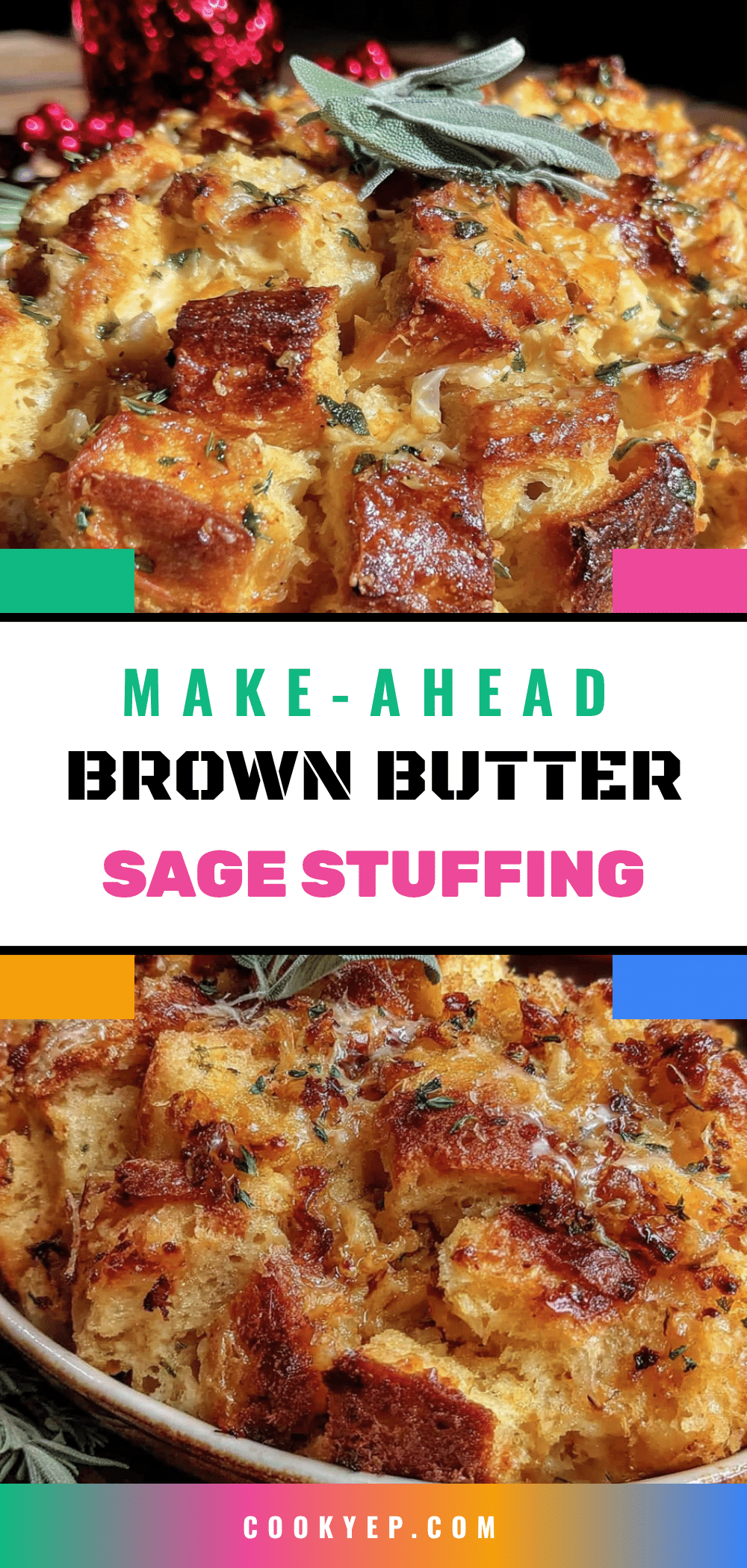
Best Brown Butter Sage Thanksgiving Stuffing (Make-Ahead)

This make-ahead stuffing features nutty brown butter and fresh sage for deep, comforting flavor. It’s a crowd-pleasing side dish that can be assembled up to two days in advance, ensuring a stress-free Thanksgiving.
- Prep Time: 20 minutes
- Cook Time: 55 minutes
- Total Time: 1 hour 15 minutes
- Yield: 10 servings 1x
- Category: Side Dish
- Cuisine: American
Ingredients
- 1 large loaf (about 1 lb) crusty sourdough bread, cut into 1-inch cubes (about 8 cups)
- 1 cup unsalted butter
- 1/4 cup fresh sage leaves, roughly chopped
- 2 cups yellow onion, finely diced (about 1 large onion)
- 1 1/2 cups celery, finely diced (about 3 ribs)
- 3 cloves garlic, minced
- 2 cups low-sodium chicken or vegetable broth
- 2 large eggs, room temperature
- 1/2 cup fresh parsley, chopped
- 1 teaspoon kosher salt
- 1/2 teaspoon black pepper, freshly ground
- 1/2 teaspoon dried thyme (or 1 teaspoon fresh)
- 1/4 teaspoon nutmeg, freshly grated
Instructions
- Prep the bread: Cut sourdough into 1-inch cubes (about 8 cups). Spread on a baking sheet and let sit out overnight to stale. If short on time, toast in a 300°F oven for 10-15 minutes until dry but not browned. Set aside.
- Brown the butter: In a large skillet over medium heat, melt the butter. Swirl occasionally. After about 5-7 minutes, when golden brown specks form and the butter smells nutty, immediately add the fresh sage leaves. They will sizzle and crisp in about 30 seconds. Remove from heat and set aside. Reserve about 2 tablespoons for the top.
- Cook the vegetables: In the same skillet, add diced onion and celery. Cook over medium heat for 6-8 minutes until softened and translucent. Add minced garlic and cook for one more minute until fragrant. Season with a pinch of salt and pepper.
- Make the custard: In a large measuring cup or bowl, whisk together chicken broth, eggs, remaining salt, pepper, thyme, and nutmeg until fully incorporated.
- Combine everything: In a large mixing bowl, add dried bread cubes, cooked vegetables, the brown butter with sage (reserving 2 tablespoons), and chopped parsley. Pour custard over the top and gently fold together. Let sit for 10 minutes so the bread absorbs the custard.
- Assemble and bake: Preheat oven to 375°F. Transfer stuffing mixture to a greased 9×13-inch baking dish and spread evenly. Drizzle reserved brown butter over the top. Cover with foil and bake for 30 minutes. Remove foil and bake for another 20-25 minutes until top is golden brown and crispy.
- Rest before serving: Let stuffing sit for 5-10 minutes after baking to set and make serving easier.
Notes
For make-ahead: Assemble completely (minus final drizzle of brown butter), cover, and refrigerate up to 2 days. Before baking, let sit on counter for 30 minutes, add reserved butter, and bake as directed, adding 5-10 extra minutes if needed. For gluten-free, use gluten-free sourdough. For dairy-free, use high-quality vegan butter like Miyoko’s.
Nutrition
- Serving Size: 1 serving (about 1 c
- Calories: 320
- Sugar: 4
- Sodium: 480
- Fat: 18
- Saturated Fat: 11
- Carbohydrates: 34
- Fiber: 2
- Protein: 7
Keywords: stuffing, Thanksgiving, brown butter, sage, make-ahead, sourdough, holiday side dish