Three days before my niece’s sixth birthday party, I stood in my kitchen at 11:17 PM, staring at a bowl of butter that was supposed to be room temperature but was definitely not. The sprinkles were in the pantry. The cake pans were greased. The whole house smelled like vanilla and something close to hope. And I realized—I had never actually made a birthday cake from scratch before. Not a real one. Not one that mattered.
That night, I learned something important about confetti cake. It’s not about the sprinkles, though they help. It’s not about the frosting, though that’s non-negotiable. It’s about the moment when you hand someone a slice of something you made with your own hands, and they take a bite, and their face does that thing—the little pause, the quick look up, the smile they can’t help. That’s the whole point.
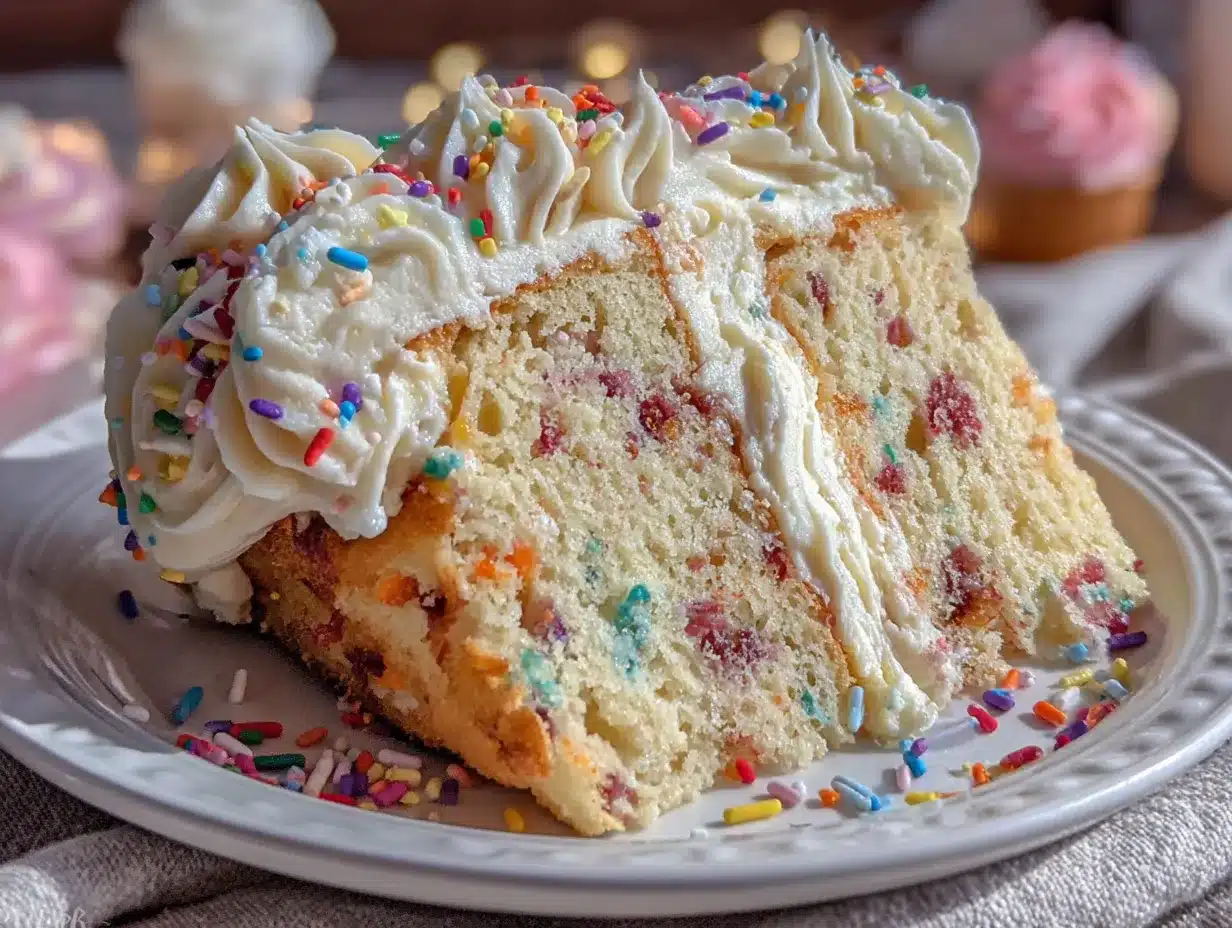
This perfect birthday confetti sheet cake with buttercream is the cake I wish I’d had that night. It’s soft, tender, and studded with tiny rainbow sprinkles that don’t bleed into the batter. The buttercream is silky but sturdy enough to pipe or spread. And honestly? It’s the kind of cake that makes you feel like you actually know what you’re doing in the kitchen, even if you’re just winging it like the rest of us.
What I love most about this recipe is how forgiving it is. Sheet cakes don’t demand perfection. They don’t care if your layers are lopsided or if your frosting has a few air bubbles. They just need to taste like celebration. And this one delivers. Every single time.
Why You’ll Love This Recipe
I’ve tested this cake more times than I care to admit. Seven batches in one week, to be exact. My neighbors started hiding when they saw me coming with another foil-covered pan. But every tweak taught me something, and this version is the one I keep coming back to.
- Quick & Easy: From start to finish, you’re looking at about an hour. That includes cooling time. For a birthday cake, that’s basically magic.
- Simple Ingredients: Nothing fancy here. No buttermilk, no cake flour, no obscure extracts. Just pantry staples you probably already have.
- Perfect for Celebrations: Birthdays, graduations, baby showers, retirement parties—this cake fits every occasion. It even works for a random Tuesday when you just need some sprinkles in your life.
- Crowd-Pleaser: Kids love the rainbow flecks. Adults love the buttery vanilla flavor. Everyone loves that it’s not too sweet.
- Unbelievably Delicious: The texture is what gets me. It’s soft but not crumbly, moist but not dense. The buttercream melts on your tongue like a cloud with a sugar edge.
What makes this recipe different from all the others? Two things. First, I use a reverse-creaming method that gives the cake a finer, more tender crumb. Second, I fold the sprinkles in by hand at the very end so they stay intact and colorful instead of turning the whole batter gray. Little details, big difference.
This is the kind of cake that makes people close their eyes after the first bite. I’ve seen it happen. It’s comfort food dressed up in party clothes—familiar enough to feel like home, special enough to feel like a celebration.
What Ingredients You Will Need
This recipe uses simple, wholesome ingredients that come together to create something greater than the sum of their parts. No specialty baking mixes, no hard-to-find items. Just real food doing what it does best.
For the Cake
- 2 ½ cups (312g) all-purpose flour – Spoon and level your flour for the most accurate measurement. Scooping directly from the bag packs in too much flour and makes the cake dry.
- 2 cups (400g) granulated sugar – White sugar keeps the crumb light and tender. Don’t substitute brown sugar here—it changes the texture and color.
- 1 cup (226g) unsalted butter, softened – I prefer Land O’Lakes for consistent results. Let it sit on the counter for at least an hour before you start. Cold butter won’t cream properly.
- 4 large eggs, room temperature – Cold eggs seize up the batter. Place them in a bowl of warm water for five minutes if you forgot to take them out ahead of time.
- 1 cup (240ml) whole milk, room temperature – Whole milk adds richness. You can use 2% in a pinch, but don’t go lower than that.
- 2 teaspoons vanilla extract – Pure vanilla extract makes a real difference here. Imitation works, but the flavor is noticeably flat.
- 2 teaspoons baking powder – Make sure it’s fresh. Test it by dropping a bit into hot water—if it fizzes, it’s good.
- ½ teaspoon salt – Fine sea salt or table salt. Kosher salt requires a bit more volume if you’re substituting.
- ½ cup (80g) rainbow jimmies sprinkles – Not the tiny round ones (nonpareils). Jimmies hold their color and shape best. I use Betty Crocker brand because they don’t bleed.
For the Buttercream
- 1 ½ cups (339g) unsalted butter, softened – Yes, a lot of butter. This is a celebration cake. Live a little.
- 4 cups (480g) powdered sugar – Sift it if it’s clumpy. Nobody wants lumpy frosting.
- 2 teaspoons vanilla extract – Again, pure vanilla. It’s the backbone of the flavor.
- 3-4 tablespoons heavy cream – Heavy cream makes the frosting silky. Milk works but won’t be as luxurious.
- ¼ teaspoon salt – Balances the sweetness and brings out the vanilla.
- Additional sprinkles for decorating – A handful on top makes everything better.
One thing I learned the hard way: sprinkles are not all created equal. The little round ones called nonpareils bleed like crazy. They turn your batter pinkish-gray and look sad. Stick with the long, skinny jimmies. Your cake will thank you.
Equipment Needed
You don’t need a professional bakery setup for this cake. Most of these tools are probably already in your kitchen.
- 13×9-inch metal baking pan – Metal conducts heat better than glass, giving you a more even bake. Glass pans often make the edges overbrown before the center is done.
- Stand mixer or hand mixer – A stand mixer makes the reverse-creaming method easier, but a hand mixer works fine. You just need to beat the butter and sugar until fluffy.
- Mixing bowls – At least two medium bowls and one large one.
- Whisk and spatula – A silicone spatula is best for folding in sprinkles and scraping down the bowl.
- Parchment paper – Line your pan with parchment, leaving a little overhang on the long sides. This makes lifting the cake out a breeze.
- Cooling rack – Wire racks let air circulate so the cake cools evenly. No soggy bottoms here.
- Offset spatula – Not required, but it makes spreading buttercream much easier. A butter knife works in a pinch.
- Piping bag and star tip – Optional but fun. I use a Wilton 1M tip for the classic rosette look.
If you don’t have a stand mixer, don’t panic. I made my first three test batches with a hand mixer and they turned out great. Just be prepared to hold the mixer for a few extra minutes while the butter and sugar get properly fluffy.
Preparation Method
Let’s walk through this step by step. I’ve added time estimates and sensory cues so you know exactly what to look for at each stage.
Step 1: Prep Your Pan and Oven
Preheat your oven to 350°F (175°C). Grease your 13×9-inch pan with butter or nonstick spray, then line it with parchment paper. Leave about two inches of overhang on the long sides so you can lift the cake out later. Set the pan aside.
Step 2: Mix the Dry Ingredients
In a medium bowl, whisk together the flour, baking powder, and salt. Make sure everything is evenly distributed. This takes about 30 seconds. Set this bowl aside.
Step 3: Start the Reverse-Creaming Method
In the bowl of your stand mixer (or a large bowl if using a hand mixer), combine the softened butter and sugar. Beat on medium speed for 3-4 minutes until the mixture looks light, fluffy, and pale yellow. Scrape down the sides of the bowl halfway through. This step is crucial—don’t rush it. You want the butter and sugar to really emulsify.
Step 4: Add the Eggs and Vanilla
With the mixer running on low, add the eggs one at a time. Let each egg fully incorporate before adding the next. Then add the vanilla extract and mix until combined. The batter might look slightly curdled at this point. That’s normal. Don’t worry.
Step 5: Alternate the Flour and Milk
With the mixer on low speed, add about one-third of the flour mixture. Mix until just combined. Then add half of the milk. Mix again. Repeat with another third of the flour, the remaining milk, and the final third of the flour. Stop mixing as soon as the flour disappears. Overmixing at this stage develops gluten and makes the cake tough. You want a smooth, thick batter that looks almost like a thick pancake batter.
Step 6: Fold in the Sprinkles
Remove the bowl from the mixer. Using a silicone spatula, gently fold the sprinkles into the batter. Use broad, slow strokes. Fold only until the sprinkles are evenly distributed—about 8-10 folds. If you overmix, the sprinkles will start to bleed and your cake will have gray streaks instead of rainbow confetti.
Step 7: Bake the Cake
Pour the batter into your prepared pan and spread it evenly with the spatula. Tap the pan gently on the counter two or three times to release any air bubbles. Bake for 28-32 minutes. The cake is done when the top is golden brown and a toothpick inserted into the center comes out clean or with a few moist crumbs. The edges will pull away slightly from the pan. Let the cake cool in the pan for 10 minutes, then lift it out using the parchment overhang and transfer it to a wire rack to cool completely. Do not frost a warm cake. The buttercream will melt into a greasy puddle. I learned this the hard way.
Step 8: Make the Buttercream
While the cake cools, make the frosting. In a stand mixer fitted with the paddle attachment, beat the softened butter on medium speed for 5-7 minutes until it’s pale, fluffy, and almost white. This is called the “whipping” stage and it’s what gives American buttercream its light texture. Scrape down the bowl. Add the powdered sugar one cup at a time, mixing on low speed after each addition. Add the vanilla and salt. Then add the heavy cream, one tablespoon at a time, until the frosting reaches your desired consistency. For spreading, you want it soft but not runny. For piping, you want it a bit stiffer. Beat on medium-high for one final minute to make it extra fluffy.
Step 9: Frost and Decorate
Once the cake is completely cool, place it on a serving platter or cutting board. Spread a generous layer of buttercream over the top using your offset spatula. If you’re piping, fill a piping bag fitted with a star tip and pipe rosettes or swirls across the surface. Top with additional sprinkles. Slice into squares and serve.
Cooking Tips & Techniques
I’ve made enough mistakes in this kitchen to fill a small cookbook. Here are the ones you don’t have to repeat.
Room temperature ingredients matter more than you think. I know it’s annoying to wait, but cold butter doesn’t cream properly and cold eggs can make your batter seize. Set everything out an hour before you start. If you forget, place eggs in warm water for five minutes and microwave your milk for 15 seconds.
Don’t open the oven door during the first 20 minutes of baking. The rush of cold air can cause the cake to sink in the middle. Trust the process. Peek through the oven window if you must.
Use a toothpick to check for doneness, not your finger. The top of a sheet cake can look fully set while the center is still raw. Insert a toothpick into the middle. If it comes out clean, you’re good. If it’s wet with batter, give it another three minutes and check again.
Let the cake cool completely before frosting. This is non-negotiable. A warm cake will melt your buttercream into a sad, greasy mess. I once frosted a slightly warm cake because I was in a hurry, and I ended up with buttercream soup. Learn from my impatience.
If your buttercream looks curdled or separated, don’t panic. This usually happens when the butter is too cold or too warm. Place the bowl in the refrigerator for 10 minutes, then beat it again on medium speed. It should come back together. If it’s too warm, add a tablespoon of powdered sugar to stabilize it.
Variations & Adaptations
This cake is incredibly adaptable. Here are a few ways to make it your own.
Chocolate Confetti Cake: Replace ⅓ cup of the flour with ⅓ cup of unsweetened cocoa powder. The chocolate flavor pairs beautifully with the vanilla buttercream and rainbow sprinkles. My nephew requests this version for every single birthday.
Lemon Confetti Cake: Add the zest of two lemons to the butter and sugar during the creaming stage. Replace 2 tablespoons of the milk with fresh lemon juice. The bright citrus cuts through the richness and makes the cake taste even more celebratory.
Gluten-Free Version: Substitute the all-purpose flour with a 1:1 gluten-free baking flour blend (I like King Arthur Measure for Measure). Add 1 teaspoon of xanthan gum if your blend doesn’t already include it. The texture will be slightly more tender, but the flavor is spot-on.
Dairy-Free Version: Use vegan butter sticks (not tub margarine) and unsweetened oat milk or almond milk. The buttercream will be a bit softer, so refrigerate the frosted cake for 20 minutes before serving to help it set.
Funfetti Cupcakes: This batter makes about 24 cupcakes. Bake at 350°F for 18-20 minutes. The reverse-creaming method gives cupcakes a perfectly domed top, which is ideal for piping swirls of buttercream.
I once made a batch with apple cinnamon overnight oats on the side for a brunch birthday party. The combination of sweet cake and cozy oatmeal was unexpectedly perfect.
Serving & Storage Suggestions
This cake tastes best at room temperature. If you’ve refrigerated it, let it sit on the counter for about 30 minutes before serving. The buttercream softens, the crumb relaxes, and the flavors become more pronounced.
For presentation, I like to cut the cake into neat squares and arrange them on a large wooden board or a white cake stand. A few extra sprinkles scattered around the plate adds a festive touch without looking fussy.
Storage: Cover the cake tightly with plastic wrap or aluminum foil and store it at room temperature for up to 3 days. If your kitchen runs warm (above 72°F), refrigerate it instead. The cake will stay moist and the buttercream will hold its shape.
Freezing: This cake freezes beautifully. Wrap the unfrosted cake tightly in plastic wrap, then in foil, and freeze for up to 3 months. Thaw overnight in the refrigerator, then bring to room temperature before frosting. You can also freeze the frosted cake—just place it in the freezer unwrapped for an hour until the buttercream hardens, then wrap it tightly. Thaw in the refrigerator overnight.
Reheating: If you want a warm slice, microwave it for 10-15 seconds. The buttercream will soften but won’t melt completely. It’s a different experience—almost like a warm vanilla pudding cake. My mom loves it this way.
The flavors actually develop overnight. Day-old cake tastes even better than fresh. The vanilla deepens, the crumb settles, and everything comes together in a way that feels intentional. If you can, make this cake the day before you plan to serve it. Your future self will thank you.
Nutritional Information & Benefits
Let’s be real—this is a celebration cake. It’s not health food. But knowing what’s in it helps you enjoy it without guilt.
Per serving (1 square, based on 12 servings):
- Calories: 520
- Fat: 28g
- Carbohydrates: 66g
- Protein: 5g
- Sugar: 48g
- Sodium: 220mg
The butter provides vitamin A and healthy saturated fats that support brain function. Eggs add high-quality protein and choline, which is important for memory and mood. The milk contributes calcium and vitamin D. And yes, the sprinkles add a touch of joy—which, honestly, has its own nutritional value.
If you’re watching your sugar intake, you can reduce the sugar in the cake to 1 ½ cups without affecting the texture too much. The buttercream is harder to adjust, but you can use a Swiss meringue buttercream instead if you want a less sweet option.
This recipe contains dairy, eggs, and gluten. It is not suitable for vegans or those with celiac disease without the substitutions mentioned above.
I believe in balance. Enjoy a slice of this cake on your birthday, then share the rest with friends. Food is meant to be celebrated, not feared. And this cake—well, it’s worth every single calorie.
Conclusion
This perfect birthday confetti sheet cake with buttercream is more than just a recipe. It’s a memory waiting to happen. It’s the cake you bring to the party, the one everyone asks for, the one that disappears before the candles are even blown out.
What I love most about this recipe is how it brings people together. There’s something about a homemade cake that says “I care” in a way that store-bought never can. And when you see someone’s face light up after that first bite—that’s the real magic.
Don’t be afraid to make this your own. Add extra sprinkles. Pipe the frosting in a pattern that makes you smile. Serve it with ice cream or fresh berries or just a tall glass of milk. However you serve it, this cake delivers.
If you make this recipe, I’d love to hear about it. Leave a comment below and tell me how it turned out. Did you add a twist? Did someone cry happy tears? Did you eat the entire pan by yourself? (No judgment here.) Share your photos, your stories, your sprinkles-covered triumphs. That’s what this is all about.
Now go bake something that matters. You’ve got this.
Frequently Asked Questions
Can I use a different pan size for this cake?
Yes, but you’ll need to adjust the baking time. For two 9-inch round pans, bake for 25-28 minutes. For a 9×13-inch pan, stick with the 28-32 minute range. For cupcakes, 18-20 minutes is perfect. Just keep an eye on the visual cues—golden edges, clean toothpick, slight pull from the pan sides.
Why did my cake sink in the middle?
This usually happens for one of three reasons: your oven temperature is too low (invest in an oven thermometer), you opened the oven door too early, or your baking powder is expired. Check your baking powder by adding a teaspoon to hot water—if it bubbles vigorously, it’s still active. If it barely fizzes, toss it and buy fresh.
Can I use margarine instead of butter?
I don’t recommend it. Margarine has a higher water content than butter, which can make the cake denser and the buttercream greasy. If you need a dairy-free option, use vegan butter sticks (like Earth Balance or Miyoko’s) instead of tub margarine. The texture will be slightly different, but the flavor will still be good.
How do I prevent my sprinkles from bleeding into the batter?
Use jimmies (the long, skinny sprinkles) instead of nonpareils (the tiny round ones). Fold them in gently at the very end, using as few strokes as possible. If you overmix, the color will start to leach. Also, avoid gel food coloring—it can react with the batter and cause streaking.
Can I make this cake ahead of time?
Absolutely. You can bake the cake up to two days in advance and store it tightly wrapped at room temperature. Frost it the day you plan to serve it for the best texture. Or freeze the unfrosted cake for up to three months. Just thaw it completely before frosting. The flavors actually improve after a day or two.
Pin This Recipe!
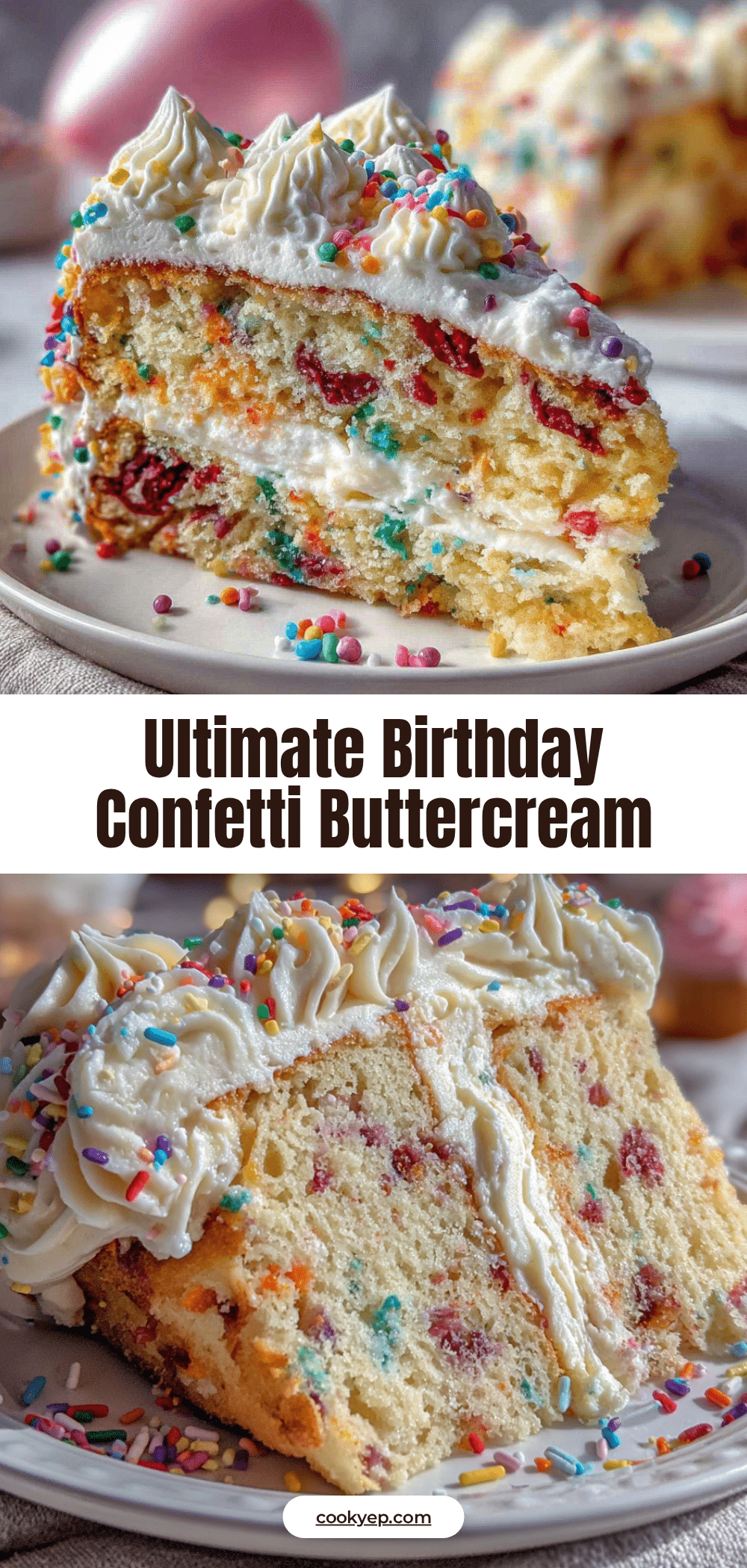
Best Birthday Confetti Sheet Cake Recipe: Easy Homemade Buttercream
A soft, tender confetti sheet cake with rainbow sprinkles and silky buttercream frosting. Perfect for birthdays and celebrations, this easy recipe uses simple ingredients and a reverse-creaming method for a fine crumb.
- Prep Time: 20 minutes
- Cook Time: 30 minutes
- Total Time: 1 hour
- Yield: 12 servings 1x
- Category: Dessert
- Cuisine: American
Ingredients
- 2 ½ cups (312g) all-purpose flour
- 2 cups (400g) granulated sugar
- 1 cup (226g) unsalted butter, softened
- 4 large eggs, room temperature
- 1 cup (240ml) whole milk, room temperature
- 2 teaspoons vanilla extract
- 2 teaspoons baking powder
- ½ teaspoon salt
- ½ cup (80g) rainbow jimmies sprinkles
- 1 ½ cups (339g) unsalted butter, softened (for buttercream)
- 4 cups (480g) powdered sugar
- 2 teaspoons vanilla extract (for buttercream)
- 3–4 tablespoons heavy cream
- ¼ teaspoon salt (for buttercream)
- Additional sprinkles for decorating
Instructions
- Preheat oven to 350°F (175°C). Grease a 13×9-inch metal baking pan and line with parchment paper, leaving overhang on long sides.
- In a medium bowl, whisk together flour, baking powder, and salt. Set aside.
- In a stand mixer or large bowl, beat softened butter and sugar on medium speed for 3-4 minutes until light, fluffy, and pale yellow. Scrape down sides.
- Add eggs one at a time, mixing on low after each addition. Add vanilla and mix until combined.
- With mixer on low, add one-third of flour mixture, mixing until just combined. Add half of milk, mix. Repeat with another third of flour, remaining milk, and final third of flour. Stop mixing when flour disappears.
- Remove bowl from mixer. Gently fold in sprinkles with a silicone spatula using 8-10 broad strokes until evenly distributed.
- Pour batter into prepared pan, spread evenly, and tap pan gently on counter to release air bubbles. Bake for 28-32 minutes until golden brown and a toothpick inserted in center comes out clean or with a few moist crumbs.
- Cool cake in pan for 10 minutes, then lift out using parchment overhang and transfer to a wire rack to cool completely.
- For buttercream: In a stand mixer with paddle attachment, beat softened butter on medium speed for 5-7 minutes until pale, fluffy, and almost white. Scrape down bowl.
- Add powdered sugar one cup at a time, mixing on low after each addition. Add vanilla and salt. Add heavy cream one tablespoon at a time until desired consistency. Beat on medium-high for 1 minute until fluffy.
- Once cake is completely cool, spread or pipe buttercream over top. Decorate with additional sprinkles. Slice into squares and serve.
Notes
Use jimmies sprinkles (not nonpareils) to prevent color bleeding. Room temperature ingredients are crucial for best texture. Do not open oven door during first 20 minutes of baking. Cool cake completely before frosting. Buttercream can be refrigerated if too soft; beat again to restore texture.
Nutrition
- Serving Size: 1 square
- Calories: 520
- Sugar: 48
- Sodium: 220
- Fat: 28
- Saturated Fat: 17
- Carbohydrates: 66
- Fiber: 1
- Protein: 5
Keywords: confetti cake, birthday cake, sheet cake, buttercream, funfetti, sprinkle cake, easy cake recipe