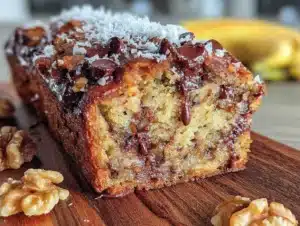
The fourth time I made this pumpkin sourdough discard bread in two weeks, I finally stopped taking notes and just let myself eat it. That’s when I knew the recipe was done — not when the crumb was perfect or the rise was textbook, but when I stopped fussing and started enjoying. There was something about the way the pumpkin puree bled into the starter, turning it a soft sunset orange, that kept pulling me back to the mixing bowl. I’d catch myself staring at the jar of discard in the fridge, thinking about that first bite of tender, faintly tangy bread with a cup of black coffee.
This isn’t a recipe I grew up with. Honestly, I stumbled into it out of pure necessity — a half-full jar of sourdough discard, a can of pumpkin that had been sitting in the pantry since October, and a craving for something that felt like fall but didn’t require a stand mixer or a complicated shaping process. The overnight method was accidental at first. I mixed everything together late one night, too tired to bake, and figured I’d deal with it in the morning. That accident turned into my favorite way to make bread.
The pumpkin keeps the crumb incredibly moist, the discard gives it that subtle sour tang that makes you take another bite just to figure out what’s different, and the overnight fermentation means you get deep flavor without babysitting a dough all day. It’s the kind of bread that makes you feel like you know what you’re doing in the kitchen, even when you’re just throwing things together and hoping for the best.
Why You’ll Love This Recipe
Let me be real with you — I’ve made a lot of quick breads in my time, and most of them fall into two categories: dry enough to need a gallon of butter, or so wet they never fully cook through. This one walks the line perfectly, and it’s all thanks to the sourdough discard doing the heavy lifting.
- Zero Waste, Maximum Flavor: That jar of discard sitting in your fridge finally has a purpose. Instead of tossing it down the drain, you’re turning it into something genuinely delicious. The tangy notes from the fermented starter play beautifully against the sweet, earthy pumpkin.
- Overnight Magic: Mix the batter in ten minutes before bed, let it do its thing on the counter overnight, and bake it fresh in the morning. Your kitchen will smell like a bakery by the time your coffee is ready. No early morning mixing required.
- Simple Pantry Ingredients: You probably already have everything you need. Pumpkin puree, flour, sugar, butter, eggs, and your sourdough discard. No weird specialty flours or expensive additives.
- Perfectly Moist Every Time: The pumpkin puree adds natural moisture and tenderness, while the sourdough discard creates a soft, tender crumb that stays fresh for days. This bread actually gets better on day two.
- Fall Vibes Without the Fuss: It’s got all the warm, cozy flavors of pumpkin season without requiring a complicated pie crust or a springform pan. Slice it, toast it, slather it with butter — it works for breakfast, snack, or dessert.
I’ve tested this recipe with active starter, discard straight from the fridge, and even discard that was a few days old. It works every single time. The key is the overnight rest, which gives the bacteria in the discard time to develop flavor and the flour time to fully hydrate. You’re essentially making a preferment without any extra effort.
What Ingredients You Will Need
This recipe uses simple, wholesome ingredients that work together to create a tender, flavorful loaf without any complicated techniques or hard-to-find items. Most of these are pantry staples, especially if you keep a sourdough starter at home.
- Pumpkin Puree (1 cup / 240g): Not pumpkin pie filling — make sure you grab 100% pure pumpkin puree. The canned stuff works perfectly here. If you’re feeling ambitious, roast your own sugar pumpkin and blend it smooth. I’ve done both, and honestly, canned is more consistent. Libby’s is my go-to.
- Sourdough Discard (1 cup / 240g): Straight from the fridge, unfed, whatever you have. The older the discard, the more pronounced the tangy flavor will be. If your discard has been sitting for a week, it’ll add a lovely complexity. Fresh discard works too, just expect a milder sourness.
- All-Purpose Flour (2 cups / 250g): Standard all-purpose flour gives this bread the perfect structure. You can substitute up to half with whole wheat pastry flour for a nuttier flavor, but I wouldn’t go full whole wheat — the bread gets a bit dense.
- Granulated Sugar (¾ cup / 150g): Just enough sweetness to complement the pumpkin without making it taste like cake. You can reduce it to ½ cup if you prefer a less sweet bread, or swap in coconut sugar for a deeper flavor.
- Light Brown Sugar (¼ cup / 50g): Packed. This adds moisture and a subtle molasses note that pairs beautifully with the pumpkin and the tangy sourdough. Don’t skip it if you can help it.
- Unsalted Butter (½ cup / 113g, melted): Melted and slightly cooled. Butter gives this bread richness and a tender crumb. You can substitute coconut oil for a dairy-free version, but the flavor will be slightly different.
- Large Eggs (2, room temperature): Room temperature eggs incorporate more evenly into the batter, creating a smoother texture. If you forgot to take them out of the fridge, place them in a bowl of warm water for 5 minutes.
- Pumpkin Pie Spice (2 teaspoons): You can use store-bought or make your own — I mix cinnamon, nutmeg, ginger, and a pinch of cloves. The warmth of the spices is what makes this taste like fall in a slice.
- Ground Cinnamon (1 teaspoon): Extra cinnamon because, let’s face it, you can never have too much. It deepens the spice profile and makes the kitchen smell incredible.
- Baking Soda (1 teaspoon): This is the primary leavening agent. The acidity in the sourdough discard activates the baking soda, helping the bread rise without needing yeast or a long proof.
- Baking Powder (½ teaspoon): A little extra lift to ensure the bread bakes up light and fluffy, even with all that moisture from the pumpkin.
- Salt (½ teaspoon): Don’t skip this. Salt balances the sweetness and enhances all the warm spices. I use fine sea salt.
- Vanilla Extract (1 teaspoon): Pure vanilla extract adds depth and rounds out the flavors. Imitation vanilla works in a pinch, but the real stuff makes a noticeable difference.
Optional Add-Ins: A handful of toasted pecans or walnuts adds wonderful crunch. Chocolate chips are never a bad idea either — dark chocolate pairs especially well with the pumpkin and spice. I’ve also stirred in dried cranberries for a tart pop of flavor.
Equipment Needed
You don’t need a fancy bakery setup for this bread. Here’s what you’ll actually use:
- 9×5-inch Loaf Pan: Standard size works perfectly. If you’re using a glass or ceramic dish, expect the baking time to be slightly longer. Metal pans conduct heat better and give you a nicer crust.
- Parchment Paper: Line your loaf pan with a sling of parchment paper. It makes lifting the bread out effortless and saves you from scrubbing stuck-on batter later.
- Large Mixing Bowl: Any large bowl will do. I use a ceramic one because it feels right for fall baking.
- Whisk and Rubber Spatula: A whisk for the wet ingredients and a spatula for folding everything together. Don’t overmix — that’s where dense bread comes from.
- Cooling Rack: Essential for letting the bread cool evenly. If you leave it in the pan, the bottom gets soggy. Trust me on this one.
- Measuring Cups and Spoons: For accuracy. Baking is a science, and pumpkin bread is forgiving, but consistent measurements give consistent results.
If you don’t have a cooling rack, you can use the inverted loaf pan or even the grates of your oven (turned off, obviously). I’ve done it in a pinch and it works fine.
Preparation Method
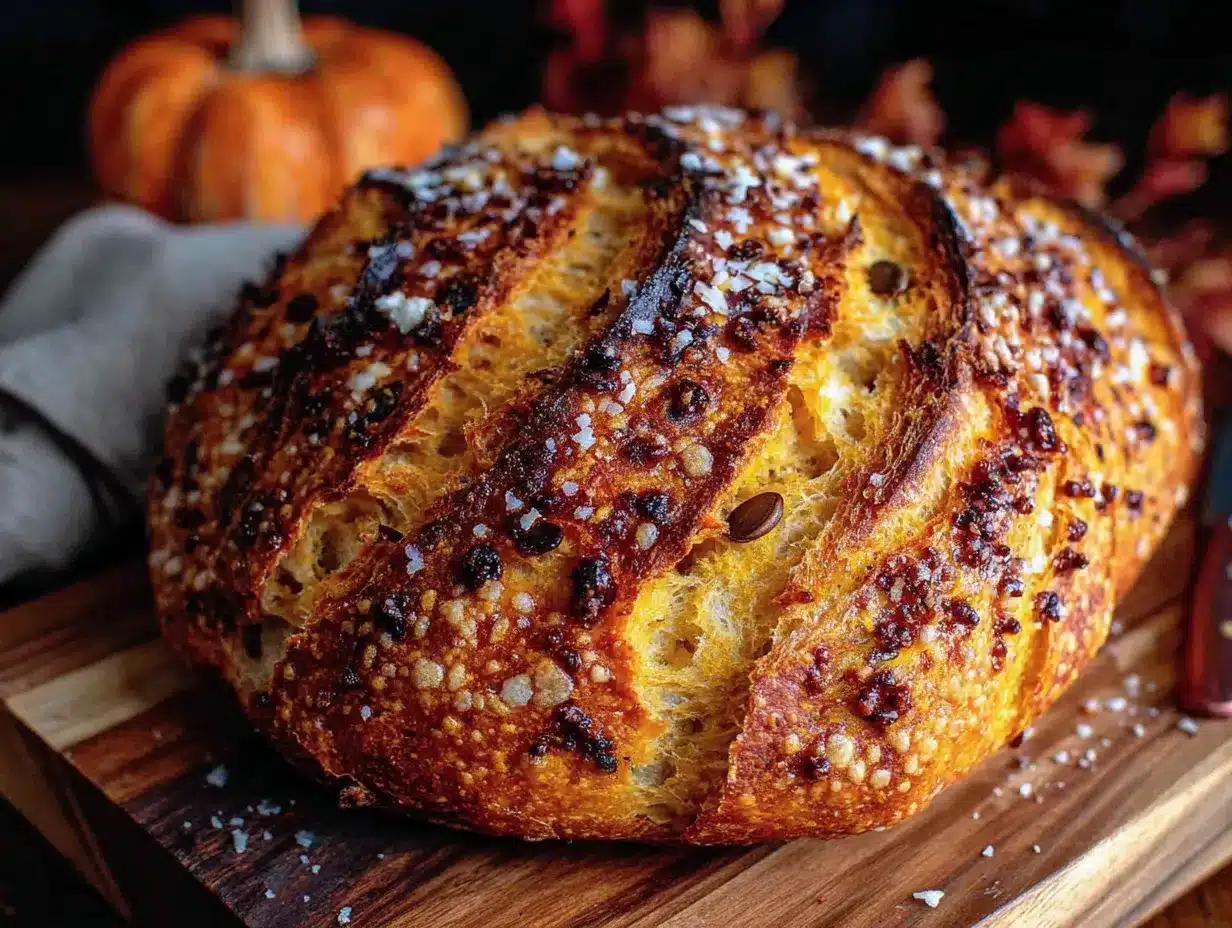
This is the part where everything comes together. The method is straightforward, but I’ve included all the little details that make the difference between good bread and great bread.
- Mix the Wet Ingredients: In a large bowl, whisk together the melted butter, granulated sugar, and brown sugar until smooth and slightly thickened. Add the eggs one at a time, whisking well after each addition. Stir in the pumpkin puree, vanilla extract, and sourdough discard. The mixture should be smooth and a gorgeous shade of orange. Don’t worry if it looks a little loose — that’s normal.
- Combine the Dry Ingredients: In a separate bowl, whisk together the all-purpose flour, pumpkin pie spice, cinnamon, baking soda, baking powder, and salt. Make sure the baking soda and powder are evenly distributed — nobody wants a pocket of baking soda in their slice.
- Fold It Together: Pour the dry ingredients into the wet ingredients. Use a rubber spatula to fold gently until just combined. A few streaks of flour are okay — overmixing develops gluten and makes the bread tough. If you’re adding nuts or chocolate chips, fold them in at this stage.
- Prepare the Pan: Line your 9×5-inch loaf pan with parchment paper, leaving some overhang on the long sides. This creates handles for lifting the bread out later. Lightly grease the exposed sides with butter or non-stick spray.
- Transfer the Batter: Scrape the batter into the prepared pan and spread it evenly. The batter will be thick but spreadable. Smooth the top with your spatula. If you want a bakery-style domed top, sprinkle a little extra sugar over the surface before baking.
- Overnight Rest (This Is the Secret): Cover the pan loosely with plastic wrap or a clean kitchen towel. Let it sit at room temperature overnight — 8 to 12 hours. During this time, the sourdough discard works its magic, developing flavor and helping the bread rise. The batter will puff up slightly and develop small bubbles on the surface. This is good.
- Bake It Fresh: In the morning, preheat your oven to 350°F (175°C). Remove the plastic wrap and place the pan on the middle rack. Bake for 50 to 60 minutes, or until a toothpick inserted into the center comes out clean or with just a few moist crumbs. The top should be golden brown and crackled beautifully.
- Cool Properly: Let the bread cool in the pan for 10 minutes. Then use the parchment sling to lift it out and transfer it to a wire rack. Cool completely before slicing — at least 1 hour. I know it’s hard to wait, but slicing too early will give you a gummy, crumbly mess.
Sensory Cues: Your kitchen will smell like a pumpkin spice candle come to life. The bread should feel springy when you gently press the center. If it feels dense or heavy, give it another 5 minutes in the oven. The crack on top should be deep and golden, with the edges pulling away slightly from the pan.
Cooking Tips & Techniques
I’ve made this bread more times than I care to count, and I’ve learned a few things the hard way. Here’s what I wish someone had told me:
- Don’t Skip the Overnight Rest: This isn’t just about convenience. The overnight rest allows the flour to fully hydrate and the sourdough discard to develop flavor. If you bake it immediately, you’ll get a decent bread, but it won’t have that complex, tangy depth that makes this recipe special.
- Room Temperature Ingredients Matter: Cold eggs and cold discard can seize the melted butter, creating a lumpy batter. Take everything out of the fridge 30 minutes before you start mixing. Your batter will come together smoothly, and the bread will bake more evenly.
- Check for Doneness Early: Ovens vary wildly. Start checking your bread at the 50-minute mark. If the top is browning too quickly, tent it loosely with aluminum foil for the last 10 to 15 minutes of baking.
- Let It Cool Completely: I know the temptation is real, but cutting into warm bread is the #1 cause of gummy texture. The starches need time to set. Give it at least an hour on the cooling rack. Your patience will be rewarded.
- Use Older Discard for More Tang: If you want a more pronounced sourdough flavor, use discard that’s been in the fridge for 5 to 7 days. Fresh discard (fed within 24 hours) will give you a milder, almost neutral flavor. Both are delicious, just different.
One time I forgot to add the baking soda. The bread came out flat, dense, and sad — like a hockey puck with pumpkin spice. Don’t be like me. Double-check your leavening agents before you walk away for the night.
Variations & Adaptations
This recipe is incredibly flexible. Here are a few ways to make it your own:
- Gluten-Free Version: Substitute the all-purpose flour with a 1:1 gluten-free baking flour blend (one that contains xanthan gum). The texture will be slightly more tender and crumbly, but still delicious. Add an extra tablespoon of flour if the batter seems too loose.
- Dairy-Free Adaptation: Swap the melted butter for melted coconut oil or a neutral vegetable oil. The coconut oil adds a subtle tropical note that actually works surprisingly well with the pumpkin and spices. Use dairy-free yogurt or applesauce if you want extra moisture.
- Chocolate Chip Pumpkin Bread: Fold in ¾ cup of semi-sweet or dark chocolate chips along with the dry ingredients. The chocolate melts into pockets of gooey richness throughout the loaf. My kids insist this is the only acceptable version.
- Vegan Option: Replace the eggs with flax eggs (2 tablespoons ground flaxseed mixed with 6 tablespoons water, let sit for 5 minutes) and use coconut oil instead of butter. The texture will be slightly denser, but the flavor is still fantastic.
- Spice It Up: Add a pinch of cardamom or a dash of allspice to the spice blend for a more complex flavor profile. I sometimes add a teaspoon of fresh grated ginger for a little heat.
If you’re feeling adventurous, try swirling in a cream cheese filling before baking. Beat 4 ounces of cream cheese with 2 tablespoons of sugar and a splash of vanilla, then drop spoonfuls into the batter and swirl with a knife. It’s next-level good.
Serving & Storage Suggestions
This bread is incredibly versatile. Here’s how to serve and store it for maximum enjoyment:
- Serving Temperature: Serve at room temperature or lightly toasted. Toasting brings out the spices and gives the edges a lovely crispness. A pat of salted butter melting into a warm slice is pure comfort.
- Presentation Ideas: Slice and arrange on a wooden board with a dusting of powdered sugar and a drizzle of honey. For a fall brunch spread, pair it with cozy fall harvest soup with roasted root veggies for a sweet-savory combination that feels intentional and seasonal.
- Storage: Wrap the cooled loaf tightly in plastic wrap or store it in an airtight container at room temperature for up to 4 days. The bread actually gets moister and more flavorful on day two as the pumpkin and spices meld together.
- Freezing Instructions: This bread freezes beautifully. Slice it first, then wrap individual slices in plastic wrap and place them in a freezer-safe bag. They’ll keep for up to 3 months. Toast directly from frozen — no need to thaw.
- Reheating: For a single slice, pop it in the toaster or toaster oven at 350°F for 5 minutes. For a whole loaf, wrap it in foil and warm it in a 300°F oven for 10 to 15 minutes.
If you’re hosting a fall gathering, this bread makes an excellent hostess gift. Wrap it in parchment, tie it with twine, and attach a tag with the recipe name. Everyone will think you spent hours in the kitchen.
Nutritional Information & Benefits
Here’s the estimated nutritional breakdown per slice (based on 12 slices):
- Calories: Approximately 260
- Total Fat: 10g
- Saturated Fat: 6g
- Carbohydrates: 38g
- Fiber: 2g
- Sugar: 18g
- Protein: 4g
- Vitamin A: 80% of the Daily Value (thanks to the pumpkin!)
Pumpkin is packed with vitamin A, which supports eye health and immune function. The sourdough fermentation process also makes the bread easier to digest for some people, as the natural bacteria break down some of the gluten and phytic acid. This isn’t a health food, but it’s a treat that offers a few nutritional perks.
If you’re watching your sugar intake, you can reduce the granulated sugar to ½ cup without significantly affecting the texture. The pumpkin provides natural sweetness, so you won’t miss it as much as you think.
Conclusion
This overnight pumpkin sourdough discard bread has become my fall baking anchor — the recipe I make when I want something that tastes like effort but actually requires very little. It’s the bread I bring to Friendsgiving, the one I slice for breakfast on chilly mornings, the one I wrap up and send home with friends who need a little comfort.
The magic is in the overnight rest. That simple act of walking away and letting the ingredients do their thing transforms a simple quick bread into something with real depth and character. It’s proof that you don’t need complicated techniques or fancy equipment to make something genuinely special.
I’d love to hear how this bread turns out for you. Did you add chocolate chips? Did you try it with a cream cheese swirl? Drop a comment below and let me know your favorite variation. And if you’re looking for more ways to use that sourdough discard, check out perfect sourdough focaccia with rosemary and sea salt — it’s another overnight recipe that will change your baking game.
Happy baking, and may your kitchen always smell like pumpkin spice and sourdough tang.
Frequently Asked Questions
Can I use active sourdough starter instead of discard?
Yes, absolutely. If you use active starter, you can reduce the overnight rest time to 4 to 6 hours instead of 8 to 12. The bread will have a milder sour flavor and a slightly lighter texture. Just make sure your starter is at its peak before mixing.
Can I bake this bread immediately without the overnight rest?
You can, but the flavor won’t be as developed, and the texture will be less tender. The overnight rest allows the flour to fully hydrate and the sourdough to work its magic. If you’re in a rush, let the batter rest for at least 2 hours at room temperature before baking.
Why did my bread sink in the middle?
This usually happens when the batter is overmixed or the oven temperature is too low. Overmixing develops gluten, which can cause the bread to rise unevenly and then collapse. Make sure your oven is fully preheated to 350°F before baking.
Can I make this bread in a different pan size?
Yes. You can use an 8×4-inch loaf pan for a taller, more domed loaf — just increase the baking time by 5 to 10 minutes. For mini loaf pans, bake for 30 to 35 minutes. Muffin tins work too; bake for 18 to 22 minutes for pumpkin sourdough discard muffins.
How do I know when the bread is fully baked?
Insert a toothpick or skewer into the center of the loaf. If it comes out clean or with just a few moist crumbs, it’s done. The internal temperature should be around 200°F. The top should be golden brown and spring back when lightly pressed.
Pin This Recipe!
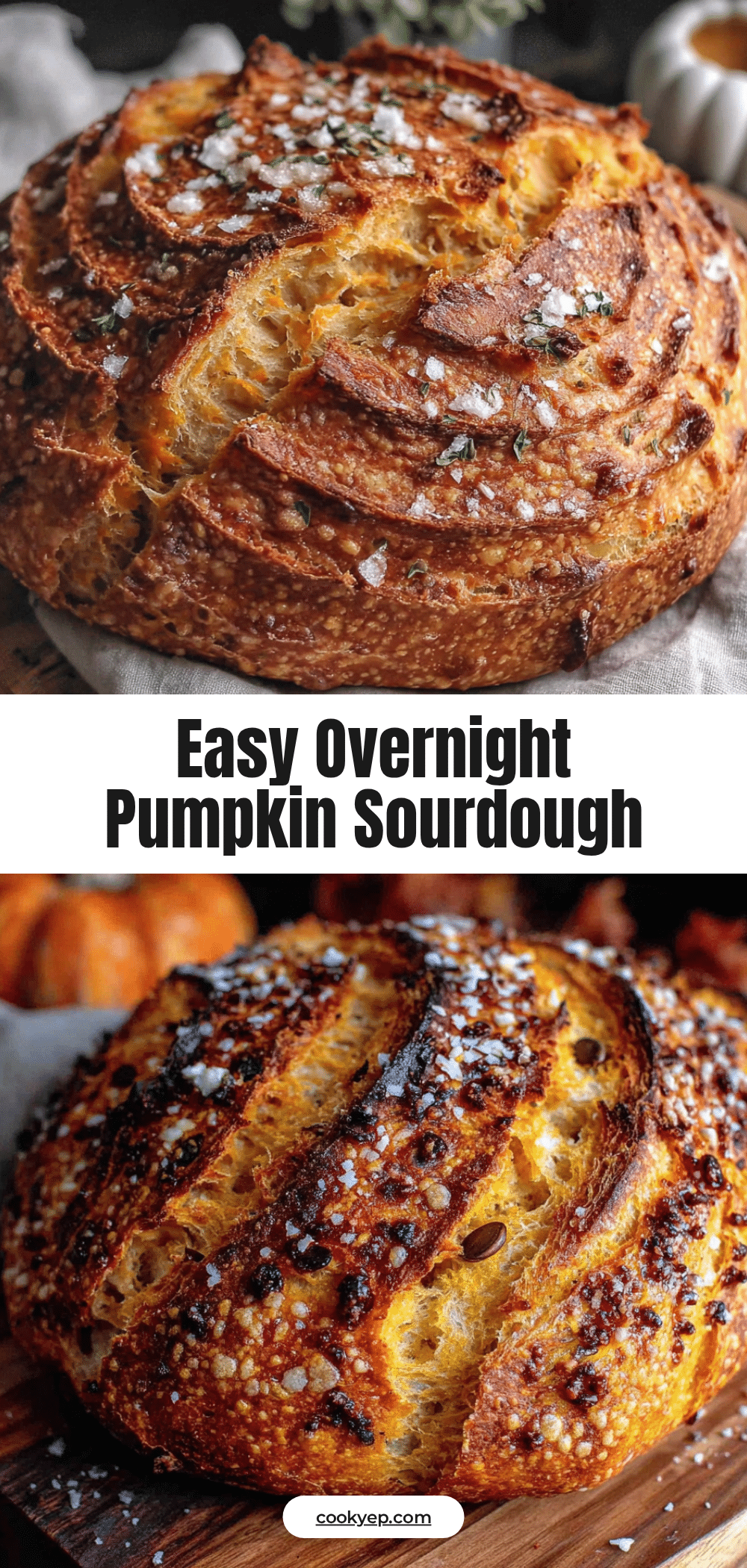
Best Easy Overnight Pumpkin Sourdough Discard Bread
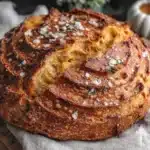
This overnight pumpkin sourdough discard bread is incredibly moist, tangy, and full of fall flavor. Mix the batter in ten minutes before bed, let it rest overnight, and bake it fresh in the morning for a zero-waste treat that gets better on day two.
- Prep Time: 10 minutes
- Cook Time: 55 minutes
- Total Time: 8 hours 10 minutes (includes overnight rest)
- Yield: 12 servings 1x
- Category: Bread
- Cuisine: American
Ingredients
- 1 cup (240g) pumpkin puree (100% pure, not pumpkin pie filling)
- 1 cup (240g) sourdough discard (straight from the fridge, unfed)
- 2 cups (250g) all-purpose flour
- ¾ cup (150g) granulated sugar
- ¼ cup (50g) light brown sugar, packed
- ½ cup (113g) unsalted butter, melted and slightly cooled
- 2 large eggs, room temperature
- 2 teaspoons pumpkin pie spice
- 1 teaspoon ground cinnamon
- 1 teaspoon baking soda
- ½ teaspoon baking powder
- ½ teaspoon fine sea salt
- 1 teaspoon vanilla extract
- Optional: ½ cup toasted pecans or walnuts, ¾ cup chocolate chips, or ½ cup dried cranberries
Instructions
- Mix the Wet Ingredients: In a large bowl, whisk together the melted butter, granulated sugar, and brown sugar until smooth and slightly thickened. Add the eggs one at a time, whisking well after each addition. Stir in the pumpkin puree, vanilla extract, and sourdough discard until smooth.
- Combine the Dry Ingredients: In a separate bowl, whisk together the all-purpose flour, pumpkin pie spice, cinnamon, baking soda, baking powder, and salt.
- Fold It Together: Pour the dry ingredients into the wet ingredients. Use a rubber spatula to fold gently until just combined. A few streaks of flour are okay. If adding nuts or chocolate chips, fold them in at this stage.
- Prepare the Pan: Line a 9×5-inch loaf pan with parchment paper, leaving overhang on the long sides. Lightly grease the exposed sides with butter or non-stick spray.
- Transfer the Batter: Scrape the batter into the prepared pan and spread it evenly. Smooth the top with a spatula. Optionally, sprinkle extra sugar over the surface for a bakery-style domed top.
- Overnight Rest: Cover the pan loosely with plastic wrap or a clean kitchen towel. Let it sit at room temperature for 8 to 12 hours. The batter will puff up slightly and develop small bubbles.
- Bake It Fresh: In the morning, preheat the oven to 350°F (175°C). Remove the plastic wrap and place the pan on the middle rack. Bake for 50 to 60 minutes, or until a toothpick inserted into the center comes out clean or with a few moist crumbs. The top should be golden brown and crackled.
- Cool Properly: Let the bread cool in the pan for 10 minutes. Then use the parchment sling to lift it out and transfer it to a wire rack. Cool completely before slicing, at least 1 hour.
Notes
Don’t skip the overnight rest—it develops flavor and hydrates the flour. Use older discard (5-7 days) for more tang. Check for doneness at 50 minutes; tent with foil if browning too quickly. Cool completely to avoid gummy texture. Store at room temperature for up to 4 days or freeze slices for up to 3 months.
Nutrition
- Serving Size: 1 slice
- Calories: 260
- Sugar: 18
- Sodium: 280
- Fat: 10
- Saturated Fat: 6
- Carbohydrates: 38
- Fiber: 2
- Protein: 4
Keywords: pumpkin bread, sourdough discard, overnight bread, fall baking, pumpkin sourdough, easy bread recipe, zero waste