I figured a bowl of vegetable soup would be, you know, fine — something to warm you up without much fuss. It took about one spoonful of this one for that assumption to completely fall apart. Honestly, I wasn’t expecting the deep, savory richness that came from a pot that seemed way too simple. The broth tasted like it had been simmering for hours, but the whole thing came together in under an hour, and most of that time I wasn’t even doing anything.
The funny thing is, I almost didn’t make it. I had a fridge full of fall vegetables — some carrots that were starting to look a little sad, a butternut squash I bought on a whim, and a few stems of kale that were begging to be used. I thought, “This is going to be one of those soups that’s good for you but tastes like it.” You know the kind. The kind you eat because you should, not because you want to.
But then I remembered a trick I learned from a friend who runs a tiny farm-to-table spot in Vermont. She told me that the secret to a great vegetable soup isn’t the stock — it’s how you treat the vegetables before the liquid ever hits the pot. So I took a little extra time to really brown the aromatics, to let the tomato paste get dark and almost jammy, and to let the squash get some color before I added the broth. That one change turned this cozy one-pot healthy fall vegetable soup from a standard weeknight meal into something I actually craved the next day. And the day after that.
It’s funny how a little patience at the front end saves you from a lifetime of boring soup. That first bite — the broth was silky, the vegetables were tender but not mushy, and there was this subtle sweetness from the squash that balanced the earthiness of the kale. I sat there, spoon in hand, thinking about how the best recipes aren’t always the ones with the longest ingredient lists. Sometimes, they’re just the ones where you pay attention at the right moments.
Why You’ll Love This Recipe
This isn’t just another vegetable soup recipe that leaves you hungry an hour later. After testing this more times than I care to admit (including one disastrous batch where I forgot the salt entirely — don’t do that), I can confidently say this is the version worth making. Here’s why it always wins in my kitchen:
- One Pot, Minimal Mess : Everything happens in a single Dutch oven or large pot. No sautéing in one pan and simmering in another. You get all the flavor with half the cleanup.
- Deep, Richer Flavor Without the Wait : Most vegetable soups taste thin and watery. By browning the tomato paste and letting the vegetables caramelize before adding liquid, you build layers of flavor in under an hour.
- Perfect for Meal Prep : This soup actually gets better after a day in the fridge. The flavors meld together, and the broth becomes even more savory. Make it on Sunday and enjoy it all week.
- No Fancy Ingredients Required : Everything here is a standard fall vegetable you can find at any grocery store. No trips to specialty markets or weird spice blends.
- Naturally Healthy and Filling : Packed with fiber-rich vegetables, lean protein from the chickpeas, and a broth that’s deeply satisfying without being heavy. It’s the kind of meal that makes you feel good after eating it.
What makes this recipe different from every other vegetable soup out there is the technique. Most recipes tell you to dump everything in a pot and simmer. That gives you a soup that tastes like boiled vegetables. This method — browning the aromatics, caramelizing the tomato paste, and roasting the squash briefly in the pot — gives you a soup that tastes like it’s been cooking all day. I’ve served this to friends who swear they don’t like vegetable soup, and they asked for seconds. It’s that good.
This is the kind of soup that makes you close your eyes after the first bite. It’s comfort food reimagined — healthier, faster, but with the same soul-soothing satisfaction. Perfect for those chilly fall evenings when you want something warm and nourishing without spending hours in the kitchen.
What Ingredients You Will Need
This recipe uses simple, wholesome ingredients that work together to create a broth that’s deeply savory and satisfying. Most of these are pantry staples or easy-to-find fall vegetables. I’ve included notes on substitutions where they work well.
For the Soup Base
- 2 tablespoons olive oil — Use a good quality extra virgin olive oil for the best flavor. It’s the foundation of the sauté.
- 1 large yellow onion, diced — About 2 cups. Yellow onion gives the best savory base, but a sweet onion works too.
- 3 cloves garlic, minced — Fresh garlic is non-negotiable here. The jarred stuff won’t give you the same punch.
- 2 large carrots, diced — About 1 cup. No need to peel if they’re organic — just scrub them well.
- 2 celery stalks, diced — About 1 cup. Adds that classic mirepoix flavor base.
- 2 tablespoons tomato paste — This is the secret to the deep, rich broth. I prefer the tube version so I can use just what I need.
For the Vegetables
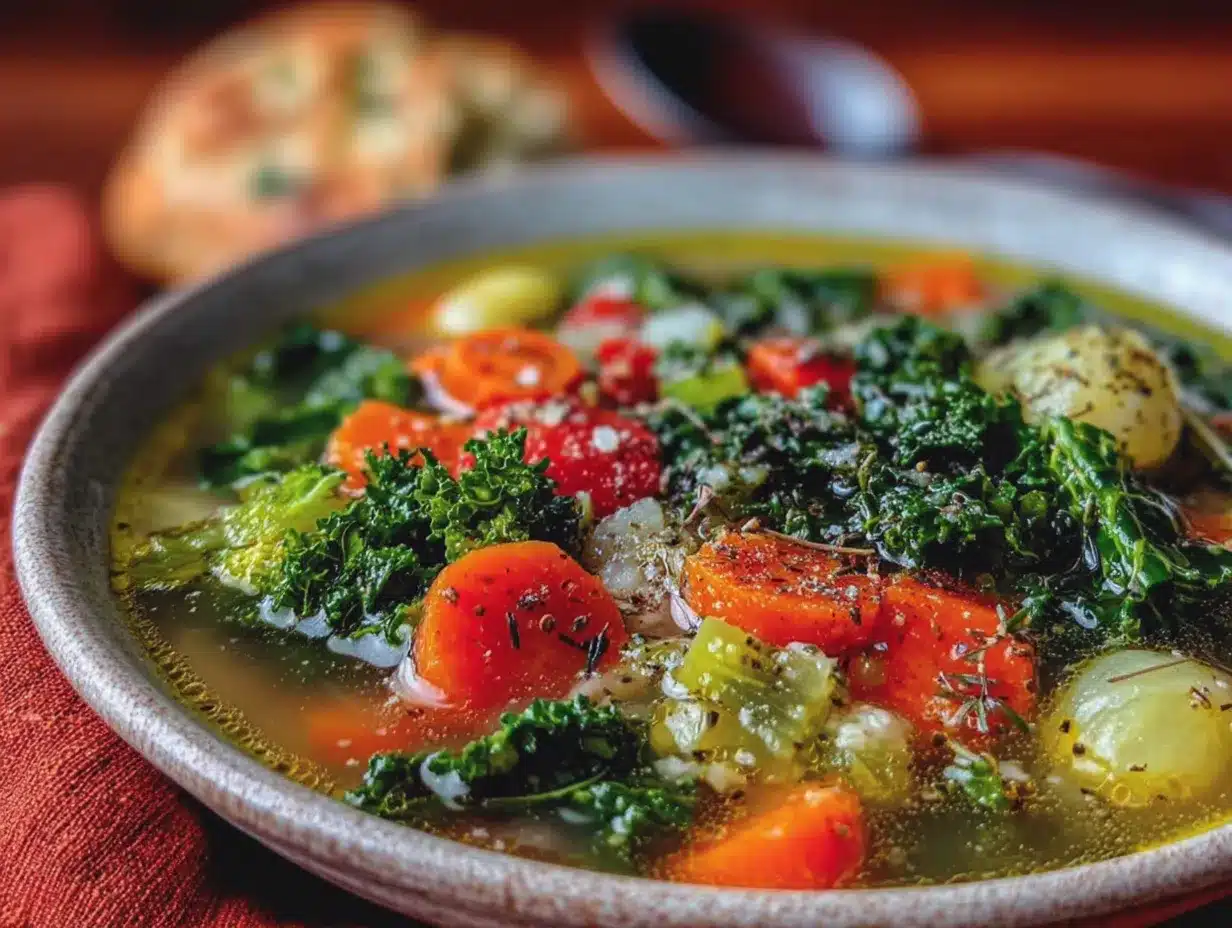
- 1 medium butternut squash, peeled and cubed — About 4 cups. Look for one that feels heavy for its size. Pre-cut cubes work in a pinch, but they’re often drier.
- 2 medium potatoes, cubed — Yukon Gold or Russet both work. Yukon Gold hold their shape better. (adds creaminess to the broth)
- 2 cups chopped kale, stems removed — Lacinato kale (also called Tuscan kale) is more tender, but curly kale works too. Massage it with a little olive oil first if you want it extra tender.
- 1 can (15 oz) chickpeas, drained and rinsed — Adds protein and makes the soup more filling. Cannellini beans are a great substitute.
For the Broth
- 4 cups vegetable broth — Use a low-sodium brand so you can control the salt. I like Better Than Bouillon vegetable base — it has the most flavor.
- 2 cups water — Helps stretch the broth without making it too salty.
- 1 teaspoon dried thyme — Earthy and warm. Pairs beautifully with the squash.
- 1 teaspoon smoked paprika — Adds a subtle smokiness that makes the soup taste more complex.
- 1 bay leaf — For background depth. Don’t skip it — it makes a difference.
- Salt and black pepper to taste — Start with 1 teaspoon salt and 1/2 teaspoon pepper, then adjust at the end.
Optional Garnishes
- Fresh parsley, chopped — Adds a bright, fresh finish.
- Grated Parmesan cheese — For a salty, umami boost. Leave it out for a vegan version.
- A drizzle of olive oil or heavy cream — Adds richness right before serving.
Equipment Needed
You don’t need much for this recipe, which is part of the beauty. A good pot and a sharp knife will get you there.
- Large Dutch oven or heavy-bottomed pot (5-6 quart) — This is ideal for even heat distribution. A stockpot works too, but watch the bottom to prevent sticking.
- Chef’s knife and cutting board — A sharp knife makes cubing squash much less frustrating. I learned that the hard way.
- Wooden spoon or silicone spatula — For scraping up the browned bits from the bottom of the pot.
- Measuring cups and spoons — Not strictly necessary if you’re comfortable eyeballing, but helpful for consistency.
- Vegetable peeler — For the butternut squash. A Y-peeler is faster and gives you more control.
If you don’t have a Dutch oven, any large, heavy pot will work. The key is to avoid thin-bottomed pots that create hot spots and burn the vegetables before they brown. I’ve used my grandmother’s old cast iron pot for years, and it’s never let me down.
Preparation Method
Take your time with the first few steps — they’re where the magic happens. The actual hands-on work is about 20 minutes; the rest is just simmering.
- Prep all your vegetables first. Dice the onion, carrots, and celery. Mince the garlic. Cube the butternut squash (about 1/2-inch pieces) and potatoes. Remove the kale leaves from the tough stems and chop them roughly. This makes the cooking process smooth and stress-free.
- Heat the olive oil in your Dutch oven over medium heat. Once it shimmers, add the diced onion, carrots, and celery. Cook for 6-8 minutes, stirring occasionally, until the vegetables are softened and the onion is translucent. You want them to start getting some color — that’s where the flavor lives.
- Add the minced garlic and cook for 30 seconds until fragrant. Stir constantly so it doesn’t burn. Burnt garlic will make the whole pot taste bitter.
- Push the vegetables to the sides of the pot and add the tomato paste to the center. Let it cook for 2-3 minutes, stirring occasionally, until it darkens to a deep brick red. This step is crucial — raw tomato paste tastes tinny, but caramelized tomato paste adds incredible depth.
- Add the cubed butternut squash and potatoes. Stir everything together and let it cook for 5 minutes without moving it too much. You want the squash to get some browned edges. This adds sweetness and texture.
- Pour in the vegetable broth and water. Use your wooden spoon to scrape up any browned bits from the bottom of the pot — that’s pure flavor. Add the dried thyme, smoked paprika, bay leaf, 1 teaspoon of salt, and 1/2 teaspoon of black pepper.
- Bring the soup to a boil, then reduce the heat to low. Cover and let it simmer for 20-25 minutes, or until the squash and potatoes are fork-tender. The broth should be fragrant and slightly thickened.
- Add the drained chickpeas and chopped kale. Stir them in and let the soup simmer uncovered for another 5 minutes. The kale will wilt down significantly, and the chickpeas will warm through.
- Remove the bay leaf. Taste the broth and adjust the seasoning. You’ll likely need another 1/2 teaspoon of salt and a few cracks of black pepper. The amount of salt you need depends on your broth, so trust your taste buds here.
- Let the soup rest off the heat for 5-10 minutes before serving. This allows the flavors to settle and the broth to thicken slightly. Serve hot, garnished with fresh parsley and a sprinkle of Parmesan if you like.
Pro tip: The soup will look a little brothy at first, but it thickens as it sits. If you’re making it ahead, expect it to be even more stew-like the next day — that’s a good thing.
Cooking Tips & Techniques
I’ve made this soup at least a dozen times, and I’ve learned a few things the hard way. Here are the tips that make the biggest difference.
Don’t skip the browning step. I know it’s tempting to just dump everything in the pot and walk away. I did that once, and the result was a soup that tasted like warm vegetable water. Taking those extra 5 minutes to brown the tomato paste and let the squash get some color transforms the entire dish. It’s the difference between a soup that’s “fine” and one that’s “I need the recipe.”
Cut your vegetables uniformly. This sounds like a boring cooking school rule, but it matters. If your squash cubes are different sizes, the small ones will turn to mush while the big ones are still hard. Aim for 1/2-inch cubes across the board. The potatoes can be slightly larger since they hold their shape better.
Use the right salt at the right time. I add salt early in the cooking process to season the vegetables from the inside out. But I always taste and adjust at the end. Different broths have different salt levels, and what works for one brand might be too salty for another. Remember, you can always add more salt, but you can’t take it out.
Massage your kale if it’s curly. This is a trick I learned from a salad-loving friend. If you’re using curly kale, drizzle it with a little olive oil and massage it with your hands for a minute before adding it to the soup. It breaks down the tough fibers and makes the kale much more tender. Lacinato kale doesn’t need this step.
Let the soup rest before serving. I know you’re hungry, but patience pays off. Letting the soup sit off the heat for 5-10 minutes allows the starches from the potatoes to thicken the broth naturally. The flavors also meld together more harmoniously. It’s worth the wait.
Variations & Adaptations
This recipe is forgiving, so feel free to play around. Here are some variations I’ve tried and loved.
Make it creamy. Blend 1 cup of the cooked soup (mostly broth and some squash) with an immersion blender or regular blender, then stir it back into the pot. This gives you a creamy, velvety texture without adding any dairy. It’s my favorite way to change things up.
Add a protein boost. Cooked shredded chicken, Italian sausage (remove the casings and brown it first), or white beans all work beautifully. If you add chicken, stir it in during the last 10 minutes of simmering so it warms through without drying out.
Switch up the vegetables. This recipe works with whatever fall vegetables you have. Swap the butternut squash for sweet potato or pumpkin. Use spinach instead of kale (add it at the very end — it wilts in 1 minute). Add parsnips or turnips for a more earthy flavor. I once made this with leftover roasted root vegetables, and it was incredible.
Make it spicy. Add 1/2 teaspoon of red pepper flakes along with the garlic, or stir in a chopped chipotle pepper in adobo sauce for a smoky heat. The spice pairs beautifully with the sweetness of the squash.
Go gluten-free and grain-free. This recipe is naturally gluten-free as written. Just double-check your vegetable broth — some brands add wheat-based ingredients. For a grain-free version, skip the potatoes and add an extra cup of squash or cauliflower.
Try a different herb profile. Swap the thyme for rosemary or sage for a more traditional fall flavor. A sprig of fresh rosemary simmered in the broth adds a lovely piney aroma. Just remember to remove the woody stem before serving.
Serving & Storage Suggestions
This soup is incredibly versatile when it comes to serving. It’s hearty enough to be a meal on its own, but it also pairs beautifully with sides.
Serve it hot — straight from the pot, ladled into deep bowls. I like to top each bowl with a sprinkle of fresh parsley, a crack of black pepper, and a generous grating of Parmesan cheese. A drizzle of good olive oil right before serving adds a luxurious finish.
Pair it with crusty bread for dipping — sourdough, a warm baguette, or even garlic toast. The bread soaks up the savory broth in the most satisfying way. If you’re feeling fancy, serve it alongside a simple green salad with a tangy vinaigrette to cut through the richness.
For storage, let the soup cool completely before transferring it to an airtight container. It will keep in the refrigerator for up to 5 days. The flavors actually improve over the first two days as the vegetables continue to release their essence into the broth.
To freeze, portion the soup into freezer-safe containers or zip-top bags. Leave about an inch of headspace for expansion. It will keep for up to 3 months. Thaw overnight in the refrigerator before reheating.
To reheat, warm the soup gently on the stovetop over medium-low heat, stirring occasionally. Add a splash of water or broth if it’s too thick. You can also microwave individual portions in 1-minute increments, stirring between each. The soup will be slightly thicker after freezing, but the flavor remains excellent.
One note: The kale will lose some of its vibrant green color after freezing and reheating. The flavor is still great, but if you’re planning to freeze the soup, consider adding fresh kale after thawing and reheating for the best texture and appearance.
Nutritional Information & Benefits
This soup is packed with nutrients, but it never feels like a “health food.” Here’s a rough estimate per serving (based on 6 servings):
| Nutrient | Amount Per Serving |
|---|---|
| Calories | 285 |
| Total Fat | 8g |
| Saturated Fat | 1g |
| Carbohydrates | 45g |
| Fiber | 10g |
| Sugar | 10g |
| Protein | 9g |
| Sodium | 680mg (varies with broth) |
Pin This Recipe!
Cozy One-Pot Healthy Fall Vegetable Soup

A deeply savory and satisfying vegetable soup that comes together in under an hour. This one-pot wonder features caramelized vegetables, a rich broth, and hearty chickpeas for a healthy and comforting fall meal.
- Prep Time: 20 minutes
- Cook Time: 35 minutes
- Total Time: 55 minutes
- Yield: 6 servings 1x
- Category: Soup
- Cuisine: American
Ingredients
- 2 tablespoons olive oil
- 1 large yellow onion, diced
- 3 cloves garlic, minced
- 2 large carrots, diced
- 2 celery stalks, diced
- 2 tablespoons tomato paste
- 1 medium butternut squash, peeled and cubed (about 4 cups)
- 2 medium potatoes, cubed (Yukon Gold or Russet)
- 2 cups chopped kale, stems removed
- 1 can (15 oz) chickpeas, drained and rinsed
- 4 cups vegetable broth (low-sodium)
- 2 cups water
- 1 teaspoon dried thyme
- 1 teaspoon smoked paprika
- 1 bay leaf
- Salt and black pepper to taste
- Fresh parsley, chopped (optional garnish)
- Grated Parmesan cheese (optional garnish)
- Olive oil or heavy cream (optional garnish)
Instructions
- Prep all your vegetables first. Dice the onion, carrots, and celery. Mince the garlic. Cube the butternut squash (about 1/2-inch pieces) and potatoes. Remove the kale leaves from the tough stems and chop them roughly.
- Heat the olive oil in your Dutch oven over medium heat. Once it shimmers, add the diced onion, carrots, and celery. Cook for 6-8 minutes, stirring occasionally, until the vegetables are softened and the onion is translucent.
- Add the minced garlic and cook for 30 seconds until fragrant, stirring constantly.
- Push the vegetables to the sides of the pot and add the tomato paste to the center. Let it cook for 2-3 minutes, stirring occasionally, until it darkens to a deep brick red.
- Add the cubed butternut squash and potatoes. Stir everything together and let it cook for 5 minutes without moving it too much, allowing the squash to get some browned edges.
- Pour in the vegetable broth and water. Use your wooden spoon to scrape up any browned bits from the bottom of the pot. Add the dried thyme, smoked paprika, bay leaf, 1 teaspoon of salt, and 1/2 teaspoon of black pepper.
- Bring the soup to a boil, then reduce the heat to low. Cover and let it simmer for 20-25 minutes, or until the squash and potatoes are fork-tender.
- Add the drained chickpeas and chopped kale. Stir them in and let the soup simmer uncovered for another 5 minutes.
- Remove the bay leaf. Taste the broth and adjust the seasoning, adding more salt and pepper as needed.
- Let the soup rest off the heat for 5-10 minutes before serving. Serve hot, garnished with fresh parsley and a sprinkle of Parmesan if desired.
Notes
Don’t skip the browning step. Taking extra 5 minutes to brown the tomato paste and let the squash get some color transforms the entire dish. Cut your vegetables uniformly (1/2-inch cubes) for even cooking. Let the soup rest before serving to allow flavors to meld and broth to thicken. The soup will be even better the next day.
Nutrition
- Serving Size: 1 serving
- Calories: 285
- Sugar: 10
- Sodium: 680
- Fat: 8
- Saturated Fat: 1
- Carbohydrates: 45
- Fiber: 10
- Protein: 9
Keywords: fall vegetable soup, healthy soup, one-pot soup, vegetarian soup, butternut squash soup, kale soup, chickpea soup, cozy soup, easy soup recipe