I burned salmon bites twice before I figured out why they kept turning out dry and rubbery. Not just a little overcooked—I mean, tough enough that even my dog gave me a look and walked away from his bowl. The second time, I stood there staring at the pan, fork in hand, genuinely confused. I had followed every step, used good salmon, fresh garlic, real butter. What was I missing? Turns out, it wasn’t the ingredients. It was the heat and the timing. I was crowding the pan and moving the pieces too much, which meant they steamed instead of seared. Once I stopped doing that—once I let them sit still in that hot butter until they developed a golden crust—everything changed. These Easy Garlic Butter Salmon Bites with Lemon came out of that frustration, and honestly, I’m kind of glad I messed up those first two batches. Because now I have a version that works every single time, and it takes about twenty minutes from start to finish. That’s faster than ordering takeout in my neighborhood.
Why You’ll Love This Recipe
Let me tell you why these salmon bites have become my go-to dinner when I want something that feels special but doesn’t require a lot of effort. I’ve tested this recipe at least a dozen times, adjusting the heat, the butter-to-garlic ratio, the lemon timing. What I landed on is the sweet spot—crispy edges, tender centers, and a sauce that coats every piece like it was meant to be there.
- Quick & Easy : From fridge to table in under 20 minutes. No marinating, no complicated steps, no waiting around.
- Simple Ingredients : Salmon, butter, garlic, lemon, salt, pepper. That’s it. You probably have most of this already.
- Perfect for Busy Weeknights : When you’re tired but still want something homemade that tastes like you tried harder than you actually did.
- Crowd-Pleaser : I’ve served these at casual dinners and even at a small gathering where someone claimed they “didn’t like salmon.” She asked for the recipe before she left.
- Unbelievably Delicious : The butter gets slightly browned, the garlic infuses every bite, and the lemon cuts through the richness just enough to keep you coming back for more.
What makes this different from other salmon recipes I’ve tried is the technique—cutting the fish into bite-sized pieces before cooking gives you more surface area for that golden crust, and the cooking time becomes incredibly forgiving when you’re working with smaller pieces. Plus, you don’t need any fancy equipment. Just a skillet and a spatula. If you’ve had bad luck with salmon drying out before, I promise this method changes things. It’s the kind of recipe that makes you close your eyes after the first bite and just breathe for a second.
What Ingredients You Will Need
This recipe uses simple, wholesome ingredients that work together to create something genuinely delicious. No hard-to-find items, no specialty stores. Just good food that does what it’s supposed to do.
- Salmon fillets (1 to 1.5 pounds) — skin removed, cut into 1-inch cubes. I prefer wild-caught when I can find it, but farm-raised works beautifully here too. Look for fillets that are evenly thick so the pieces cook at the same rate.
- Unsalted butter (3 tablespoons) — this is where the magic happens. I use unsalted so I can control the salt level myself. Kerrygold is my go-to brand, but any good-quality butter will work.
- Garlic (4 to 5 cloves, minced) — fresh garlic only here. The jarred stuff won’t give you the same flavor, and honestly, it’s worth the extra thirty seconds to mince it yourself.
- Fresh lemon (1 whole lemon) — you’ll use both the zest and the juice. The zest adds brightness that juice alone can’t quite replicate.
- Salt (½ teaspoon, or to taste) — I use fine sea salt for even seasoning.
- Black pepper (¼ teaspoon, freshly ground) — fresh ground makes a difference here.
- Red pepper flakes (optional, ¼ teaspoon) — adds a tiny kick without making it spicy. Leave it out if you’re sensitive to heat.
- Fresh parsley (2 tablespoons, chopped) — for garnish and a fresh finish. Flat-leaf parsley is my preference.
One thing I’ve learned: pat the salmon cubes dry with paper towels before seasoning. This step seems small, but it’s the difference between a good sear and a sad, steamy mess. Also, if you’re using frozen salmon, thaw it completely in the fridge overnight and press it dry before cutting. Trust me on this one.
For a variation, you can swap the butter with ghee if you’re dairy-sensitive, or use avocado oil for a dairy-free option. The flavor won’t be quite as rich, but it’ll still be good. I’ve also added a splash of white wine to the pan at the end before—delicious, but not necessary.
Equipment Needed
You don’t need a lot of gear for this recipe, which is part of why I make it so often. Here’s what you’ll want to have on hand:
- Large skillet (10 to 12 inches) — cast iron is my first choice because it holds heat evenly and gives you that beautiful crust. A stainless steel pan works great too. Nonstick is fine but won’t give you quite as much browning.
- Sharp knife — a good chef’s knife makes cutting the salmon into even cubes so much easier. Dull knives are dangerous and will tear the fish.
- Cutting board — preferably one you don’t mind getting fishy. I have a separate board for seafood.
- Tongs or a spatula — for flipping the salmon bites without breaking them apart.
- Small bowl — for mixing the seasoning if you want to do it ahead.
- Microplane or zester — for getting the lemon zest without the bitter white pith.
- Paper towels — for drying the salmon. This step matters more than you think.
If you don’t have a cast iron skillet, don’t stress. I’ve made these in a regular nonstick pan and they turned out great—just not quite as crispy on the edges. A stainless steel pan with a little extra butter will get you close. And if you’re wondering about budget options, I picked up my current cast iron skillet at a thrift store for eight dollars. Best eight dollars I ever spent.
Preparation Method
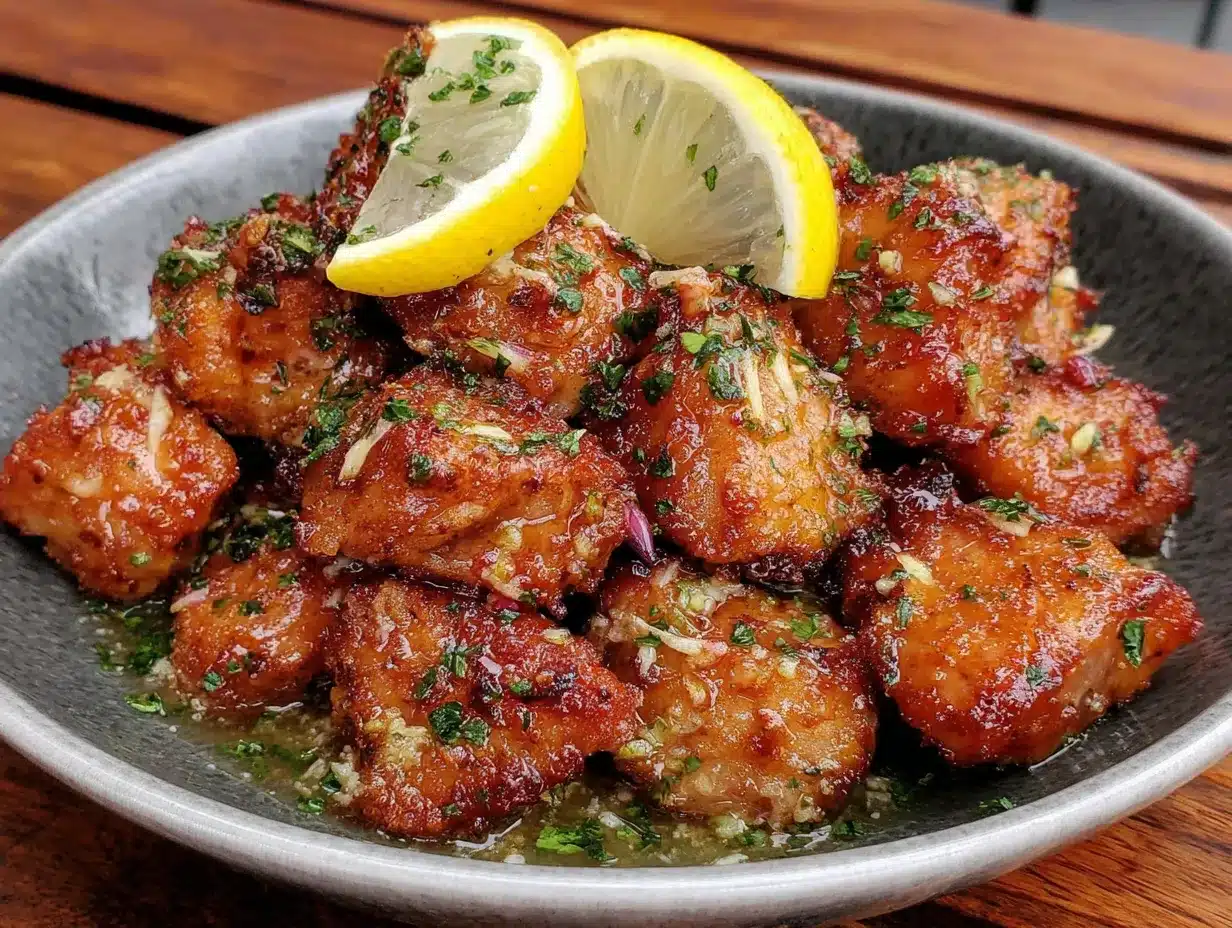
Let’s get cooking. This whole process takes about 20 minutes, and most of that is hands-off while the salmon sears. Here’s how it goes:
- Prep the salmon (5 minutes). Place your salmon fillets on a cutting board. Run your fingers over the surface to check for any tiny pin bones—if you feel any, pull them out with tweezers or clean pliers. Cut the salmon into 1-inch cubes, keeping them as uniform as possible so they cook evenly. Pat each cube dry with paper towels. This is not optional. Wet salmon won’t sear.
- Season the pieces (2 minutes). Place the salmon cubes in a bowl. Sprinkle with salt and black pepper, tossing gently to coat. If you’re using red pepper flakes, add them now. Let the salmon sit at room temperature for about 5 minutes while you get the pan ready. This helps it cook more evenly.
- Heat the skillet (2 minutes). Place your skillet over medium-high heat. Add 2 tablespoons of butter and let it melt, swirling the pan occasionally. You’ll know it’s ready when the butter stops foaming and starts to smell nutty—that’s the milk solids browning slightly. Don’t let it go too far, though. Burnt butter tastes bitter.
- Sear the salmon bites (4 to 5 minutes). Carefully place the salmon cubes in the hot butter in a single layer. Do not crowd the pan—if you have too many pieces, cook them in two batches. Let them sit undisturbed for 2 minutes. I know it’s tempting to poke at them, but don’t. After 2 minutes, flip each piece with tongs. The cooked side should be golden brown. Cook for another 1 to 2 minutes on the other side.
- Add garlic and lemon (1 minute). Reduce the heat to medium-low. Add the remaining 1 tablespoon of butter, the minced garlic, and the lemon zest. Stir gently to coat all the salmon pieces. Cook for about 30 seconds until the garlic is fragrant—don’t let it burn. Garlic turns bitter fast.
- Finish with lemon juice (30 seconds). Squeeze the juice of half a lemon over the salmon bites. Toss everything together gently. The sauce will come together quickly. If it looks too thin, let it cook for another 30 seconds to reduce slightly.
- Garnish and serve (1 minute). Remove the skillet from heat. Sprinkle fresh parsley over the top. Taste a piece and adjust salt or lemon if needed. Serve immediately while the edges are still crispy and the butter sauce is warm.
A few notes from experience: if the salmon starts sticking to the pan when you try to flip it, it’s not ready yet. Give it another 30 seconds and try again. Also, the internal temperature for cooked salmon should be around 125°F to 130°F for medium, but honestly, I just look for the visual cues—opaque on the outside, slightly translucent in the center, and flaking easily with a fork.
Cooking Tips & Techniques
After making these salmon bites more times than I can count, I’ve picked up a few tricks that make the difference between good and great. Here’s what I wish someone had told me earlier:
Don’t move the salmon too soon. This is the mistake I made those first two times. Salmon needs contact with hot butter to develop that crust, and moving it around breaks the seal. Just let it sit. Two full minutes. Set a timer if you have to.
Pat dry, then pat dry again. Moisture is the enemy of a good sear. After you cut the salmon into cubes, lay them out on a paper towel-lined plate and press another paper towel gently on top. Let them sit for a minute. Then season. You’ll notice the difference immediately.
Room temperature matters. Cold salmon straight from the fridge will lower the pan temperature and cook unevenly. Let the seasoned cubes sit out for 5 to 10 minutes before they hit the pan. Not long enough to be unsafe, just long enough to take the chill off.
Watch your heat. Medium-high is the sweet spot for searing, but you need to drop it down when you add the garlic. Garlic burns at high heat, and burnt garlic ruins the whole dish. I’ve done it. It’s sad. Learn from my mistakes.
Use a fish spatula if you have one. The thin, angled blade slides under the salmon without breaking the pieces apart. If you don’t have one, a regular thin spatula works—just be gentle.
Batch cook if needed. If your skillet isn’t big enough to hold all the pieces in a single layer, cook them in two batches. Crowding the pan drops the temperature and causes steaming instead of searing. You’ll end up with gray, sad salmon bites. Nobody wants that.
One more thing—if you’re making this for company, you can cut and season the salmon ahead of time and keep it covered in the fridge. Just let it come up to temperature for a few minutes before cooking. The actual cooking time is so short that you can have these ready while your guests are still pouring their drinks.
Variations & Adaptations
This recipe is flexible, and I’ve tried several variations depending on what I have in the fridge or who I’m cooking for. Here are a few that work well:
Spicy Honey Garlic Salmon Bites — Add 1 tablespoon of honey and an extra pinch of red pepper flakes along with the garlic. The sweetness balances the heat, and the honey helps the sauce caramelize slightly. I made this version for a friend who loves sweet-and-spicy combos, and she asked for the recipe before she finished eating.
Herb Butter Salmon Bites — Swap the parsley for a mix of fresh dill, chives, and a tiny bit of fresh thyme. Add the herbs right at the end so they stay bright and fresh. This version feels lighter and goes beautifully with a simple green salad or roasted asparagus.
Dairy-Free Option — Use avocado oil or a good-quality olive oil instead of butter. The flavor changes, but it’s still delicious. Add a splash of coconut aminos or tamari along with the lemon for a different flavor profile entirely. I’ve done this when cooking for a friend who’s dairy-free, and it worked great.
Oven-Baked Version — If you don’t want to stand over the stove, arrange the seasoned salmon cubes on a parchment-lined baking sheet. Bake at 400°F for 8 to 10 minutes, then toss with melted butter, garlic, and lemon juice. The texture is different—less crispy, more tender—but it’s still really good and even easier.
Air Fryer Version — Place the seasoned salmon cubes in the air fryer basket in a single layer. Cook at 375°F for 6 to 8 minutes, shaking the basket halfway through. Toss with the garlic butter and lemon after cooking. This version gets surprisingly crispy edges with less butter.
I’ve also added capers to the butter sauce before, and that briny pop of flavor works beautifully with the salmon. If you like capers, give it a try. Start with a tablespoon, rinsed and drained.
Serving & Storage Suggestions
These salmon bites are versatile enough to work with almost any side dish. Here’s how I like to serve them and how to handle leftovers if you have any—which, honestly, is rare in my house.
Serving temperature and presentation — Serve the salmon bites immediately while the edges are still crispy and the butter sauce is warm. I usually transfer them to a warm serving platter and spoon the remaining pan sauce over the top. A final squeeze of lemon and a sprinkle of fresh parsley makes them look restaurant-ready.
What to serve with them — These bites pair beautifully with rice, quinoa, or crusty bread to soak up the butter sauce. I also love them over a bed of arugula or mixed greens with a simple lemon vinaigrette. For a heartier meal, try them alongside roasted vegetables or a crispy fall harvest chopped salad. If you’re in the mood for something cozy, they’re fantastic served over creamy apple cinnamon overnight oats—wait, no, that’s breakfast. Stick with the salad or rice. For a lighter option, try them with easy grilled corn and black bean salad for a fresh, summery pairing.
Storage instructions — Store leftover salmon bites in an airtight container in the refrigerator for up to 3 days. The texture will soften as they sit, but the flavor remains good. I don’t recommend freezing these—salmon tends to get dry and mealy when thawed, and the butter sauce doesn’t reheat well.
Reheating methods — The best way to reheat these is in a skillet over medium-low heat with a tiny splash of water or lemon juice to revive the sauce. Cover the pan and heat for 2 to 3 minutes until warmed through. The microwave works in a pinch, but it’ll make the salmon rubbery. If you must use it, do 20-second intervals at half power.
How flavors develop over time — These salmon bites are best fresh, but I’ll admit that leftovers the next day—cold, straight from the fridge—make a surprisingly good salad topper. The garlic and lemon flavors mellow and blend together overnight. Just flake the cold salmon over greens with some cherry tomatoes and a simple dressing. It’s a different dish, but a good one.
Nutritional Information & Benefits
Salmon is one of those foods that feels good to eat, and these bites pack some solid nutritional benefits alongside the delicious butter situation. Here’s the breakdown:
| Nutrient | Amount Per Serving (approx. 4 oz) |
|---|---|
| Calories | 320-350 |
| Protein | 28-32g |
| Total Fat | 22-25g |
| Saturated Fat | 9-11g |
| Carbohydrates | 2-3g |
| Fiber | 0g |
| Sugar | 1g |
| Sodium | 350-400mg |
| Omega-3 Fatty Acids | 2.5-3.5g |
| Vitamin D | 15-20% DV |
| Vitamin B12 | 50-60% DV |
Salmon is rich in omega-3 fatty acids, which support heart and brain health. The vitamin D content is a nice bonus, especially during winter months when sunlight is scarce. Garlic adds allicin, a compound with potential immune-supporting properties, and lemon provides a small dose of vitamin C. This recipe is naturally gluten-free and low-carb, making it suitable for a variety of dietary preferences. If you’re watching your saturated fat intake, you can reduce the butter to 2 tablespoons and use avocado oil for the rest.
From a personal perspective, I love that this recipe feels indulgent but is actually packed with nutrients. It’s the kind of meal that satisfies both your taste buds and your body’s needs, and that balance is hard to find in a 20-minute dinner.
Conclusion
These Easy Garlic Butter Salmon Bites with Lemon have become one of those recipes I turn to again and again, and I think they’ll earn a spot in your regular rotation too. They’re quick enough for a Tuesday night when you’re tired and hungry, but impressive enough to serve to company without feeling like you’re phoning it in. The combination of crispy edges, tender salmon, and that garlic-lemon butter sauce is simple, but sometimes simple is exactly what you need.
I hope you give these a try and make them your own. Maybe you’ll add a little more lemon, or throw in some capers, or serve them over pasta instead of rice. That’s the beauty of a recipe like this—it’s a starting point, not a rulebook. If you make them, I’d love to hear how they turned out. Drop a comment below and let me know if you tried any variations, or tag me in your photos if you share them online. Happy cooking, and don’t forget to let that salmon sit still in the pan. That crust is worth the wait.
Frequently Asked Questions
Can I use frozen salmon for this recipe?
Yes, but thaw it completely in the refrigerator first—overnight is best. Pat it very dry with paper towels before cutting and seasoning. Frozen salmon tends to release more moisture as it cooks, so drying it thoroughly is extra important here.
How do I know when the salmon bites are done cooking?
Look for visual cues: the outside should be golden brown and opaque, while the center should be slightly translucent for medium doneness. The pieces should flake easily when pressed with a fork. If you’re using a thermometer, aim for 125°F to 130°F in the thickest part of a piece.
Can I make this recipe without butter?
Absolutely. Use avocado oil, ghee, or a high-quality olive oil instead. The flavor will be different—less rich and nutty—but still delicious. If using olive oil, keep the heat at medium to prevent it from smoking.
Why did my salmon stick to the pan?
Two common reasons: either the pan wasn’t hot enough when you added the salmon, or you tried to flip it too soon. Let the pan heat up properly over medium-high heat, and give the salmon a full 2 minutes of undisturbed cooking before attempting to flip. If it’s still sticking, give it another 30 seconds.
Can I prep the salmon bites ahead of time?
Yes. You can cut the salmon into cubes, season them, and keep them covered in the refrigerator for up to 4 hours before cooking. Let them sit at room temperature for about 5 minutes before adding them to the hot pan. The actual cooking is so quick that you can do it right before serving.
Pin This Recipe!
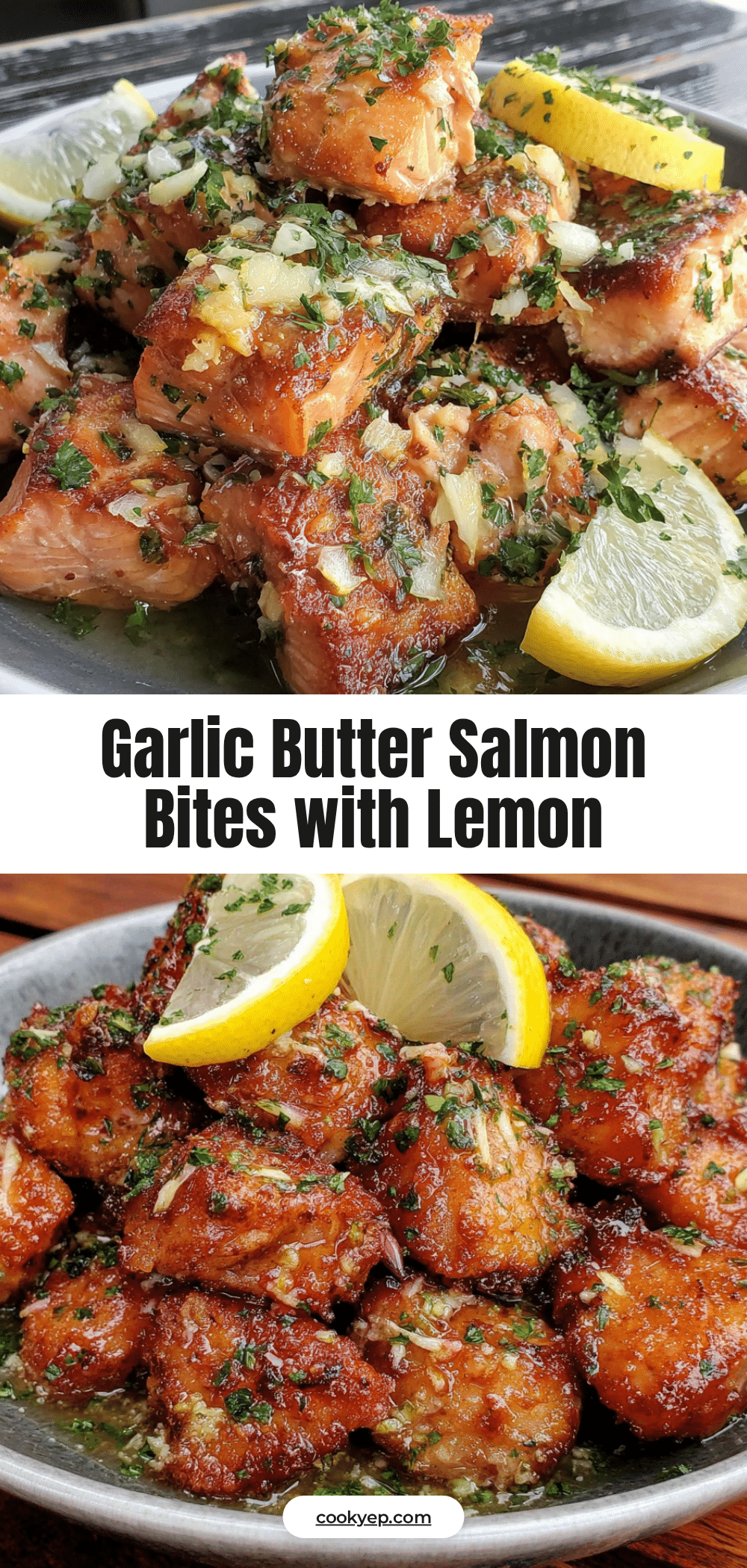
Easy Garlic Butter Salmon Bites with Lemon

Crispy-edged salmon bites in a rich garlic butter sauce with fresh lemon, ready in just 20 minutes. A quick and easy weeknight dinner that tastes like a special occasion.
- Prep Time: 10 minutes
- Cook Time: 10 minutes
- Total Time: 20 minutes
- Yield: 4 servings 1x
- Category: Main Course
- Cuisine: American
Ingredients
- 1 to 1.5 pounds salmon fillets, skin removed, cut into 1-inch cubes
- 3 tablespoons unsalted butter
- 4 to 5 cloves garlic, minced
- 1 whole lemon (zest and juice)
- ½ teaspoon fine sea salt
- ¼ teaspoon freshly ground black pepper
- ¼ teaspoon red pepper flakes (optional)
- 2 tablespoons fresh parsley, chopped
Instructions
- Prep the salmon: Place salmon fillets on a cutting board. Remove any pin bones. Cut into 1-inch cubes, keeping them uniform. Pat each cube dry with paper towels.
- Season the pieces: Place salmon cubes in a bowl. Sprinkle with salt, black pepper, and red pepper flakes if using. Toss gently to coat. Let sit at room temperature for 5 minutes.
- Heat the skillet: Place a large skillet over medium-high heat. Add 2 tablespoons of butter and let it melt, swirling occasionally, until the butter stops foaming and smells nutty.
- Sear the salmon bites: Carefully place salmon cubes in the hot butter in a single layer. Do not crowd the pan. Let them sit undisturbed for 2 minutes. Flip each piece and cook for another 1 to 2 minutes until golden brown.
- Add garlic and lemon: Reduce heat to medium-low. Add remaining 1 tablespoon butter, minced garlic, and lemon zest. Stir gently to coat. Cook for about 30 seconds until fragrant.
- Finish with lemon juice: Squeeze the juice of half a lemon over the salmon bites. Toss gently. Let cook for 30 seconds to reduce the sauce slightly.
- Garnish and serve: Remove from heat. Sprinkle with fresh parsley. Taste and adjust salt or lemon if needed. Serve immediately.
Notes
Pat the salmon cubes very dry before seasoning for the best sear. Don’t crowd the pan—cook in batches if needed. Let the salmon sit undisturbed for 2 minutes before flipping to develop a golden crust. For dairy-free, use avocado oil or ghee. Leftovers keep in the refrigerator for up to 3 days; reheat in a skillet with a splash of water or lemon juice.
Nutrition
- Serving Size: 4 oz
- Calories: 335
- Sugar: 1
- Sodium: 375
- Fat: 23.5
- Saturated Fat: 10
- Carbohydrates: 2.5
- Protein: 30
Keywords: salmon bites, garlic butter salmon, easy salmon recipe, quick salmon dinner, lemon salmon, weeknight dinner, healthy salmon recipe