Dinner was about to go sideways. I had a beautiful fillet of salmon defrosting on the counter, a bunch of asparagus that was starting to look a little sad in the fridge, and absolutely zero energy for a sink full of pots and pans. The lemon was sitting right there on the counter, practically begging to be used. And honestly? I just needed something that tasted like I tried without actually trying that hard.
So I grabbed my one and only sheet pan, threw everything on it, and crossed my fingers. What came out of the oven was pure magic. The salmon was flaky and tender, the asparagus had those perfect little charred edges, and the whole thing was swimming in a buttery, garlicky, lemony sauce that I wanted to drink with a straw. That first bite? I stood right there at the counter and ate half of it with a fork, no plate, no shame.
This Easy One-Pan Lemon Garlic Salmon with Asparagus has become my go-to for those nights when I need dinner to feel special but don’t have the bandwidth for a complicated recipe. It’s proof that simple ingredients, treated right, can create something genuinely memorable. No fancy techniques, no long ingredient lists—just good food that works with your life, not against it.
Why You’ll Love This Recipe
Look, I’ve tested a lot of salmon recipes over the years. Some were fussy, some were flavorless, and some just didn’t deliver on the promise of being “easy.” This one actually does. Here’s why it’s earned a permanent spot in my weekly rotation:
- Truly One-Pan: The salmon and asparagus roast together on a single sheet pan. That means minimal prep and even less cleanup. You’re looking at maybe 10 minutes of active work.
- Simple Ingredients: You probably have most of this in your kitchen right now. Salmon, asparagus, lemon, garlic, olive oil, salt, pepper. That’s really it. No hunting down specialty items.
- Perfect for Busy Weeknights: From start to finish, this comes together in about 25 minutes. It’s faster than takeout and way better for you.
- Crowd-Pleaser: I’ve served this to picky kids, dinner guests, and my mom who “doesn’t really like fish.” Everyone cleans their plate. Every single time.
- Unbelievably Delicious: The lemon garlic butter sauce that forms in the pan is honestly the star of the show. It coats every flake of salmon and every spear of asparagus in pure, bright, savory goodness.
What makes this version different from the hundreds of other salmon recipes out there? It’s the balance. The garlic gets fragrant without burning. The lemon stays bright without turning bitter. The salmon comes out perfectly cooked with that beautiful flaky texture. And the asparagus? It roasts right alongside everything, soaking up all those juices. It’s not just another sheet pan dinner—it’s the sheet pan dinner.
This is the kind of meal that makes you feel like you’ve got your life together, even if you’re eating it in your pajamas at 7 PM on a Tuesday. And honestly? That’s exactly the kind of energy we all need sometimes.
What Ingredients You Will Need
This recipe relies on a handful of quality ingredients that work together beautifully. Each one has a specific job, and together they create something that’s way more than the sum of its parts.
- Salmon Fillets (4 fillets, about 6 ounces each): Look for fillets that are roughly the same thickness so they cook evenly. I prefer wild-caught salmon when I can find it—the flavor is cleaner and the texture is firmer. But honestly, good-quality farmed salmon works beautifully here too. Pat the fillets dry with paper towels before seasoning for the best sear.
- Fresh Asparagus (1 bunch, about 1 pound): Choose asparagus spears that are bright green with firm, closed tips. Thicker spears hold up better to roasting and won’t get mushy. Snap off the woody ends—they’ll break naturally at the right spot.
- Fresh Garlic (4-5 cloves, minced): Fresh garlic is non-negotiable here. The pre-minced stuff in a jar won’t give you the same aromatic punch. Mince it yourself—it takes thirty seconds and makes a real difference.
- Fresh Lemon (1 large lemon): You’ll use both the zest and the juice. The zest adds bright, floral notes that you can’t get from juice alone. Roll the lemon on the counter before juicing to get the most out of it.
- Extra Virgin Olive Oil (3 tablespoons): A good-quality olive oil adds richness and helps everything roast beautifully. Don’t use the fancy finishing oil here—save that for drizzling at the end.
- Unsalted Butter (2 tablespoons, melted): Butter adds that luxurious richness that makes the sauce so good. If you’re dairy-free, you can substitute with a good vegan butter or just use all olive oil.
- Salt and Black Pepper (to taste): I use kosher salt for seasoning. It’s more forgiving than table salt and distributes more evenly. Freshly cracked black pepper makes a difference here.
- Optional Garnishes: Fresh dill, parsley, or chives add a pop of color and freshness. Red pepper flakes add a nice kick if you like heat. Toasted almonds or pine nuts add crunch.
One thing I’ve learned from making this recipe dozens of times: the quality of your salmon matters more than anything else. If you can, buy from a fish counter where you can see and smell the fish. Fresh salmon should smell like the ocean, not fishy. It should look bright and moist, not dull or dry.
Equipment Needed
The beauty of this recipe is that it doesn’t require much. Here’s what you’ll need:
- Sheet Pan (rimmed, 18×13 inches): A rimmed baking sheet is essential—it catches all those delicious juices. I’ve been using the same Nordic Ware half-sheet pan for years and it’s never let me down. If you don’t have one, any large rimmed baking sheet will work.
- Parchment Paper or Aluminum Foil: Lining the pan makes cleanup even easier. I prefer parchment paper because nothing sticks to it. Foil works too, though you might need a little extra oil.
- Chef’s Knife and Cutting Board: For trimming the asparagus and mincing the garlic. A sharp knife makes all the difference—dull knives are dangerous and frustrating.
- Small Bowl: For whisking together the lemon garlic butter mixture.
- Measuring Spoons: For accurate measurements, especially with the olive oil and lemon juice.
- Instant-Read Thermometer (optional but recommended): Salmon is perfectly cooked at 125-130°F for medium. A thermometer takes the guesswork out of it.
If you don’t have a sheet pan, you can use a large cast iron skillet or even a 9×13 baking dish. Just keep an eye on cooking times since different materials conduct heat differently. The sheet pan really is the best option though—it allows for good air circulation around everything, which means better browning.
Preparation Method
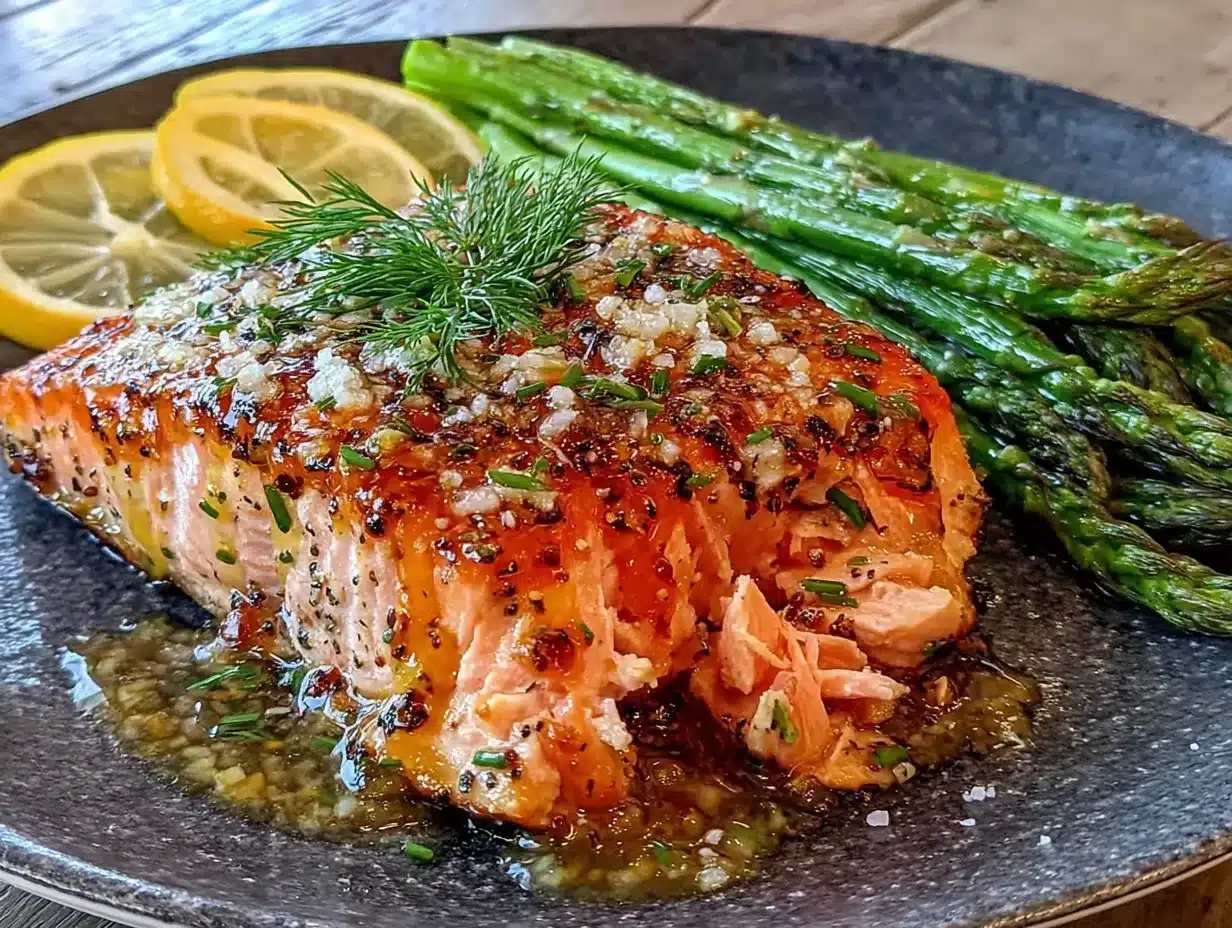
Let me walk you through this step by step. I’ve made this recipe more times than I can count, and these are the little details that make it work every single time.
- Preheat your oven to 400°F (200°C). Position the rack in the middle of the oven. Getting the oven fully preheated is important—if you put the pan in too early, the salmon won’t get that beautiful golden exterior.
- Line your sheet pan with parchment paper. This isn’t strictly necessary, but trust me, you’ll thank yourself when cleanup takes 30 seconds instead of 10 minutes. If you’re using foil, give it a light spray of cooking oil.
- Prepare the asparagus. Rinse the asparagus and pat it dry. Snap off the woody ends by holding each spear near the bottom and bending until it breaks naturally. This usually removes about an inch or two. Place the trimmed asparagus on one side of the pan. Drizzle with 1 tablespoon of olive oil, season with salt and pepper, and toss to coat. Spread them in a single layer.
- Prepare the salmon. Pat the salmon fillets dry with paper towels. This step is crucial—excess moisture will steam the fish instead of roasting it. Place the fillets on the other side of the pan, skin-side down if they have skin. Leave a little space between each fillet for even cooking.
- Make the lemon garlic butter. In a small bowl, whisk together the remaining 2 tablespoons of olive oil, the melted butter, minced garlic, lemon zest (about 1 teaspoon), and lemon juice (about 2 tablespoons). Add a pinch of salt and a few cracks of black pepper. Give it a taste—it should be bright, garlicky, and well-seasoned.
- Drizzle and brush. Spoon the lemon garlic mixture over the salmon fillets, making sure each one gets a good coating. Use a brush or the back of the spoon to spread it evenly. Drizzle any remaining mixture over the asparagus.
- Roast for 12-15 minutes. The exact time depends on the thickness of your fillets. At 12 minutes, check for doneness. The salmon should be opaque and flake easily with a fork. The asparagus should be tender with lightly browned edges. If you’re using a thermometer, look for 125-130°F at the thickest part for medium.
- Optional broil for extra color. If you want a little more browning on top, switch the oven to broil for the last 1-2 minutes. Watch it closely—broilers are aggressive and things can go from golden to burnt in seconds.
- Rest for 2-3 minutes. Let the pan sit on the counter for a few minutes before serving. This allows the juices to redistribute and the salmon to finish cooking gently.
- Garnish and serve. Sprinkle with fresh herbs, a squeeze of extra lemon, and maybe a pinch of red pepper flakes if you like heat. Serve directly from the pan or transfer to a platter.
One thing I learned the hard way: don’t crowd the pan. If your salmon fillets are touching, they’ll steam instead of roast. If your sheet pan is too small, use two pans or cook in batches. Overcrowding is the number one mistake people make with sheet pan dinners.
Cooking Tips & Techniques
After making this recipe more times than I can count, here are the things I wish someone had told me from the start:
Bring your salmon to room temperature. Take the fillets out of the fridge 15-20 minutes before cooking. Cold salmon cooks unevenly—the outside can overcook while the inside stays raw. Room temperature salmon cooks more evenly and consistently.
Don’t skip drying the salmon. I know it seems like a small step, but it makes a huge difference. Wet salmon steams. Dry salmon roasts and develops that beautiful golden exterior. Pat those fillets dry like you mean it.
Watch the garlic. Garlic burns easily at high temperatures. If your garlic pieces are too small or you roast too long, they can turn bitter. That’s why I mix the garlic into the oil and butter mixture rather than sprinkling it directly on top—it helps protect it from direct heat.
Cut asparagus uniformly. Try to trim the asparagus so all the spears are roughly the same length and thickness. This ensures they cook at the same rate. If some spears are much thicker than others, you can cut them in half lengthwise.
Use the right pan size. A standard half-sheet pan (18×13 inches) is perfect for 4 fillets and a bunch of asparagus. If you use a smaller pan, everything will be crowded and you won’t get good browning.
Check doneness early. Salmon continues to cook after it comes out of the oven (carryover cooking). I always check at the minimum time. It’s better to pull it out a minute early and let it rest than to overcook it. Overcooked salmon is dry and mealy—a tragedy for such a beautiful ingredient.
Make extra sauce. Honestly, the lemon garlic butter that pools in the pan is liquid gold. I sometimes double the sauce ingredients so there’s extra to spoon over rice or quinoa on the side. No judgment here.
I once forgot to dry the salmon and ended up with pale, sad-looking fillets. Another time, I used pre-minced garlic from a jar and the flavor was flat and almost metallic. These are the mistakes you only make once. Learn from mine and save yourself the disappointment.
Variations & Adaptations
This recipe is incredibly forgiving and adaptable. Here are some of my favorite variations:
Mediterranean Twist: Add halved cherry tomatoes, sliced red onion, and Kalamata olives to the pan. Swap the dill for oregano and crumble feta cheese over everything before serving. The tomatoes burst and create this incredible pan sauce. I made this version for a dinner party and everyone asked for the recipe.
Spicy Version: Add 1/2 teaspoon of red pepper flakes and a minced fresno chili to the lemon garlic mixture. The heat cuts through the richness of the salmon beautifully. Top with sliced jalapeños if you’re feeling brave.
Herb-Crusted: Mix 2 tablespoons of fresh chopped herbs (parsley, dill, chives, tarragon) with 1/4 cup of panko breadcrumbs and a tablespoon of olive oil. Press this mixture onto the salmon before roasting. It creates a gorgeous, crispy crust that’s absolutely divine.
Low-Carb/Keto: This recipe is naturally low-carb and keto-friendly. Just make sure to use plenty of butter and olive oil. You can also add other low-carb vegetables like zucchini slices or bell pepper strips to the pan.
Dairy-Free: Skip the butter and use all olive oil. Add an extra tablespoon of olive oil to keep everything moist and flavorful. The lemon and garlic are strong enough that you won’t miss the dairy.
Different Vegetables: Asparagus is classic, but this works beautifully with broccoli florets, green beans, brussels sprouts (halved), or thick slices of zucchini. Just adjust cooking times based on the vegetable’s density. Broccoli might need an extra 5 minutes, while zucchini might need 5 minutes less.
Lemon Garlic Butter Sauce: If you want an even saucier version, double the butter and lemon juice. After roasting, transfer the salmon and vegetables to a plate and pour the pan juices into a small saucepan. Simmer for 2-3 minutes to reduce slightly, then pour over everything.
My personal favorite variation? The Mediterranean version with feta and olives. It feels like something you’d get at a fancy restaurant, but it comes together in under 30 minutes on a regular Tuesday night. That’s my kind of cooking.
Serving & Storage Suggestions
This dish is beautiful on its own, but here’s how to make it a complete meal:
Serving Suggestions: Serve the salmon and asparagus hot, directly from the pan or on a warm platter. Spoon any remaining pan juices over the top. A squeeze of fresh lemon right before serving brightens everything up. I love serving this with a side of fluffy rice, quinoa, or crusty bread to soak up all that gorgeous lemon garlic butter. A simple green salad with a light vinaigrette also pairs beautifully.
Wine Pairing: A crisp Sauvignon Blanc or unoaked Chardonnay is perfect with the bright lemon and garlic flavors. If you prefer red, a light Pinot Noir works surprisingly well.
Storage: Store leftover salmon and asparagus in an airtight container in the refrigerator for up to 2 days. The salmon will lose some of its texture, but the flavor remains delicious. I don’t recommend freezing this dish—the texture of both the salmon and asparagus will suffer significantly.
Reheating: The best way to reheat is in a low oven (300°F) for about 5-7 minutes, or in a skillet over medium-low heat with a splash of water or lemon juice. The microwave works in a pinch, but it can make the salmon rubbery and the asparagus mushy. If you’re using the microwave, do it in 30-second bursts and stop as soon as it’s warm.
Meal Prep: This recipe doesn’t meal prep brilliantly since fresh-cooked salmon is always best. But you can prep the components: trim the asparagus, mince the garlic, and mix the lemon garlic butter up to a day ahead. Store everything separately in the fridge and assemble when you’re ready to cook.
One thing I’ve noticed: the flavors actually meld and deepen overnight. Cold leftover salmon, flaked over a salad with some of that pan dressing, makes an incredible lunch the next day. It’s almost like getting two different meals out of one cooking session.
Nutritional Information & Benefits
This recipe is as good for you as it tastes. Here’s a rough breakdown per serving (one fillet plus asparagus):
- Calories: Approximately 380-420
- Protein: 35-40 grams
- Healthy Fats: 22-26 grams (mostly omega-3s from the salmon and olive oil)
- Carbohydrates: 8-10 grams
- Fiber: 3-4 grams
- Vitamin C: 25% of daily value (from lemon and asparagus)
- Vitamin A: 20% of daily value (from asparagus)
- Iron: 15% of daily value
Salmon is one of the best sources of omega-3 fatty acids, which support heart health, brain function, and reduce inflammation. Asparagus is packed with fiber, folate, and vitamins A, C, and K. Garlic is known for its immune-boosting properties, and lemon adds a healthy dose of vitamin C. This isn’t just a delicious meal—it’s genuinely good for you.
This recipe is naturally gluten-free, low-carb, and can easily be made dairy-free. It’s also Whole30-compatible if you skip the butter and use all olive oil. The only potential allergen is fish, so it’s not suitable for those with seafood allergies.
I love that I can serve this to my family knowing it’s nourishing them from the inside out. It’s the kind of meal that makes you feel good about what you’re putting into your body—without sacrificing an ounce of flavor.
Conclusion
This Easy One-Pan Lemon Garlic Salmon with Asparagus has saved my sanity on countless busy weeknights. It’s proof that you don’t need complicated techniques or a dozen ingredients to create something genuinely memorable. Just good salmon, bright lemon, fragrant garlic, and a hot oven.
What I love most about this recipe is how it makes me feel. Like I’ve got dinner handled without breaking a sweat. Like I can feed my family something nourishing and delicious without spending an hour in the kitchen. Like I’m a competent, put-together adult—even on nights when I’m definitely winging it.
I hope you’ll give this recipe a try and make it your own. Add your favorite vegetables, adjust the seasonings, play with the variations. Cooking should be flexible and fun, not rigid and stressful. If you make it, I’d love to hear how it turned out. Drop a comment below and let me know what you think—did you add anything? Change anything? Serve it with something unexpected? Your adaptations might just inspire someone else’s dinner tonight.
Happy cooking, friends. Here’s to good food that doesn’t require a full kitchen cleanup.
Frequently Asked Questions
Can I use frozen salmon for this recipe?
Yes, but you need to thaw it completely first. Thaw in the refrigerator overnight or place the sealed bag in cold water for about 30 minutes. Pat the salmon very dry before seasoning—frozen salmon releases more moisture as it thaws, and excess moisture will prevent browning.
How do I know when the salmon is done?
The easiest way is to use an instant-read thermometer. Salmon is perfectly cooked at 125-130°F for medium. Without a thermometer, look for the fish to become opaque and flake easily when gently pressed with a fork. The internal temperature will continue to rise about 5 degrees after you take it out of the oven.
Can I make this recipe with other types of fish?
Absolutely. This lemon garlic preparation works beautifully with trout, cod, halibut, or sea bass. Just adjust cooking times based on the thickness of the fillet. Thicker fish like cod might need a few extra minutes, while thinner fillets like trout might cook faster.
What if I don’t have fresh asparagus?
No problem at all. You can substitute with broccoli florets, green beans, zucchini slices, or even frozen asparagus (thawed and patted dry). Each vegetable will have slightly different cooking times, so keep an eye on things. Broccoli might need 5 extra minutes, while zucchini might need 5 minutes less.
Can I double this recipe for a crowd?
Yes, but use two sheet pans instead of one. Overcrowding the pan will cause the salmon to steam instead of roast, and you won’t get that beautiful golden exterior. Rotate the pans halfway through cooking for even results. If you only have one oven, cook the pans on separate racks and swap their positions halfway through.
Pin This Recipe!
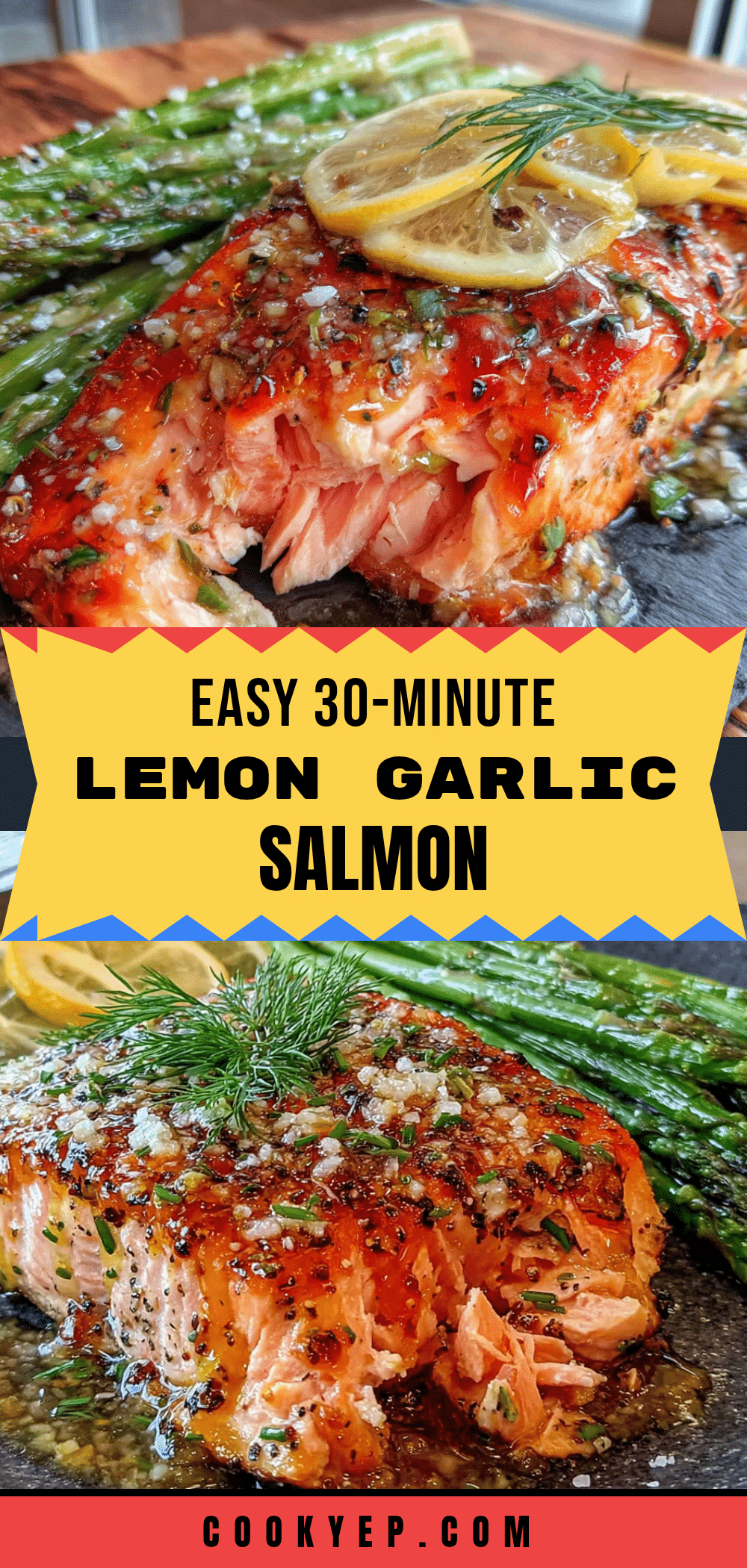
Easy One-Pan Lemon Garlic Salmon with Asparagus
A quick and delicious sheet pan dinner featuring flaky salmon and tender asparagus in a buttery, garlicky, lemony sauce. Perfect for busy weeknights with minimal prep and cleanup.
- Prep Time: 10 minutes
- Cook Time: 15 minutes
- Total Time: 25 minutes
- Yield: 4 servings 1x
- Category: Main Course
- Cuisine: American
Ingredients
- 4 salmon fillets (about 6 ounces each)
- 1 bunch fresh asparagus (about 1 pound)
- 4–5 cloves fresh garlic, minced
- 1 large lemon (zest and juice)
- 3 tablespoons extra virgin olive oil
- 2 tablespoons unsalted butter, melted
- Salt and black pepper to taste
- Optional: fresh dill, parsley, or chives for garnish
- Optional: red pepper flakes for heat
- Optional: toasted almonds or pine nuts for crunch
Instructions
- Preheat your oven to 400°F (200°C). Position the rack in the middle of the oven.
- Line your sheet pan with parchment paper or aluminum foil.
- Rinse the asparagus and pat it dry. Snap off the woody ends. Place the trimmed asparagus on one side of the pan. Drizzle with 1 tablespoon of olive oil, season with salt and pepper, and toss to coat. Spread in a single layer.
- Pat the salmon fillets dry with paper towels. Place them on the other side of the pan, skin-side down if they have skin. Leave space between each fillet.
- In a small bowl, whisk together the remaining 2 tablespoons of olive oil, melted butter, minced garlic, lemon zest (about 1 teaspoon), and lemon juice (about 2 tablespoons). Add a pinch of salt and black pepper.
- Spoon the lemon garlic mixture over the salmon fillets, coating evenly. Drizzle any remaining mixture over the asparagus.
- Roast for 12-15 minutes. Check at 12 minutes: salmon should be opaque and flake easily with a fork; asparagus should be tender with lightly browned edges. For medium, internal temperature should be 125-130°F.
- Optional: Broil for 1-2 minutes for extra browning, watching closely.
- Let the pan rest for 2-3 minutes before serving.
- Garnish with fresh herbs, extra lemon squeeze, and red pepper flakes if desired. Serve directly from the pan or transfer to a platter.
Notes
Bring salmon to room temperature 15-20 minutes before cooking for even cooking. Pat salmon very dry to ensure browning. Watch garlic to prevent burning; mixing into oil/butter helps protect it. Cut asparagus uniformly for even cooking. Check doneness early due to carryover cooking. Make extra sauce for serving over rice or quinoa.
Nutrition
- Serving Size: 1 fillet plus aspara
- Calories: 400
- Sugar: 3
- Sodium: 350
- Fat: 24
- Saturated Fat: 6
- Carbohydrates: 9
- Fiber: 3.5
- Protein: 37
Keywords: salmon, asparagus, one-pan, sheet pan dinner, lemon garlic, easy weeknight dinner, healthy, low-carb, gluten-free