The way the roasted squash caramelizes at the edges—that deep amber almost-burnt spot where the maple syrup meets the heat—that’s the whole reason I keep making this bowl. Everything else just builds around it. I didn’t set out to create a “harvest bowl” for Instagram or Pinterest. Honestly, I was just tired of sad desk salads in October when all I wanted was something that actually felt like a meal. Something warm. Something you could eat with one hand while scrolling through photos of other people’s pumpkin patches.
This bowl started as a fridge-clearing experiment on a Sunday night when I had half a butternut squash, a bag of farro I’d forgotten about, and a tahini jar with maybe two tablespoons left. I figured I’d throw it all together and call it dinner. But then I drizzled that maple-tahini sauce on top—the one I made on a whim because plain tahini felt too bitter—and something clicked. The sweetness of the maple cutting through the earthy sesame, the chew of the grain, the soft give of the roasted vegetables. It wasn’t just dinner. It was the kind of meal that makes you slow down.
This Wholesome Fall Harvest Grain Bowl with Maple-Tahini Drizzle has become my go-to for those weeks when I need something nourishing but don’t want to spend hours in the kitchen. It’s forgiving, adaptable, and somehow feels both fancy and completely unfussy. You can meal prep it on Sunday and eat it all week, or throw it together on a Tuesday night when you need a win. Trust me on this one.
Why You’ll Love This Recipe
I’ve tested this bowl about seven times now—I’m not kidding—and each version taught me something. The first time, I undercooked the farro and it was chewy in a bad way. The second time, I forgot to season the squash and it tasted like sadness. But by the third try, I had it down. And now I’m sharing everything I learned so you don’t have to make those same mistakes.
- Simple Ingredients, Big Flavor: You don’t need a specialty grocery store for this one. Farro, sweet potatoes or butternut squash, kale, chickpeas, and a few pantry staples. The magic is in how they come together.
- Perfect for Meal Prep: This bowl actually gets better after a day or two. The flavors meld, the dressing soaks into the grains, and you’ve got lunch sorted for three days straight.
- Naturally Vegetarian & Easily Vegan: No animal products here—just plants doing their thing. And if you want to add protein, a hard-boiled egg or some grilled chicken fits right in.
- That Maple-Tahini Drizzle: I’m not exaggerating when I say this dressing is life-changing. It’s creamy, slightly sweet, a little tangy, and it ties everything together. You’ll want to put it on everything—trust me, I’ve tried it on salads, roasted veggies, and even drizzled over pumpkin chocolate chip bread for a savory-sweet twist.
- Crowd-Pleaser Status: I brought this to a Friendsgiving potluck and three people asked for the recipe. It’s that bowl that looks impressive but takes minimal effort.
What makes this different from other grain bowls you’ve seen? It’s the balance. The roasted vegetables are seasoned with smoked paprika and a touch of cinnamon—just enough to feel warm without being pumpkin-spice everything. The kale is massaged until it’s tender (game-changer, honestly). And the dressing? It’s emulsified perfectly so it coats every grain without being gloppy. This isn’t just another bowl. It’s the version you’ll actually want to make again.
What Ingredients You Will Need
This recipe uses simple, wholesome ingredients that work together to create a bowl that’s satisfying, nourishing, and packed with fall flavor. Most of these are pantry staples or easy to find at any grocery store.
For the Roasted Vegetables
- 1 medium butternut squash (about 3 cups cubed) or 2 large sweet potatoes, peeled and cut into ½-inch cubes – I prefer butternut for its sweetness, but sweet potatoes work beautifully too
- 1 can (15 oz) chickpeas, drained and rinsed – look for Biona or Westbrae for firmer chickpeas that roast up crispier
- 2 tablespoons olive oil – use a good-quality extra virgin for roasting
- 1 teaspoon smoked paprika – this adds that subtle smoky depth
- ½ teaspoon ground cinnamon – trust me, it’s not overpowering, just warm
- ½ teaspoon salt – I use fine sea salt
- ¼ teaspoon black pepper
For the Grains
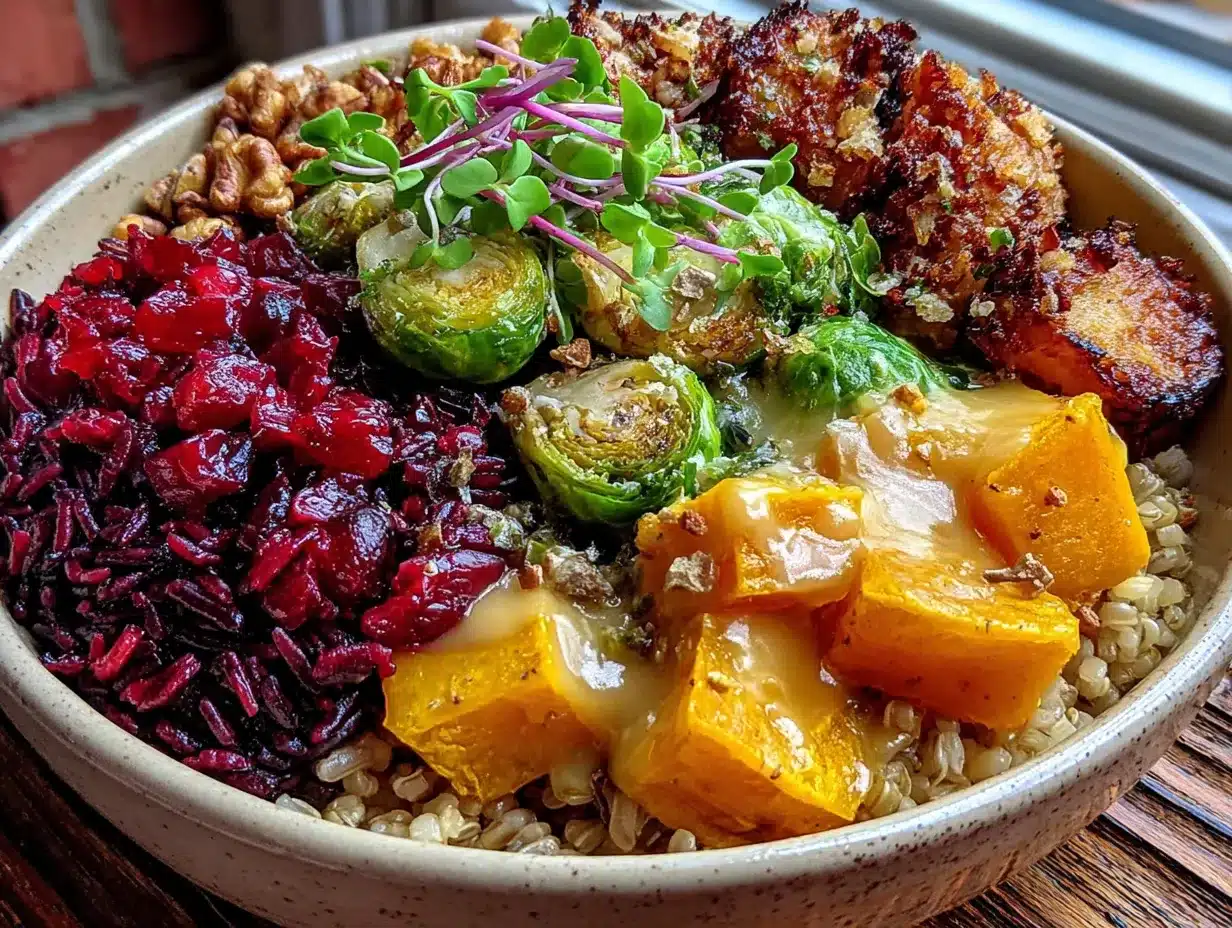
- 1 cup farro (or spelt, barley, or brown rice) – I love farro for its chewy texture and nutty flavor; look for semi-pearled farro which cooks faster
- 2 cups water or vegetable broth – broth adds more flavor, but water works fine
- Pinch of salt
For the Maple-Tahini Drizzle
- ¼ cup tahini – I recommend Soom or Seed + Mill for a smooth, not-bitter tahini; stir well before using
- 2 tablespoons maple syrup – pure maple syrup, not pancake syrup (the flavor difference is huge)
- 2 tablespoons lemon juice – fresh squeezed is best, but bottled works in a pinch
- 2-3 tablespoons warm water – to thin the dressing to your preferred consistency
- 1 small garlic clove, minced or grated – optional, but I love the little kick
- ¼ teaspoon salt
For the Bowl Assembly
- 3 cups curly kale, stems removed and leaves torn into bite-sized pieces – Lacinato (dinosaur) kale is also great
- 1 tablespoon olive oil – for massaging the kale
- Pinch of salt
- ¼ cup dried cranberries – or dried cherries for a tarter option
- ¼ cup toasted pumpkin seeds (pepitas) – for crunch
- Optional: crumbled feta cheese or goat cheese – if you’re not strictly vegan, this adds a lovely salty tang
Ingredient Tips: If you can’t find farro, spelt or barley are excellent substitutes. For a gluten-free option, use brown rice or quinoa. The tahini—please, please stir it before measuring. It separates in the jar and you’ll end up with a watery mess if you don’t mix it first. And if your tahini tastes bitter, add an extra tablespoon of maple syrup to balance it out.
Equipment Needed
You don’t need a fancy kitchen to make this bowl. Here’s what you’ll need:
- Baking sheet (half-sheet size, 18×13 inches) – I prefer Nordic Ware for even heat distribution; if you don’t have one, line any baking sheet with parchment paper to prevent sticking
- Medium saucepan – for cooking the farro; any 2-quart pot works
- Large mixing bowl – for massaging the kale
- Small bowl or jar – for whisking the dressing; a mason jar works perfectly for shaking
- Chef’s knife and cutting board – a sharp knife makes cubing squash so much easier
- Vegetable peeler – for peeling butternut squash or sweet potatoes
- Measuring cups and spoons
- Whisk or fork – for emulsifying the dressing
Budget-Friendly Tip: If you don’t have a half-sheet pan, use two smaller baking sheets to avoid overcrowding the vegetables—crowding leads to steaming instead of roasting. And honestly, a good chef’s knife is worth the investment. I used a $20 knife for years and it worked fine. Just keep it sharp.
Preparation Method
Let’s get cooking. This bowl comes together in about 45 minutes, and most of that is hands-off roasting time.
- Preheat your oven to 400°F (200°C). Line a large baking sheet with parchment paper for easy cleanup.
- Cook the farro. Rinse 1 cup of farro under cold water. In a medium saucepan, combine the farro with 2 cups of water or vegetable broth and a pinch of salt. Bring to a boil, then reduce heat to low, cover, and simmer for 25-30 minutes, or until the farro is tender but still chewy. Drain any excess liquid and fluff with a fork. Set aside. (Pro tip: cook the farro while the vegetables roast to save time.)
- Prep the vegetables. Peel the butternut squash (or sweet potatoes) and cut into ½-inch cubes. Aim for uniform size so they cook evenly. Drain and rinse the chickpeas, then pat them dry with a clean kitchen towel—this helps them get crispy in the oven.
- Season and roast. In a large bowl, toss the cubed squash and chickpeas with 2 tablespoons olive oil, smoked paprika, cinnamon, salt, and pepper. Spread them in a single layer on the prepared baking sheet. Roast for 25-30 minutes, flipping halfway through, until the squash is tender and caramelized at the edges and the chickpeas are golden and slightly crispy. The smell in your kitchen right now is pure fall magic.
- Massage the kale. While the vegetables roast, place the torn kale in a large bowl. Drizzle with 1 tablespoon olive oil and a pinch of salt. Using your hands, massage the kale for 2-3 minutes until it darkens in color and becomes tender. This step is non-negotiable—raw kale is tough and bitter, but massaged kale is silky and delicious. You’ll feel it soften under your fingers.
- Make the maple-tahini dressing. In a small bowl or mason jar, combine ¼ cup tahini, 2 tablespoons maple syrup, 2 tablespoons lemon juice, the minced garlic (if using), and ¼ teaspoon salt. Whisk or shake until smooth. Add warm water, 1 tablespoon at a time, whisking after each addition, until the dressing reaches a pourable consistency. It should be thick enough to coat a spoon but thin enough to drizzle. Taste and adjust—more maple for sweetness, more lemon for tang.
- Toast the pumpkin seeds (optional but recommended). In a dry skillet over medium heat, toast ¼ cup pumpkin seeds for 2-3 minutes, shaking the pan frequently, until they start to pop and smell nutty. Remove from heat immediately to prevent burning.
- Assemble the bowls. Divide the massaged kale among serving bowls. Top with a generous scoop of cooked farro. Arrange the roasted squash and chickpeas on top. Sprinkle with dried cranberries and toasted pumpkin seeds. If using, add crumbled feta or goat cheese. Drizzle generously with the maple-tahini dressing—don’t be shy here.
- Serve immediately while the vegetables are still warm. The contrast between the warm roasted veggies, the cool kale, and the creamy dressing is everything.
Cooking Tips & Techniques
I’ve made this bowl enough times to know where things can go sideways. Here’s what I’ve learned:
Don’t overcrowd the baking sheet. If you pile the squash and chickpeas on top of each other, they’ll steam instead of roast. You want that caramelization, that slight char. Use two baking sheets if you need to. Your patience will be rewarded.
Season in layers. I see people make the mistake of only seasoning the vegetables and then wondering why the bowl tastes flat. Season the farro cooking water with salt. Season the kale with salt as you massage it. Season the dressing with salt. Each layer builds flavor.
Make the dressing ahead. The maple-tahini dressing thickens as it sits in the fridge. That’s normal. Just add a splash of warm water and whisk before using. I often double the dressing recipe because I end up using it on everything—drizzled over this fall chopped salad or even as a dip for raw vegetables.
Toast your grains. Before cooking the farro, try toasting it in the dry saucepan for 2-3 minutes until it smells nutty. It adds another dimension of flavor. I learned this trick from a friend who’s a professional chef, and I’ve never gone back.
Watch the squash. Different ovens run hot. Check the squash at the 20-minute mark. You want it fork-tender but not mushy. If it’s browning too quickly, lower the temperature to 375°F (190°C) for the last 10 minutes.
My biggest failure? The first time I made this, I forgot to massage the kale. I just tossed it in the bowl raw. It was like eating leaves from the backyard. Don’t skip that step. Massaging kale is the difference between “ugh, kale” and “wait, this is actually good.”
Variations & Adaptations
This bowl is endlessly adaptable. Here are some of my favorite variations:
- Protein-Packed Version: Add grilled chicken, baked tofu, or a soft-boiled egg on top. For a quick option, try this with maple Dijon sheet pan chicken thighs sliced over the bowl—the flavors match beautifully.
- Seasonal Swap: In winter, use roasted Brussels sprouts and carrots instead of squash. In spring, swap in asparagus and peas. The dressing works year-round.
- Grain-Free Option: Replace farro with cauliflower rice (roasted or sautéed) for a low-carb version. It’s lighter but still satisfying.
- Nut-Free: Skip the pumpkin seeds or replace them with sunflower seeds. The dressing is naturally nut-free since tahini is made from sesame seeds.
- Spicy Twist: Add a pinch of cayenne or red pepper flakes to the dressing for a little heat. I tried this once when I was fighting a cold and it was surprisingly good.
- Cheese Lover’s Version: Crumble feta, goat cheese, or even shaved Parmesan on top. The salty tang cuts through the sweetness of the maple dressing.
I once made a version with roasted delicata squash (no peeling needed!) and added pomegranate arils instead of cranberries. It was stunning for a holiday table. Don’t be afraid to experiment—this bowl is forgiving.
Serving & Storage Suggestions
This bowl is best served warm, right after assembly. The contrast between the warm roasted vegetables, the cool kale, and the creamy dressing is what makes it sing. But it’s also great at room temperature, which makes it perfect for packed lunches.
For meal prep: Store the components separately in airtight containers in the refrigerator. The cooked farro, roasted vegetables, and dressing each keep for up to 5 days. The massaged kale stays good for 3-4 days—just keep it dry and don’t dress it until you’re ready to eat. Assemble individual bowls as needed.
Reheating tip: If you’re eating this for lunch, I recommend reheating the farro and roasted vegetables separately (microwave for 1-2 minutes) and then adding the cold kale and dressing. The warm grains and veggies will slightly wilt the kale, which is lovely. Do not microwave the kale or the dressing—trust me on this.
Freezer-friendly? The roasted vegetables and cooked farro freeze well for up to 3 months. The kale and dressing should be made fresh. Thaw the grains and veggies in the refrigerator overnight, then reheat and assemble.
Flavor development: The dressing actually gets better after a day in the fridge—the flavors meld and mellow. If you’re making this for a party, make the dressing a day ahead. Your future self will thank you.
Nutritional Information & Benefits
This bowl is packed with nutrients that make you feel good from the inside out. Here’s the approximate breakdown per serving (based on 4 servings, without optional cheese):
- Calories: ~480
- Protein: 14g
- Fat: 18g (mostly healthy fats from tahini and olive oil)
- Carbohydrates: 68g
- Fiber: 14g
- Sugar: 16g (natural sugars from maple syrup, squash, and cranberries)
Health Highlights: Butternut squash is loaded with vitamin A (great for eye health and immunity). Farro provides complex carbohydrates and fiber for sustained energy. Kale is a powerhouse of vitamins K, C, and A, plus antioxidants. Tahini offers healthy fats and calcium. And chickpeas add plant-based protein and fiber. This bowl is naturally vegetarian, vegan-friendly, and can be made gluten-free with a grain swap.
Allergen Note: Contains sesame (tahini). Nut-free as written. Gluten-free if using brown rice or quinoa instead of farro.
I love that this bowl feels indulgent but is actually incredibly nourishing. It’s the kind of meal that leaves you satisfied without feeling heavy—perfect for those transitional fall days when you want comfort without the food coma.
Conclusion
This Wholesome Fall Harvest Grain Bowl with Maple-Tahini Drizzle is more than just a recipe—it’s my go-to for busy weeks, lazy Sundays, and everything in between. It’s the bowl that makes eating vegetables feel like a treat, not a chore. The combination of warm roasted squash, chewy farro, tender kale, and that creamy-sweet dressing is honestly hard to beat.
I hope you make this bowl your own. Swap in whatever grains you have, use whatever vegetables are in season, and adjust the dressing to your taste. That’s the beauty of a bowl like this—it’s a template, not a rulebook. And if you discover a variation you love, I’d love to hear about it.
Drop a comment below and let me know how yours turned out. Did you add something unexpected? Did the dressing blow your mind like it did mine? Share your creation on Pinterest and tag me—I can’t wait to see your fall harvest bowls in the wild. Happy cooking, friends!
Frequently Asked Questions
Can I make this bowl ahead of time for meal prep?
Absolutely! Store the cooked farro, roasted vegetables, and dressing separately in the fridge for up to 5 days. Massage the kale fresh or keep it dry in a container for 3-4 days. Assemble individual bowls when you’re ready to eat.
What can I use instead of farro?
Spelt, barley, brown rice, quinoa, or even couscous work great. For a gluten-free option, go with brown rice or quinoa. The cooking time will vary slightly, so check the package instructions.
My tahini dressing turned out bitter. What went wrong?
Some tahini brands are naturally more bitter than others. Try adding an extra tablespoon of maple syrup or a pinch more salt to balance it. Also, make sure you stirred the tahini well before measuring—the oil separates and can throw off the flavor.
Can I use frozen butternut squash instead of fresh?
You can, but fresh is better for roasting. Frozen squash releases more water and won’t caramelize as nicely. If using frozen, thaw and pat dry thoroughly before roasting, and expect a softer texture.
Is this recipe suitable for a vegan diet?
Yes, as written! Just skip the optional feta or goat cheese. The maple-tahini dressing is completely plant-based, and the rest of the ingredients are naturally vegan.