I figured browning butter was one of those fussy chef tricks that took more patience than it was worth. It took about one batch of this soup for that assumption to fall apart completely. I was standing over the stove, a bit skeptical, watching the butter foam and then quiet down, when these little brown specks started appearing at the bottom of the pan. The smell that hit me? It was nutty and warm and toasty, like the entire season of fall had been distilled into a single pot. I was supposed to be roasting the squash at the same time, but honestly, I just stood there, stirring the butter, completely mesmerized.
That first spoonful was the real surprise, though. The brown butter doesn’t just add flavor—it wraps around the sweet, earthy butternut squash like a cozy blanket. It deepens everything without overpowering it. I added a splash of apple cider on a whim (it was sitting in the fridge, looking lonely), and that little tart kick cut through the richness perfectly. This soup is the kind of meal you make when you want to feel like you’ve got your life together, even if the rest of the kitchen is a mess. It’s that good. And honestly, it’s easier than it sounds.
Why You’ll Love This Recipe
Let me tell you why this soup has become my go-to for chilly evenings and lazy Sunday meal prep. It hits all the right notes without demanding a ton of effort.
- Deep, Rich Flavor: The brown butter is the star here. It adds a toasty, nutty depth that plain butter or oil just can’t touch. It makes the soup taste like you simmered it for hours, even though it comes together in under an hour.
- Simple, Whole Ingredients: You don’t need a pantry full of exotic spices. Onion, garlic, a good butternut squash, and some broth are the base. The magic happens with technique, not a long ingredient list.
- Perfect for Fall Gatherings: This soup is fancy enough for a Thanksgiving starter but easy enough for a Tuesday night dinner. Pair it with a cozy one-pot healthy fall vegetable soup for a full autumn spread.
- Crowd-Pleaser: I’ve served this to picky kids and foodie adults, and it gets scooped up every single time. The creamy texture is naturally appealing, and the flavor is familiar but elevated.
- Unbelievably Satisfying: There is something about the combination of roasted squash and nutty brown butter that just feels like a hug in a bowl. It’s the kind of soup that makes you close your eyes after the first bite.
This isn’t just another squash soup recipe. It’s the one where the brown butter does all the heavy lifting, turning a humble vegetable into something truly special. It’s comfort food reimagined—richer, cozier, and with the same soul-soothing satisfaction you crave when the weather turns cold.
What Ingredients You Will Need
This recipe uses simple, wholesome ingredients to deliver that deep, bold flavor without the fuss. Most of these are pantry staples during the fall season, which makes this soup an easy weeknight win.
- Butternut Squash (1 medium, about 3 lbs): Look for one that feels heavy for its size with a matte, not shiny, skin. You’ll peel, seed, and cube it. Pre-cut squash from the store works in a pinch, but it’s often drier. I prefer baking a whole squash first for the sweetest flavor, but cubing it raw is faster.
- Unsalted Butter (4 tablespoons): This is non-negotiable for the brown butter. Unsalted lets you control the salt level. I use Kerrygold for its higher fat content, which browns beautifully.
- Yellow Onion (1 large, diced): A sweet onion like Vidalia works great here too. It adds a savory backbone to the soup.
- Garlic (3 cloves, minced): Fresh garlic is best. Don’t use the jarred stuff; it lacks that punchy aroma.
- Vegetable Broth (4 cups): Low-sodium is key so you can season to taste. A good quality broth makes a difference. Chicken broth works if you’re not keeping it vegetarian.
- Apple Cider (1/2 cup): This is my secret ingredient. It adds a subtle tartness that brightens the soup and balances the richness of the brown butter. Unfiltered apple cider is ideal.
- Heavy Cream (1/2 cup): For that velvety finish. You can use full-fat coconut milk for a dairy-free version, but it will change the flavor slightly.
- Maple Syrup (1 tablespoon): Just a touch to enhance the natural sweetness of the squash. Use real maple syrup, not pancake syrup.
- Salt and Black Pepper (to taste): I start with 1 teaspoon of salt and 1/4 teaspoon of pepper, then adjust at the end.
- Fresh Thyme (2 sprigs): Adds an earthy, slightly floral note. Dried thyme works (1/2 teaspoon), but fresh is better here.
- Optional Toppings: Toasted pepitas (pumpkin seeds), a drizzle of brown butter, a swirl of cream, or crispy sage leaves. Don’t skip the toppings—they add texture and make it feel fancy.
Equipment Needed
You don’t need a ton of fancy gear for this soup, which is part of its charm. Here’s what you’ll need to pull it off.
- Large Heavy-Bottomed Pot or Dutch Oven: A 5 to 6-quart pot is perfect. The heavy bottom is crucial for browning the butter evenly without burning it. I love my Le Creuset for this, but any sturdy pot works.
- Chef’s Knife and Cutting Board: Peeling and cubing a butternut squash requires a sharp knife. A vegetable peeler can also help with the skin.
- Immersion Blender or Regular Blender: An immersion blender makes the soup creamy right in the pot with less mess. If using a regular blender, blend in batches and leave the lid slightly ajar to let steam escape. Trust me on that one—I learned the hard way.
- Wooden Spoon or Silicone Spatula: For stirring the brown butter and scraping up any browned bits from the bottom of the pot.
- Measuring Cups and Spoons: For accuracy, especially with the broth and cream.
A good pot is worth the investment, but if you’re on a budget, a stainless steel pot works fine—just watch the heat closely to prevent the butter from scorching.
Preparation Method

Let’s get cooking. This method is straightforward, but I’ll walk you through each step so you get that perfect, creamy texture every time.
- Prep the Squash (10 minutes): Peel the butternut squash with a vegetable peeler. Cut off the top and bottom, then slice it in half lengthwise. Scoop out the seeds with a spoon. Cut the flesh into 1-inch cubes. Aim for uniform pieces so they cook evenly. You should have about 5-6 cups of cubed squash.
- Brown the Butter (5-7 minutes): Place your large pot over medium heat. Add the 4 tablespoons of butter. Let it melt completely, then continue cooking, swirling the pan occasionally. The butter will foam up, then subside. Watch closely as the color changes from pale yellow to a golden amber, and you’ll see brown specks forming at the bottom. It will smell intensely nutty and toasty. Once it reaches a deep amber color (think the color of a penny), immediately remove the pot from the heat and pour the brown butter into a heat-safe bowl to stop the cooking. Do not walk away—it can burn in seconds.
- Sauté the Aromatics (8 minutes): Return the pot to medium heat. Add 2 tablespoons of the reserved brown butter (yes, you’re using some of that liquid gold now). Add the diced onion and cook, stirring occasionally, until softened and translucent, about 5-6 minutes. Add the minced garlic and the fresh thyme sprigs, and cook for another minute until fragrant. The smell at this point is incredible.
- Cook the Squash (15 minutes): Add the cubed butternut squash to the pot. Stir to coat it with the onions and garlic. Cook for about 5 minutes, stirring occasionally, letting the squash get a little color on the edges. This step builds more flavor. Season with a generous pinch of salt and pepper.
- Simmer the Soup (20 minutes): Pour in the 4 cups of vegetable broth and the 1/2 cup of apple cider. Stir in the 1 tablespoon of maple syrup. Bring the mixture to a boil, then reduce the heat to low, cover the pot, and let it simmer for about 20 minutes, or until the squash is fork-tender. You should be able to easily pierce a cube with a knife.
- Blend Until Smooth (5 minutes): Remove the thyme sprigs and discard them. Use an immersion blender directly in the pot to puree the soup until it’s completely smooth and velvety. If using a regular blender, work in batches. Fill the blender no more than halfway, hold the lid down with a towel, and blend until smooth. Return the puree to the pot.
- Finish with Cream and Brown Butter (5 minutes): Stir in the 1/2 cup of heavy cream and the remaining 2 tablespoons of reserved brown butter. Taste the soup and adjust the seasoning. You might want another pinch of salt or a crack of black pepper. If it’s too thick, add a splash more broth or water until it reaches your desired consistency. Warm the soup over low heat for a few minutes—do not let it boil after adding the cream.
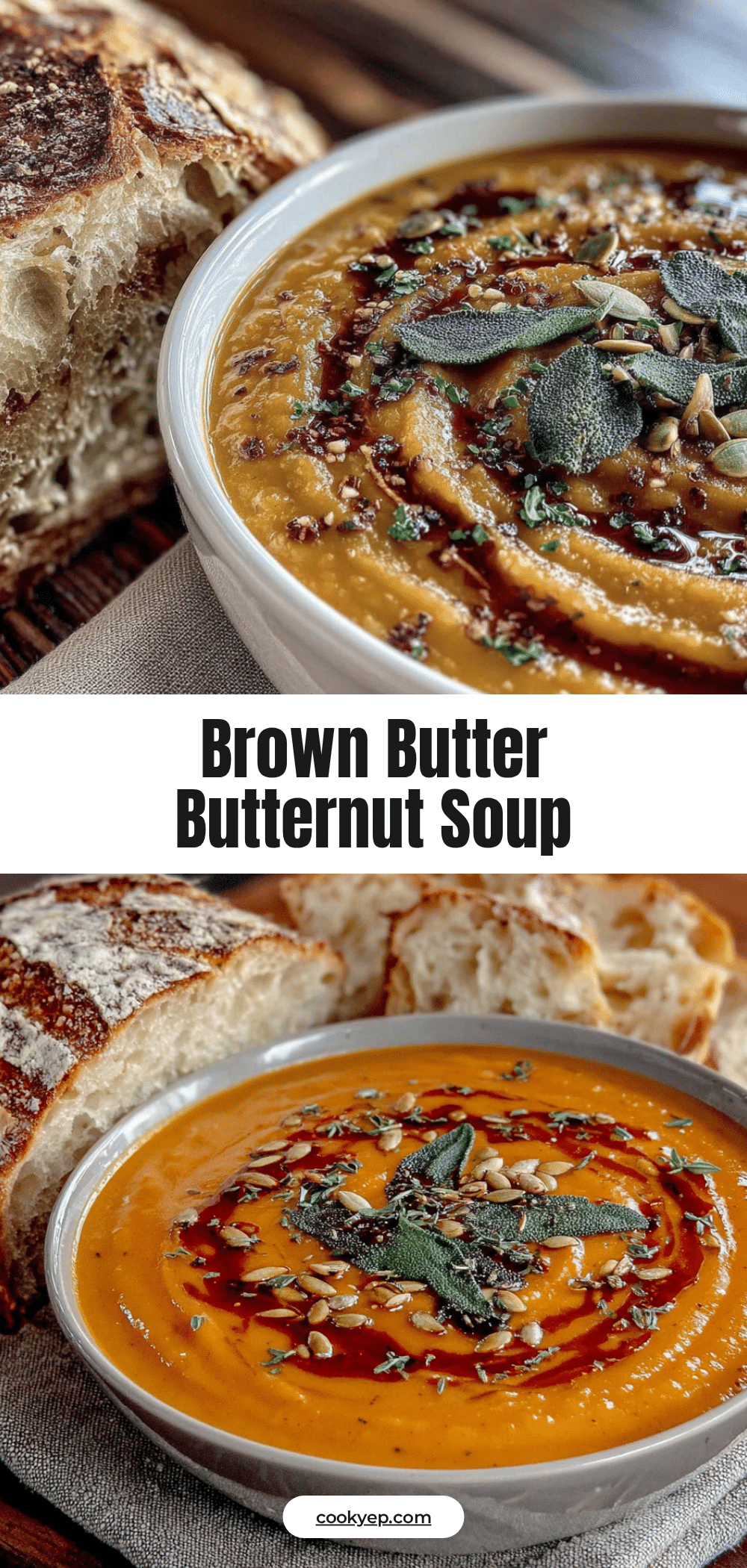
- Serve and Garnish (2 minutes): Ladle the soup into bowls. Drizzle with the extra reserved brown butter (if you have any left), a swirl of cream, and a sprinkle of toasted pepitas. A few crispy sage leaves on top are a beautiful touch, too.
Cooking Tips & Techniques
I’ve made this soup more times than I can count, and I’ve definitely learned a few things the hard way. Here are my best tips for getting it perfect every time.
Master the Brown Butter: This is the most important step. Use a light-colored pan so you can see the color change clearly. Swirl the pan constantly as the butter foams. The moment it turns a deep amber and smells nutty, pull it off the heat. If you see black specks, you’ve gone too far. Don’t worry if it seems thin—it will thicken as it cools.
Roast for More Flavor: If you have the extra time, roast the cubed squash at 400°F (200°C) for 25 minutes before adding it to the pot. This caramelizes the natural sugars and adds a deeper, sweeter flavor. It’s not required, but it’s a game-changer when you want to impress.
Don’t Skip the Apple Cider: I know it sounds a little odd, but that splash of tart apple cider is what keeps the soup from being one-note sweet. It cuts through the richness of the brown butter and the cream, making each spoonful feel balanced. If you don’t have apple cider, a splash of apple cider vinegar will work in a pinch—just use less (about 1 tablespoon).
Blend with Caution: Hot soup in a blender is a recipe for a kitchen disaster. Always let the soup cool for a few minutes before blending, and never fill the blender more than halfway. Hold the lid down with a kitchen towel to prevent any explosions. An immersion blender is truly the easiest tool here.
Adjust the Consistency: Everyone likes their soup a little different. If you prefer a thinner soup, add more broth. For a thicker, more stew-like texture, simmer it uncovered for a few extra minutes after blending. The soup will also thicken as it sits, so keep that in mind if you’re making it ahead.
Variations & Adaptations
One of the best things about this soup is how easy it is to adapt. Here are a few ways I’ve changed it up depending on my mood or what’s in the fridge.
Vegan and Dairy-Free: Swap the butter for a high-quality vegan butter or coconut oil to brown. Use full-fat canned coconut milk instead of heavy cream. The coconut flavor is subtle and actually pairs beautifully with the squash and brown butter. This version is just as creamy and satisfying.
Spicy Kick: Add a pinch of red pepper flakes or a small, seeded jalapeño when you sauté the onions. The heat contrasts wonderfully with the sweet squash and nutty butter. I love this version on a cold, rainy day when I need an extra layer of warmth.
Add Some Protein: For a heartier meal, stir in some shredded rotisserie chicken or cooked white beans after blending. You can also top the soup with crispy bacon bits or crumbled Italian sausage. It turns a side dish into a full dinner.
Roasted Garlic Version: Roast a whole head of garlic in the oven while you prep the squash. Squeeze the soft, caramelized cloves into the pot before blending. It adds a mellow, sweet garlic flavor that’s completely different from raw garlic. This is my favorite variation for holiday dinners.
Spice It Up: Instead of just thyme, add a cinnamon stick or a pinch of nutmeg while the soup simmers. These warm spices complement the brown butter and squash beautifully. Just remove the cinnamon stick before blending.
Serving & Storage Suggestions
This soup is incredibly versatile when it comes to serving and storing. Here’s how to make the most of it.
Serving: Serve the soup hot, but not boiling. Ladle it into warm bowls for the best experience. A drizzle of extra brown butter, a swirl of cream, and a sprinkle of toasted pepitas or pumpkin seeds add the perfect finishing touch. A few crispy sage leaves (fried in butter for 30 seconds) are a beautiful, aromatic garnish. This soup pairs wonderfully with a crusty loaf of sourdough or a simple green salad. For a fun twist, serve it in small mugs as a starter for a fall dinner party, or pair it with a cozy roasted apple cider margarita for a truly seasonal meal.
Storage: Let the soup cool completely to room temperature. Transfer it to an airtight container and store it in the refrigerator for up to 5 days. The flavors actually get better after a day or two as they meld together. The soup will thicken as it sits, so don’t be alarmed.
Freezing: This soup freezes beautifully. Pour the cooled soup into freezer-safe bags or containers. Leave about an inch of headspace for expansion. It will keep for up to 3 months. To thaw, place the container in the refrigerator overnight.
Reheating: Reheat the soup gently on the stovetop over medium-low heat, stirring occasionally. Add a splash of broth or water to thin it out if needed. You can also reheat individual portions in the microwave in 30-second bursts, stirring between each. Avoid boiling the soup after adding cream, as it can curdle.
Flavor Development: I honestly think this soup tastes even better the next day. The brown butter flavor seems to deepen, and the squash becomes even more mellow. It’s the perfect make-ahead meal for busy weeks or holiday prep.
Nutritional Information & Benefits
This soup is as nourishing as it is delicious. Here’s a quick look at what you’re getting in a serving.
Estimated Nutritional Values (per 1.5-cup serving):
- Calories: 280
- Fat: 18g
- Carbohydrates: 28g
- Fiber: 6g
- Protein: 4g
- Sugar: 12g (naturally occurring)
Health Benefits: Butternut squash is packed with vitamin A (great for your eyes and immune system), vitamin C, and fiber. The brown butter adds healthy fats that help your body absorb those fat-soluble vitamins. The apple cider provides a small dose of antioxidants. It’s a bowl of comfort that actually does your body some good.
Dietary Considerations: This recipe is naturally gluten-free and can easily be made vegan and dairy-free with the substitutions mentioned above. It’s also a great option for those watching their sugar intake, as the sweetness comes mostly from the squash itself.
Potential Allergens: Contains dairy (butter, cream). If you have a nut allergy, be sure to check your pepitas, though they are seeds and generally safe. The soup is free of the top eight allergens when made with the vegan substitutions.
I love that I can serve this soup to my family knowing it’s filling them up with real, whole ingredients. It’s the kind of meal that makes you feel good from the inside out.
Conclusion
This Cozy Brown Butter Butternut Squash Soup is more than just a recipe—it’s a feeling. It’s the warmth of a crackling fire, the comfort of a soft blanket, and the satisfaction of a meal made with intention. The brown butter adds a depth of flavor that turns a simple squash soup into something truly memorable, and it’s so much easier than you’d think.
I hope you give this soup a try and make it your own. Maybe you’ll add a pinch of cinnamon, swirl in some coconut milk, or top it with crispy bacon. Whatever you do, don’t skip the brown butter—it’s the heart of this dish. And when you take that first spoonful, I hope it makes you feel as cozy and content as it makes me.
I’d love to hear how it turns out for you! Drop a comment below and let me know if you tried any fun variations, or tag me in your photos on social media. Your kitchen adventures inspire me to keep creating. Happy cooking, friends!
Frequently Asked Questions
Can I use frozen butternut squash for this soup?
Absolutely! Frozen butternut squash works great and saves you the prep time. Just add it directly to the pot with the broth—no need to thaw it first. The soup might be slightly thinner, so you may need to simmer it a few extra minutes to thicken it up.
How do I prevent my brown butter from burning?
The key is to watch it closely and use medium heat. Once the butter melts, it will foam. Swirl the pan gently and keep your eyes on the color. When it turns a deep amber and smells nutty, pull it off the heat immediately. Pouring it into a separate bowl stops the cooking process.
Can I make this soup in a slow cooker or Instant Pot?
Yes! For a slow cooker, sauté the aromatics on the stovetop first, then transfer everything (except the cream and brown butter) to the slow cooker. Cook on low for 6-8 hours or high for 3-4 hours. Blend, then stir in the cream and brown butter. For an Instant Pot, use the sauté function for the aromatics, then pressure cook on high for 10 minutes with a natural release.
What can I use instead of apple cider?
If you don’t have apple cider, you can use apple juice or even a splash of orange juice for a different citrusy note. For a more savory twist, try a tablespoon of apple cider vinegar or white wine vinegar. It won’t be exactly the same, but it will still brighten the soup nicely.
Is this soup freezer-friendly?
Yes, it freezes beautifully! Let the soup cool completely, then transfer it to freezer-safe bags or containers. It will keep for up to 3 months. Thaw it in the refrigerator overnight and reheat gently on the stovetop. The texture remains creamy and smooth after thawing.
Pin This Recipe!
Cozy Brown Butter Butternut Squash Soup

This brown butter butternut squash soup is the ultimate fall comfort food. The nutty, toasty brown butter deepens the sweet, earthy squash, while a splash of apple cider adds a bright, tart kick that balances the richness perfectly.
- Prep Time: 15 minutes
- Cook Time: 40 minutes
- Total Time: 55 minutes
- Yield: 4 servings 1x
- Category: Soup
- Cuisine: American
Ingredients
- 1 medium butternut squash (about 3 lbs), peeled, seeded, and cubed
- 4 tablespoons unsalted butter
- 1 large yellow onion, diced
- 3 cloves garlic, minced
- 4 cups low-sodium vegetable broth
- 1/2 cup apple cider
- 1/2 cup heavy cream
- 1 tablespoon maple syrup
- Salt and black pepper to taste
- 2 sprigs fresh thyme
- Optional toppings: toasted pepitas, extra brown butter, cream swirl, crispy sage leaves
Instructions
- Prep the squash: Peel the butternut squash, cut off the top and bottom, slice in half lengthwise, and scoop out the seeds. Cut into 1-inch cubes (about 5-6 cups).
- Brown the butter: In a large heavy-bottomed pot or Dutch oven over medium heat, melt the butter. Continue cooking, swirling occasionally, until it foams, then subsides, and turns a deep amber color with brown specks and a nutty aroma (5-7 minutes). Immediately remove from heat and pour into a heat-safe bowl to stop cooking.
- Sauté the aromatics: Return the pot to medium heat. Add 2 tablespoons of the reserved brown butter. Add the diced onion and cook until softened and translucent, about 5-6 minutes. Add the minced garlic and fresh thyme sprigs, and cook for 1 minute until fragrant.
- Cook the squash: Add the cubed butternut squash to the pot. Stir to coat, and cook for about 5 minutes, letting the squash get a little color on the edges. Season with a generous pinch of salt and pepper.
- Simmer the soup: Pour in the vegetable broth and apple cider. Stir in the maple syrup. Bring to a boil, then reduce heat to low, cover, and simmer for about 20 minutes, until the squash is fork-tender.
- Blend until smooth: Remove the thyme sprigs and discard. Use an immersion blender to puree the soup directly in the pot until completely smooth. If using a regular blender, blend in batches, filling no more than halfway, and hold the lid down with a towel.
- Finish with cream and brown butter: Stir in the heavy cream and the remaining 2 tablespoons of reserved brown butter. Taste and adjust seasoning with salt and pepper. Warm over low heat for a few minutes; do not boil after adding cream.
- Serve and garnish: Ladle into bowls. Drizzle with extra brown butter, a swirl of cream, and sprinkle with toasted pepitas or crispy sage leaves if desired.
Notes
For deeper flavor, roast the cubed squash at 400°F (200°C) for 25 minutes before adding to the pot. The soup thickens as it sits; add more broth to thin if needed. Brown butter can burn quickly—watch closely and remove from heat as soon as it turns amber. The soup tastes even better the next day as flavors meld.
Nutrition
- Serving Size: 1.5 cups
- Calories: 280
- Sugar: 12
- Sodium: 480
- Fat: 18
- Saturated Fat: 10
- Carbohydrates: 28
- Fiber: 6
- Protein: 4
Keywords: butternut squash soup, brown butter soup, fall soup, creamy squash soup, easy soup recipe, comfort food, vegetarian soup