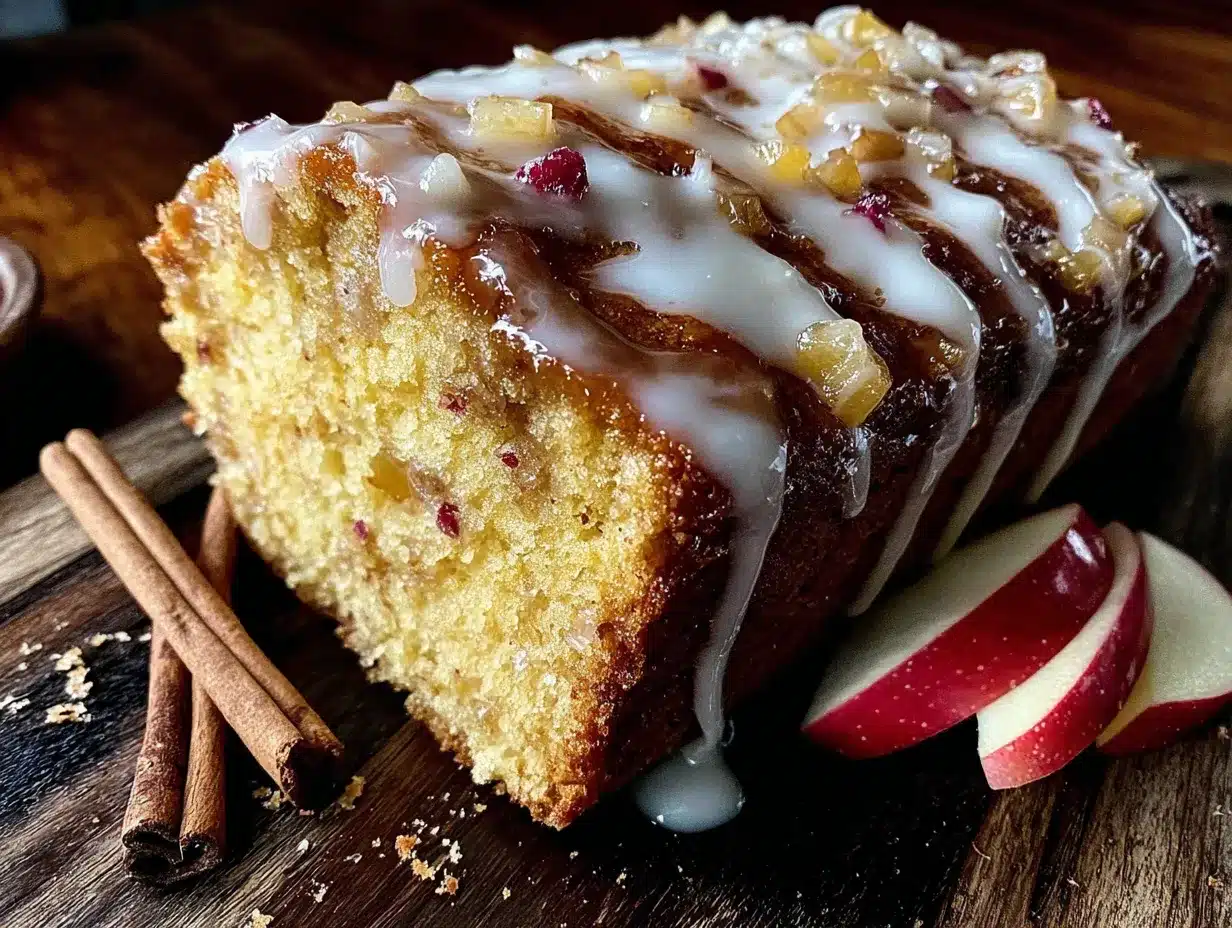
Third batch in five days, and I finally accepted that the crumb topping was never going to stay put in the loaf pan—so I stopped fighting it and let it fall where it wanted, which turned out to be the best decision I made all week. The first loaf came out looking like a construction site, all crumble and chaos, but tasting like someone had distilled an entire apple orchard into a single slice of bread. I kept making it because I couldn’t figure out why something so messy could taste so right. Turns out, the crumb topping that slides off during baking creates this accidental caramelized crust along the bottom and sides of the bread—a little sugary, a little buttery, and absolutely worth the mess.
This apple cider donut bread with cinnamon glaze started as a way to use up the half-gallon of fresh cider sitting in my fridge after a weekend trip to the orchard. I wanted something that captured that first-bite feeling of a warm apple cider donut—the slight tang from the cider, the soft crumb, the way the cinnamon sugar cracks against your teeth—but in loaf form, because let’s be honest, nobody wants to stand over a pot of hot oil on a Tuesday night. The first attempt was dry. The second was too dense. The third? That was the one where I stopped trying to make it perfect and started paying attention to what the batter was telling me.
There’s something about reducing apple cider on the stove that changes the whole personality of a bake. It concentrates the flavor without making things watery, and it gives the bread this almost caramel-like undertone that regular apple juice just can’t touch. I started reducing the cider as an afterthought, mostly because I was impatient and wanted the flavor to punch harder. Now I won’t make this bread any other way. The glaze—just powdered sugar, cinnamon, and a splash of that same reduced cider—ties it all together without overwhelming the delicate apple flavor. It’s the kind of recipe that feels like a warm sweater on a cold morning. You’ll want to keep it close.
Why You’ll Love This Recipe
This isn’t just another quick bread that pretends to taste like a donut. I tested this recipe seven times over two weeks—yes, seven—because I needed the texture to match the memory of a perfect cider donut. The crumb needed to be tender but sturdy enough to hold a thick glaze without turning into soup. The cider flavor needed to be obvious, not something you have to squint to taste. And the cinnamon? It had to be present without taking over the whole show.
- Big flavor, small effort: The reduced apple cider does most of the heavy lifting here. No complicated techniques, no fancy equipment—just one pot and a loaf pan.
- No deep frying required: You get all the cozy, spiced warmth of a fried donut without the oil splatter or the guilt. This bread bakes up soft and tender, with that signature donut crumb you’re craving.
- Pantry-friendly ingredients: Butter, sugar, flour, eggs, cinnamon—you probably have most of this already. The only special item is fresh apple cider, and you can find that at any grocery store this time of year.
- Perfect for fall mornings (or any morning): Slice it for breakfast, toast it for a snack, or serve it warm with a scoop of vanilla ice cream for dessert. It pulls triple duty without breaking a sweat.
- That cinnamon glaze: It sets up just enough to crack when you bite into it, but stays soft and glossy underneath. It’s the kind of glaze that makes you close your eyes on the first bite.
I’ve made this bread for neighbors, for book club, and for my own sanity during a particularly rainy October week. Every single time, someone asks for the recipe before they finish their first slice. That’s the kind of recipe this is—the one people remember.
What Ingredients You Will Need
This recipe uses simple, honest ingredients that work together to create something greater than the sum of their parts. The magic happens in the details—reducing the cider, using room-temperature eggs, letting the butter brown just a little.
- Apple cider (2 cups, reduced to ⅔ cup): Fresh, unfiltered cider works best here. The reduction concentrates the apple flavor and removes excess water, which keeps the bread from turning gummy. I’ve tried this with store-bought apple juice, and honestly, it’s not the same—the flavor is thinner and the bread comes out less tender. Stick with real cider if you can.
- Unsalted butter (½ cup, 1 stick, softened): Butter gives this bread its rich, tender crumb. I prefer unsalted so I can control the salt level. If you only have salted butter on hand, just reduce the added salt in the recipe by ¼ teaspoon.
- Granulated sugar (¾ cup): Regular white sugar keeps the crumb light and tender. It also helps the bread brown evenly in the oven.
- Light brown sugar (¼ cup, packed): Brown sugar adds moisture and a hint of molasses depth that plays beautifully with the cinnamon and apple cider. Don’t skip it—it’s what gives the bread that soft, almost sticky texture.
- Large eggs (2, room temperature): Room-temperature eggs emulsify into the batter more smoothly, creating a finer, more even crumb. If you forget to take them out of the fridge, place them in a bowl of warm water for 5 minutes before using.
- Vanilla extract (1 teaspoon): Pure vanilla extract rounds out the spiced flavors. Imitation vanilla works in a pinch, but the flavor won’t be as warm or complex.
- All-purpose flour (1¾ cups): Standard all-purpose flour provides the right structure for this bread. I’ve tested this with a 1:1 gluten-free blend, and it works—just expect a slightly denser crumb.
- Baking powder (1½ teaspoons): This is the main leavening agent. Make sure your baking powder is fresh—if it doesn’t bubble when you drop a pinch into hot water, it’s time to buy a new can.
- Baking soda (½ teaspoon): Works with the acidity in the reduced cider to help the bread rise and brown.
- Salt (½ teaspoon): Salt enhances every other flavor in the bread. Don’t skip it, even if you’re watching your sodium intake.
- Ground cinnamon (2 teaspoons, divided): One teaspoon goes into the batter, and the other goes into the glaze. I use Vietnamese cinnamon for its bold, almost spicy warmth, but any grocery store cinnamon will work.
- Ground nutmeg (¼ teaspoon): Just a whisper of nutmeg adds that classic fall bakery flavor without being obvious. Freshly grated is best, but pre-ground is fine.
- Buttermilk (¼ cup, room temperature): Buttermilk adds tenderness and a subtle tang that brightens the apple flavor. If you don’t have buttermilk, stir 1 teaspoon of lemon juice or vinegar into ¼ cup of regular milk and let it sit for 5 minutes.
For the cinnamon glaze:
- Powdered sugar (1 cup): Sifted, if you want a perfectly smooth glaze. I rarely sift mine, and it still turns out great—just a few tiny lumps that remind you it’s homemade.
- Reduced apple cider (2 tablespoons): Use the same reduced cider from the bread batter. This keeps the flavor consistent and adds a beautiful apple tang to the glaze.
- Ground cinnamon (1 teaspoon): For that signature cinnamon swirl effect in the glaze.
- Vanilla extract (½ teaspoon): Optional, but it rounds out the glaze nicely.
Equipment Needed
You don’t need a bakery-grade kitchen to make this bread. A few basic tools will get the job done beautifully.
- Standard 9×5-inch loaf pan: This is the workhorse of the recipe. Glass, metal, or ceramic all work—just note that glass pans may require an extra 5-7 minutes of baking time.
- Small saucepan: For reducing the apple cider. A 1-quart saucepan is perfect.
- Large mixing bowl: For the dry ingredients.
- Medium mixing bowl: For the wet ingredients.
- Whisk and wooden spoon (or spatula): A whisk for the dry ingredients and a wooden spoon for folding the wet into the dry. I prefer a wooden spoon because it’s gentle on the batter and doesn’t overmix.
- Parchment paper: Lining the loaf pan makes removal a breeze. I’ve forgotten this step before, and let me tell you—scraping a stuck loaf out of the pan is not a fun way to start your morning.
- Wire cooling rack: Essential for even cooling and preventing a soggy bottom.
- Measuring cups and spoons: For accuracy. I’ve been baking long enough to eyeball most things, but this bread is worth measuring properly.
If you don’t have a loaf pan, you can bake this batter in a 9-inch round cake pan—just reduce the baking time to 30-35 minutes and check for doneness early.
Preparation Method
- Reduce the apple cider: Pour 2 cups of fresh apple cider into a small saucepan. Bring it to a boil over medium-high heat, then reduce the heat to medium-low and let it simmer gently. Stir occasionally. You’re looking for the cider to reduce down to about ⅔ cup—this usually takes 15-20 minutes. The cider will thicken slightly and smell intensely of cooked apples. Remove it from the heat and let it cool completely before using. (I learned the hard way that adding hot cider to butter creates a greasy mess, not a smooth batter.)
- Preheat and prep: Preheat your oven to 350°F (175°C). Grease a 9×5-inch loaf pan and line it with parchment paper, leaving an overhang on the two long sides. This makes lifting the bread out later a complete non-event.
- Mix the dry ingredients: In a large bowl, whisk together the all-purpose flour, baking powder, baking soda, salt, 1 teaspoon of cinnamon, and the nutmeg. Whisking aerates the flour and distributes the leavening agents evenly, which means no bitter baking soda pockets in your finished bread.
- Cream the butter and sugars: In a separate medium bowl, beat the softened butter, granulated sugar, and brown sugar together until light and fluffy—about 2-3 minutes with a hand mixer, or 4-5 minutes if you’re doing it by hand with a wooden spoon. The mixture should look pale and slightly aerated. Don’t rush this step; proper creaming is what gives the bread its tender crumb.
- Add the eggs and vanilla: Beat in the room-temperature eggs one at a time, making sure each is fully incorporated before adding the next. Stir in the vanilla extract. The batter might look a little curdled at this point—that’s normal, especially if your eggs were slightly cooler than room temperature.
- Alternate the dry and wet ingredients: Gradually add the flour mixture to the butter mixture, alternating with the buttermilk. Start and end with the flour mixture. I do this in three additions: flour, half the buttermilk, flour, the rest of the buttermilk, then the remaining flour. Mix just until the flour disappears—overmixing at this stage will make the bread tough.
- Fold in the reduced cider: Gently fold the cooled reduced apple cider into the batter. The batter will thin out slightly, which is exactly what you want. Stop folding as soon as the cider is evenly distributed. A few streaks of cider are fine; they’ll bake out.
- Bake the bread: Pour the batter into the prepared loaf pan and smooth the top with a spatula. Bake for 50-60 minutes, or until a toothpick inserted into the center comes out clean or with just a few moist crumbs. If the top is browning too quickly (after about 35 minutes), tent the loaf loosely with aluminum foil.
- Cool completely: Let the bread cool in the pan for 15 minutes, then lift it out using the parchment overhang and transfer it to a wire rack. Cool completely before glazing. I know it’s tempting to glaze it warm, but the glaze will slide right off and pool at the bottom of the plate. Trust me on this one.
- Make the glaze: In a small bowl, whisk together the powdered sugar, 2 tablespoons of reduced apple cider, 1 teaspoon of cinnamon, and the vanilla extract (if using). The glaze should be thick but pourable—add a little more cider if it’s too stiff, or more sugar if it’s too thin. Drizzle it over the cooled bread and let it set for 10-15 minutes before slicing.
Cooking Tips & Techniques
I’ve made this bread enough times to have a few battle scars—and a few hard-won tips that make the process smoother.
- Don’t rush the cider reduction: The first time I made this, I cranked the heat to high to speed things up and ended up with a burnt, sticky mess that smelled more like caramel gone wrong than apple cider. Low and slow is the way to go. The reduction should take about 15-20 minutes. Use that time to measure your other ingredients and enjoy the smell of apples simmering on the stove.
- Room temperature ingredients matter: Cold eggs and cold butter don’t emulsify well, which can lead to a dense, greasy bread. If you’re short on time, place your eggs in a bowl of warm water for 5 minutes and microwave your buttermilk for 10-15 seconds (just until it’s no longer cold to the touch).
- Check your baking powder: I once made an entire loaf with expired baking powder and ended up with a flat, rubbery brick that even the squirrels wouldn’t touch. Test your baking powder by dropping a pinch into hot water—if it bubbles vigorously, you’re good to go.
- Use the toothpick test wisely: A clean toothpick means the bread is done, but a few moist crumbs are actually ideal—they mean the bread will stay soft and tender. If you wait until the toothpick is completely dry, the bread might be overbaked.
- Glaze with confidence: Don’t be shy with the glaze. I like to drizzle it in a zigzag pattern across the top of the bread, letting some drip down the sides. It looks rustic and intentional, and it ensures every slice gets a little bit of that cinnamon-sugar goodness.
Variations & Adaptations
This bread is forgiving enough to handle a few tweaks. Here are some variations I’ve tried and loved.
- Gluten-free version: Substitute the all-purpose flour with a 1:1 gluten-free baking blend (I like Bob’s Red Mill). Add 1 teaspoon of xanthan gum if your blend doesn’t already include it. The texture will be slightly more tender and a little crumblier, but the flavor is spot-on.
- Dairy-free option: Use melted coconut oil or vegan butter in place of the unsalted butter, and swap the buttermilk for ¼ cup of unsweetened almond milk mixed with 1 teaspoon of apple cider vinegar. The bread will be a touch denser but still delicious.
- Add-ins: Fold in ½ cup of chopped pecans or walnuts along with the cider for a little crunch. Or stir in ½ cup of dried cranberries for a tart pop of flavor that plays nicely with the sweet glaze.
- Spice it up: Add ¼ teaspoon of ground ginger or cardamom to the dry ingredients for a more complex spice profile. I did this once on a whim, and it was so good I’ve made it that way ever since.
- Apple chunks: If you want a chunkier texture, fold in ½ cup of finely diced fresh apple (Granny Smith or Honeycrisp work well) after adding the reduced cider. The apple pieces soften during baking and add little pockets of fruity moisture.
If you’re looking for another cozy fall bake, you might also enjoy this pumpkin chocolate chip bread with maple glaze—it’s a similar vibe with a completely different flavor profile.
Serving & Storage Suggestions
This bread is at its absolute best the day it’s made, when the glaze is still slightly soft and the crumb is tender. But it keeps beautifully for days, which is part of why I make it so often.
- Serving temperature: Serve at room temperature or gently warmed. To warm a slice, pop it in the microwave for 10-15 seconds or toast it lightly in a skillet with a pat of butter. The butter melts into the crumb and the glaze gets slightly gooey—it’s a game-changer.
- Pairings: A slice of this bread pairs beautifully with a hot cup of coffee, a chai latte, or a glass of cold milk. For a more indulgent treat, serve it warm with a scoop of vanilla ice cream and a drizzle of caramel sauce. I’ve also been known to eat it for breakfast with a side of crispy bacon—the salty-sweet combo is incredible.
- Storage: Store the bread in an airtight container at room temperature for up to 3 days. If you live in a humid climate (like I do), the glaze might get a little sticky after day two—that’s normal and doesn’t affect the flavor.
- Freezing: This bread freezes beautifully. Wrap the unglazed loaf tightly in plastic wrap, then in a layer of aluminum foil, and freeze for up to 3 months. When you’re ready to serve, thaw it overnight in the refrigerator, bring it to room temperature, and glaze it fresh. The glaze doesn’t freeze well, so always add it after thawing.
- Flavor development: Interestingly, the apple flavor actually deepens after the bread sits for a day. I’ve found that day-old slices taste even more intensely of cider than fresh ones. So if you can resist eating the whole loaf on day one, you’re in for a treat on day two.
For another cozy fall breakfast option, try these creamy apple cinnamon overnight oats—they’re perfect for busy mornings when you want something warm and comforting without any effort.
Nutritional Information & Benefits
Let’s be real—this is a treat, not a health food. But that doesn’t mean it can’t have a few redeeming qualities.
- Estimated per slice (1/12 of loaf): Calories: 285 | Fat: 11g | Carbohydrates: 44g | Fiber: 1g | Sugar: 28g | Protein: 4g
- Apple cider: Fresh apple cider contains antioxidants called polyphenols, which may help reduce inflammation and support heart health. The reduction process concentrates these compounds, so even a small amount packs a punch.
- Cinnamon: Beyond its warm, comforting flavor, cinnamon has been studied for its potential to help regulate blood sugar levels and reduce inflammation. It’s one of those rare ingredients that tastes good and does good.
- Dietary considerations: This recipe contains gluten, dairy, and eggs. For gluten-free and dairy-free adaptations, see the Variations section above. It is not suitable for a vegan diet as written, but a vegan version is possible with appropriate substitutions.
- Portion control tip: This bread is rich and satisfying, so a single slice is usually enough to hit that sweet spot. I like to slice the entire loaf and freeze individual portions—that way, I can grab one slice at a time instead of mindlessly working my way through half the loaf in one sitting. Not that I’ve ever done that. Okay, maybe once.
Conclusion
This apple cider donut bread with cinnamon glaze is the kind of recipe that feels like a warm hug on a cold day. It’s not complicated, it doesn’t require any special skills, and it uses ingredients you probably already have in your kitchen. But somehow, when you combine reduced apple cider, warm cinnamon, and a glossy glaze, you get something that tastes like it came from a little bakery in the middle of an orchard.
I’ve made this bread for friends who swore they didn’t like baked goods with fruit, and watched them go back for seconds. I’ve made it for myself on a rainy Sunday when the only thing that sounded good was something warm and sweet and familiar. It’s become my go-to fall recipe, the one I turn to when I want to make someone feel special without spending hours in the kitchen.
Now I want to hear from you. Have you tried this bread? Did you add your own twist? Drop a comment below and let me know how it turned out—I read every single one, and I love hearing about your kitchen victories (and your happy accidents). Don’t forget to share this recipe with a friend who needs a little fall comfort in their life. Happy baking, friends!
Frequently Asked Questions
Can I use apple juice instead of apple cider?
You can, but the flavor will be noticeably thinner and less complex. Apple juice is typically filtered and pasteurized, which removes some of the natural apple solids and tannins that give cider its depth. If you only have apple juice on hand, reduce it the same way you would cider, and consider adding an extra ¼ teaspoon of cinnamon to the batter to boost the flavor.
Why did my bread sink in the middle?
A sunken middle usually means the bread was underbaked or the oven temperature was too low. Make sure your oven is properly preheated to 350°F (175°C) and that you’re using an oven thermometer—many ovens run cooler than their dial says. Also, avoid opening the oven door during the first 30 minutes of baking, as the temperature fluctuation can cause the bread to collapse.
Can I make this recipe into muffins?
Absolutely. Grease a 12-cup muffin tin and divide the batter evenly among the cups. Bake at 350°F (175°C) for 18-22 minutes, or until a toothpick inserted into the center of a muffin comes out clean. Let them cool in the pan for 5 minutes, then transfer to a wire rack. Glaze them the same way you would the loaf—the glaze will set up beautifully on the muffin tops.
How do I know when the apple cider is reduced enough?
The reduced cider should measure about ⅔ cup and have the consistency of thin maple syrup. It will coat the back of a spoon and smell intensely of cooked apples. If you tilt the saucepan, the cider should move slowly rather than sloshing around like water. If it reduces too much (below ½ cup), simply add a tablespoon or two of water to bring it back to ⅔ cup.
Can I double this recipe?
Yes, this recipe doubles beautifully. Use two 9×5-inch loaf pans and bake them on the same rack in the center of the oven. You may need to add 5-10 minutes to the baking time, so start checking for doneness at the 55-minute mark. If you only have one loaf pan, you can bake the batter in batches—just keep the extra batter covered at room temperature while the first loaf bakes.
Pin This Recipe!
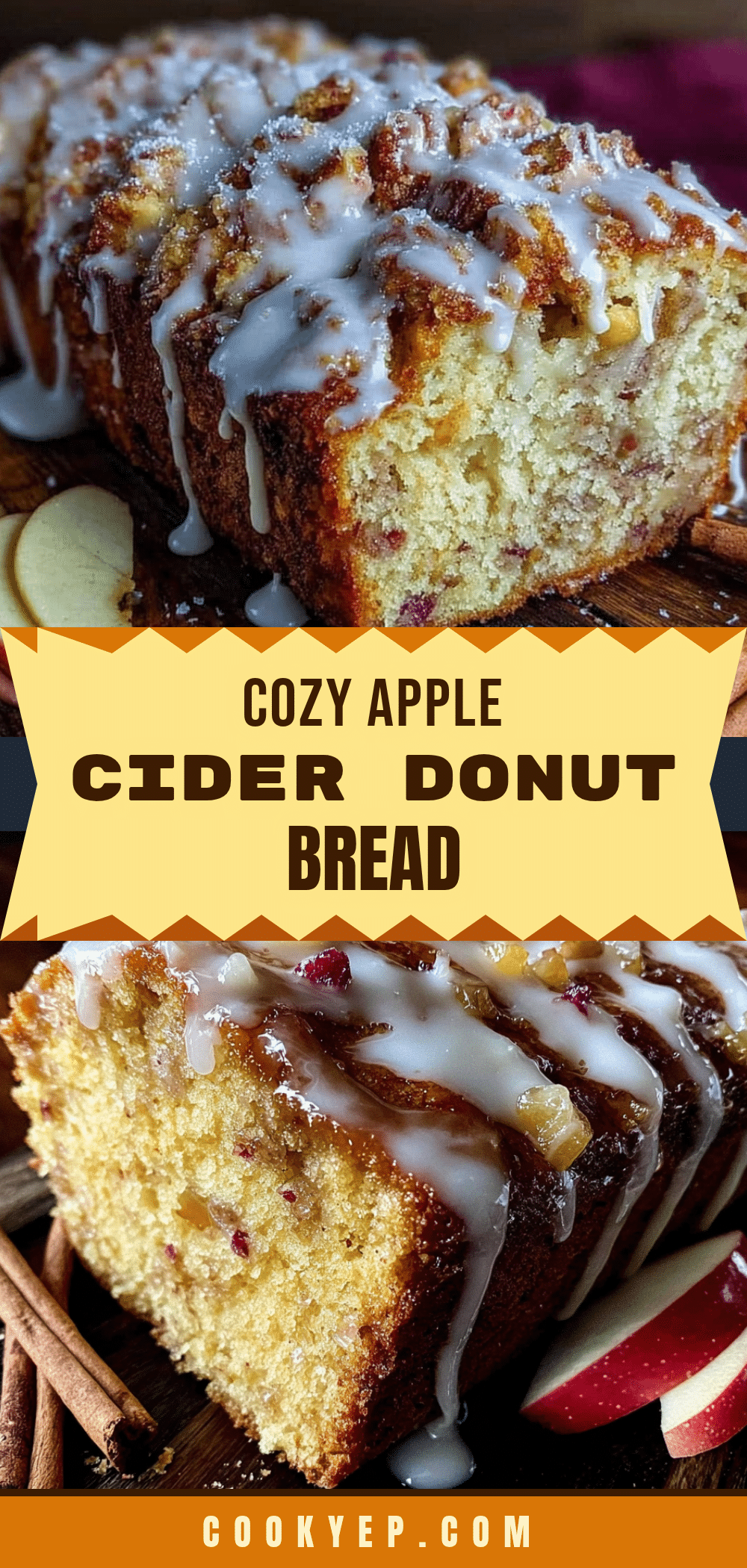
Best Easy Apple Cider Donut Bread with Cinnamon Glaze

This apple cider donut bread with cinnamon glaze captures the cozy flavor of a warm apple cider donut in an easy, no-fry loaf. Reduced apple cider and warm spices create a tender, flavorful bread topped with a glossy cinnamon glaze.
- Prep Time: 20 minutes
- Cook Time: 50-60 minutes
- Total Time: 1 hour 20 minutes
- Yield: 12 servings 1x
- Category: Dessert
- Cuisine: American
Ingredients
- 2 cups apple cider, reduced to ⅔ cup
- ½ cup (1 stick) unsalted butter, softened
- ¾ cup granulated sugar
- ¼ cup packed light brown sugar
- 2 large eggs, room temperature
- 1 teaspoon vanilla extract
- 1¾ cups all-purpose flour
- 1½ teaspoons baking powder
- ½ teaspoon baking soda
- ½ teaspoon salt
- 2 teaspoons ground cinnamon, divided
- ¼ teaspoon ground nutmeg
- ¼ cup buttermilk, room temperature
- 1 cup powdered sugar
- 2 tablespoons reduced apple cider
- 1 teaspoon ground cinnamon
- ½ teaspoon vanilla extract (optional)
Instructions
- Reduce the apple cider: Pour 2 cups of fresh apple cider into a small saucepan. Bring to a boil over medium-high heat, then reduce heat to medium-low and simmer gently, stirring occasionally, until reduced to about ⅔ cup (15-20 minutes). Remove from heat and let cool completely.
- Preheat and prep: Preheat oven to 350°F (175°C). Grease a 9×5-inch loaf pan and line with parchment paper, leaving an overhang on the two long sides.
- Mix the dry ingredients: In a large bowl, whisk together flour, baking powder, baking soda, salt, 1 teaspoon cinnamon, and nutmeg.
- Cream the butter and sugars: In a separate medium bowl, beat softened butter, granulated sugar, and brown sugar together until light and fluffy (2-3 minutes with a hand mixer, or 4-5 minutes by hand).
- Add the eggs and vanilla: Beat in room-temperature eggs one at a time, ensuring each is fully incorporated. Stir in vanilla extract.
- Alternate the dry and wet ingredients: Gradually add the flour mixture to the butter mixture, alternating with buttermilk. Start and end with flour mixture (three additions of flour, two of buttermilk). Mix just until flour disappears.
- Fold in the reduced cider: Gently fold the cooled reduced apple cider into the batter until evenly distributed. Batter will thin slightly.
- Bake the bread: Pour batter into prepared loaf pan and smooth the top. Bake for 50-60 minutes, or until a toothpick inserted into the center comes out clean or with a few moist crumbs. If top browns too quickly, tent with foil after 35 minutes.
- Cool completely: Let bread cool in pan for 15 minutes, then lift out using parchment overhang and transfer to a wire rack. Cool completely before glazing.
- Make the glaze: In a small bowl, whisk together powdered sugar, 2 tablespoons reduced apple cider, 1 teaspoon cinnamon, and vanilla extract (if using). Glaze should be thick but pourable. Drizzle over cooled bread and let set for 10-15 minutes before slicing.
Notes
Don’t rush the cider reduction; low and slow is best. Room temperature ingredients are crucial for proper emulsification. Test baking powder freshness before using. A few moist crumbs on the toothpick indicate ideal doneness. Glaze with confidence—let some drip down the sides for a rustic look.
Nutrition
- Serving Size: 1 slice (1/12 of loa
- Calories: 285
- Sugar: 28
- Sodium: 220
- Fat: 11
- Saturated Fat: 6
- Carbohydrates: 44
- Fiber: 1
- Protein: 4
Keywords: apple cider donut bread, cinnamon glaze, fall baking, quick bread, apple cider recipe