I figured cornbread was cornbread. Flour, cornmeal, some kind of liquid, bake it in a pan. It took about one dry, crumbly, flavorless square from a box mix to realize I was wrong. That first bite was so disappointing I actually put the piece back on the plate and stared at it. How could something so simple be so boring?
So I started messing around. I tried adding more butter, then less. I swapped milk for buttermilk and got a little closer. But the real turning point came when I forgot to preheat the pan. Not the oven—the skillet. I poured the batter into a cold cast iron pan by accident, realized my mistake, and figured I’d ruined it. I baked it anyway because I was out of cornmeal and too stubborn to start over.
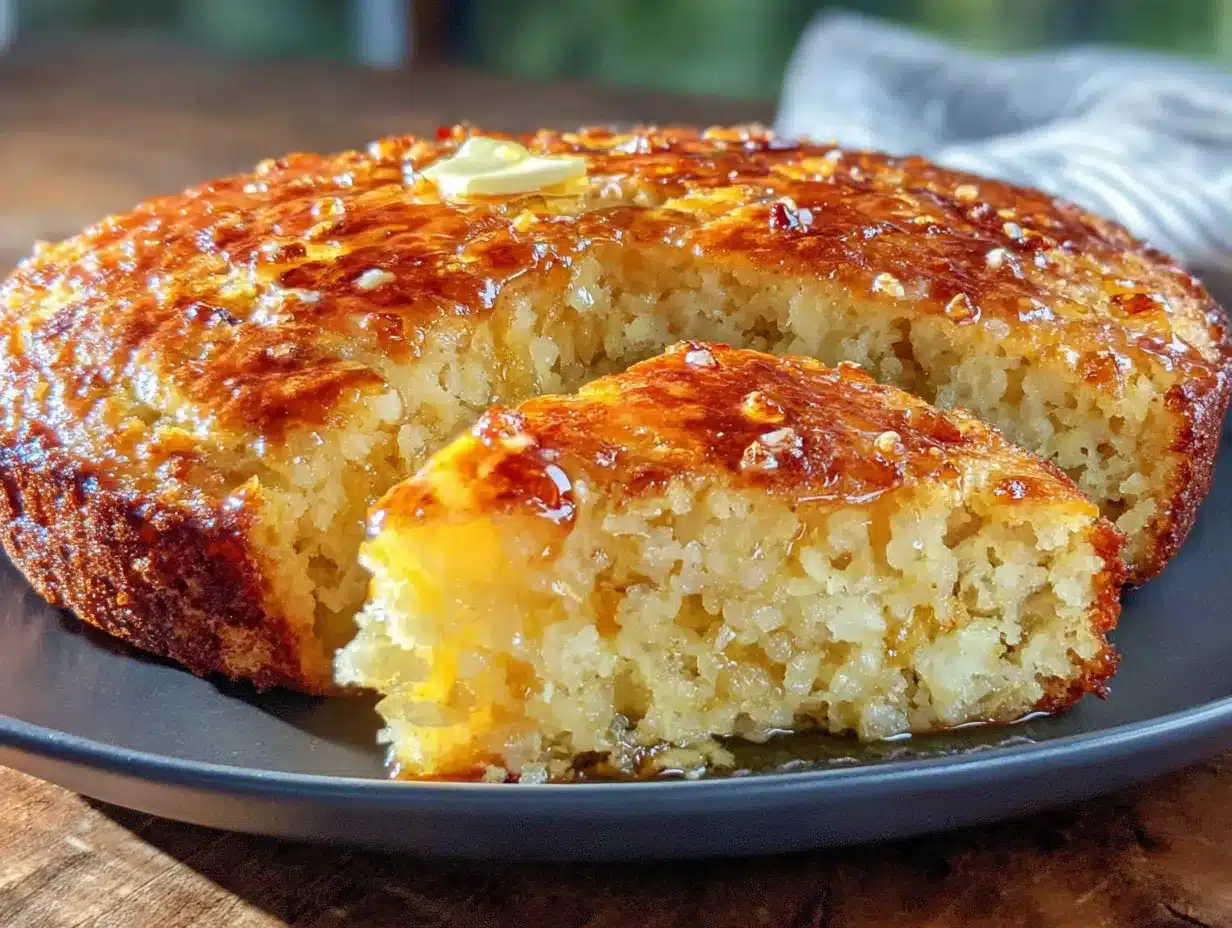
That sad-looking, rushed skillet of cornbread turned out to be the best I’d ever made. The bottom was golden and crispy, the inside was tender and moist, and it had this tangy, buttery flavor that no box mix had ever come close to. That happy accident taught me something important: the method matters just as much as the ingredients. This homemade buttermilk skillet cornbread recipe is the result of all those experiments, failures, and one very lucky forgotten step. It’s the one I keep coming back to, and I think you will too.
Why You’ll Love This Recipe
This isn’t your average cornbread. It’s the kind that makes you understand why people fight over the corner piece. Here’s what makes it stand out:
- Perfect Texture Every Time : The combination of buttermilk and a hot cast iron skillet gives you a crispy, golden crust with a soft, tender crumb that’s never dry or gritty.
- Simple Pantry Ingredients : You probably have everything you need right now. Cornmeal, flour, buttermilk, eggs, butter, sugar, baking powder, and salt. That’s it.
- Ready in Under 30 Minutes : From mixing to slicing, this cornbread comes together fast. Perfect for weeknight dinners or last-minute guests.
- Incredibly Versatile : Serve it alongside chili, soup, barbecue, or breakfast. It works for any meal and any season.
- Foolproof Method : Even if you’ve never made cornbread from scratch, this recipe is hard to mess up. The hot skillet does most of the work for you.
What makes this recipe different from all the others? It’s the technique. Preheating the skillet with butter creates that signature crispy crust. Using buttermilk adds tang and tenderness that regular milk just can’t replicate. And the balance of cornmeal to flour means you get that classic corn flavor without the crumbly texture that falls apart in your hands. I’ve tested this recipe more times than I care to admit, and this version is the one that gets requested again and again. It’s comfort food that actually delivers—no disappointment, no dry bites, just pure satisfaction.
What Ingredients You Will Need
This recipe uses simple, honest ingredients that work together to create something greater than the sum of their parts. Most of these are pantry staples, which makes this cornbread perfect for spontaneous baking.
- Yellow Cornmeal (1 cup / 160g) : Use medium or fine-ground cornmeal for the best texture. I prefer yellow cornmeal for its color and flavor, but white cornmeal works too. Avoid coarse-ground polenta here—it won’t soften enough during the short baking time.
- All-Purpose Flour (1 cup / 125g) : This gives the cornbread structure and prevents it from being too crumbly. You can substitute a gluten-free all-purpose blend if needed, but the texture will be slightly different.
- Granulated Sugar (1/3 cup / 65g) : Just enough sweetness to balance the tangy buttermilk without making it taste like cake. If you prefer less sweet cornbread, reduce to 1/4 cup.
- Baking Powder (1 tablespoon) : Fresh baking powder is crucial here. If yours has been sitting in the cabinet for a year, go buy a new can. Trust me.
- Baking Soda (1/2 teaspoon) : This reacts with the buttermilk to create lift and tenderness. Don’t skip it.
- Salt (1 teaspoon) : Use fine sea salt or table salt. Salt enhances all the other flavors and balances the sweetness.
- Buttermilk (1 cup / 240ml) : Full-fat buttermilk gives the best flavor and texture. If you don’t have buttermilk, you can make a quick substitute by adding 1 tablespoon of lemon juice or white vinegar to 1 cup of milk and letting it sit for 5 minutes. It’s not quite the same, but it works in a pinch.
- Large Egg (1) : Binds everything together and adds richness. Let it come to room temperature for better incorporation.
- Unsalted Butter (1/4 cup / 57g, plus 2 tablespoons for the skillet) : Use unsalted so you control the salt level. The extra butter goes into the hot skillet to create that crispy, golden crust. I use Kerrygold or Plugrá for the best flavor.
- Honey (1 tablespoon, optional) : Adds a subtle floral sweetness and helps with browning. You can skip it or substitute maple syrup.
Equipment Needed
You don’t need fancy equipment for this recipe, but a few key tools make a big difference.
- 10-inch Cast Iron Skillet : This is non-negotiable for the best results. The cast iron holds heat evenly and creates that signature crispy crust. If you don’t have one, use a 9-inch round cake pan or an 8×8 baking dish, but preheat it in the oven just like you would the skillet.
- Large Mixing Bowl : For combining dry ingredients.
- Medium Mixing Bowl : For whisking wet ingredients.
- Whisk : For mixing both wet and dry ingredients without overworking the batter.
- Rubber Spatula : For scraping the bowl clean and folding ingredients together.
- Measuring Cups and Spoons : For accurate measurements. I prefer metal measuring cups for dry ingredients and glass for liquids.
- Oven Mitts : The skillet handle gets dangerously hot. Don’t forget these.
I’ve made this cornbread in a glass baking dish when my cast iron was occupied, and it was still good—just not as crispy on the bottom. If you’re buying your first cast iron skillet, Lodge makes affordable, pre-seasoned options that last forever. Season it well and it’ll only get better with use.
Preparation Method
Follow these steps carefully, and you’ll have the best cornbread of your life. The key is the hot skillet—don’t rush that part.
- Preheat the oven to 425°F (220°C). Place your 10-inch cast iron skillet inside the oven while it preheats. This step is crucial. You want the skillet screaming hot when the batter hits it.
- Mix the dry ingredients. In a large bowl, whisk together 1 cup yellow cornmeal, 1 cup all-purpose flour, 1/3 cup sugar, 1 tablespoon baking powder, 1/2 teaspoon baking soda, and 1 teaspoon salt. Whisk thoroughly to distribute the leavening agents evenly.
- Mix the wet ingredients. In a medium bowl, whisk together 1 cup buttermilk, 1 large egg, 1/4 cup melted unsalted butter (cooled slightly), and 1 tablespoon honey if using. Whisk until the egg is fully incorporated and the mixture is smooth.
- Combine wet and dry. Pour the wet ingredients into the dry ingredients. Stir gently with a rubber spatula or wooden spoon until just combined. A few lumps are fine—overmixing will make the cornbread tough. The batter should be thick but pourable, like a thick pancake batter.
- Prepare the skillet. Carefully remove the hot skillet from the oven using oven mitts. Add the remaining 2 tablespoons of butter to the skillet and swirl until it melts completely. The butter should sizzle and foam immediately.
- Pour the batter. Immediately pour the batter into the hot, buttered skillet. It will sizzle and start cooking on contact—that’s exactly what you want. Spread it evenly with a spatula if needed.
- Bake. Return the skillet to the oven and bake for 18-22 minutes, or until the top is golden brown and a toothpick inserted in the center comes out clean or with a few moist crumbs. The edges should be dark golden and pulling away from the skillet slightly.
- Cool slightly. Let the cornbread cool in the skillet for 5-10 minutes before slicing. This allows it to set properly. Serve warm directly from the skillet for maximum drama and deliciousness.
Pro tip: For extra crispy edges, broil the cornbread for the last 1-2 minutes of baking. Watch it closely—it can go from golden to burnt in seconds.
Cooking Tips & Techniques
I’ve made this cornbread dozens of times, and I’ve learned a few things the hard way. Here’s what I wish someone had told me.
Don’t skip preheating the skillet. I know it seems fussy, but this step is what gives you that crispy, buttery crust. Cold batter hitting a hot pan creates an immediate sear, just like a steak. If your skillet isn’t hot enough, the butter won’t sizzle and the crust won’t form properly.
Let your ingredients come to room temperature. Cold buttermilk and eggs can seize the melted butter and make the batter lumpy. Take them out of the fridge 20 minutes before you start mixing, or warm the buttermilk gently in the microwave for 10-15 seconds.
Don’t overmix the batter. This is the most common mistake. Stir until the flour disappears into the wet ingredients, then stop. Overmixing develops gluten and makes the cornbread dense and tough. A few lumps are your friends here.
Check your baking powder freshness. If your cornbread doesn’t rise properly, stale baking powder is usually the culprit. Test it by dropping a teaspoon into hot water—if it fizzes vigorously, it’s good. If it barely bubbles, toss it and buy new.
Use a light hand with the cornmeal. Scoop it gently into your measuring cup and level it off with a knife. Packing it down can make the cornbread dry and gritty. If you’re using a kitchen scale, 160 grams is the sweet spot.
Let it rest before slicing. I know it’s tempting to dig in immediately, but giving the cornbread 5-10 minutes to set makes a huge difference. The steam redistributes, the crumb firms up, and you get cleaner slices that don’t fall apart.
Variations & Adaptations
This recipe is a great starting point, but cornbread is endlessly adaptable. Here are some of my favorite variations.
Savory Cheddar and Jalapeño Cornbread : Fold in 1 cup of shredded sharp cheddar cheese and 2-3 diced jalapeños (seeds removed for less heat) into the batter before pouring it into the skillet. The cheese gets melty and browned on the edges, and the jalapeños add a subtle kick. This version is incredible alongside a big bowl of chili or cozy crockpot chicken taco soup.
Honey Butter Cornbread : Whisk 2 tablespoons of honey into the melted butter before pouring it into the skillet. Then, while the cornbread is still warm, brush the top with another tablespoon of honey mixed with 1 tablespoon of melted butter. It creates a glossy, sweet finish that’s hard to resist.
Gluten-Free Cornbread : Substitute the all-purpose flour with a 1:1 gluten-free baking flour blend that contains xanthan gum. I’ve tested this with Bob’s Red Mill and King Arthur brands, and both work well. The texture is slightly more delicate, but the flavor is still fantastic.
Vegan Cornbread : Replace the buttermilk with 1 cup of unsweetened almond or oat milk mixed with 1 tablespoon of apple cider vinegar. Use a flax egg (1 tablespoon ground flaxseed mixed with 3 tablespoons water, let sit for 5 minutes) instead of the regular egg, and substitute the butter with vegan butter or coconut oil. It’s not quite as rich, but it’s still darn good.
Sweet Cornbread with Berries : Gently fold in 1 cup of fresh or frozen blueberries, raspberries, or chopped strawberries into the batter. The berries burst as they bake, creating pockets of juicy sweetness. This version is perfect for breakfast or brunch, especially alongside a creamy apple cinnamon overnight oats spread.
Serving & Storage Suggestions
Cornbread is best served warm, straight from the skillet, with a generous pat of butter melting into each slice. But it’s also surprisingly versatile for leftovers.
Serving temperature and presentation : Serve the cornbread in the skillet for a rustic, family-style presentation. Cut it into wedges like a pizza, or slice it into squares if you’re using a baking dish. A drizzle of honey or a sprinkle of flaky sea salt on top adds a nice finishing touch.
What to serve with it : This cornbread is a natural partner for chili, barbecue, pulled pork, fried chicken, or a big bowl of soup. It’s also fantastic for breakfast with scrambled eggs and bacon, or as a side for a crispy fall harvest chopped salad for a lighter meal. For a sweet treat, serve it with a dollop of whipped cream and fresh berries.
Storage instructions : Store leftover cornbread in an airtight container at room temperature for up to 2 days. For longer storage, wrap it tightly in plastic wrap and then foil, and refrigerate for up to 5 days. The texture will be slightly denser after refrigeration, but it’s still delicious.
Freezing instructions : Cornbread freezes beautifully. Wrap individual slices or the whole cornbread (cooled completely) in plastic wrap, then foil, and freeze for up to 3 months. Thaw at room temperature or reheat directly from frozen.
Reheating methods : The best way to reheat cornbread is in a 350°F oven for 5-10 minutes, or in a toaster oven. You can also microwave individual slices for 15-20 seconds, but they won’t have the same crispy edges. For a quick refresh, slice the cornbread, butter it, and toast it in a skillet over medium heat until golden.
How flavors develop : Cornbread is actually better the next day in some ways. The flavors meld together, and the texture becomes more moist and tender. If you can resist eating it all fresh, save a few slices for tomorrow’s breakfast.
Nutritional Information & Benefits
This recipe makes about 8 servings. Here are the approximate nutritional values per serving (one wedge, assuming 8 wedges per skillet):
- Calories : 285
- Total Fat : 14g
- Saturated Fat : 8g
- Cholesterol : 55mg
- Sodium : 480mg
- Total Carbohydrates : 36g
- Dietary Fiber : 2g
- Sugars : 10g
- Protein : 5g
Health benefits of key ingredients : Cornmeal is a good source of complex carbohydrates and provides some fiber, which supports digestive health. Buttermilk contains probiotics and calcium, which are beneficial for gut health and bone strength. Butter, while high in fat, provides fat-soluble vitamins like A, D, and E. This cornbread is also relatively low in added sugar compared to many baked goods.
Dietary considerations : This recipe contains gluten, dairy, and eggs. For gluten-free or vegan options, see the variations section above. It’s not suitable for low-carb or keto diets due to the cornmeal and flour content, but it’s a perfectly reasonable indulgence in moderation.
Personal wellness perspective : I believe in enjoying real food without guilt. This cornbread isn’t health food, but it’s made from simple, recognizable ingredients that nourish both body and soul. Sometimes a warm slice of cornbread with butter is exactly what you need, and that’s okay.
Conclusion
This homemade buttermilk skillet cornbread is the real deal. It’s crispy on the outside, tender on the inside, and packed with that tangy, buttery flavor that makes cornbread worth eating. No more dry, crumbly squares from a box. No more bland, forgettable side dishes. This is cornbread that stands on its own, whether you’re serving it with chili, soup, barbecue, or just a pat of butter and a drizzle of honey.
I’ve made this recipe more times than I can count, and it never gets old. It’s the kind of recipe you’ll memorize after making it twice, the kind you’ll pull out for every potluck and family dinner. And the best part? It’s forgiving. If you forget to preheat the skillet or overmix the batter just a little, it’ll still be delicious. That’s the beauty of simple, honest cooking.
I’d love to hear how yours turns out. Leave a comment below and let me know if you tried any of the variations, or if you came up with your own twist. Share a photo on Pinterest and tag me—I love seeing your creations. And if you’re looking for more cozy, comforting recipes, check out our cozy sausage and sweet potato fall soup or cozy pumpkin chocolate chip bread with maple glaze for more fall-inspired goodness.
Happy baking, friends. You’ve got this.
Frequently Asked Questions
Can I use milk instead of buttermilk?
You can, but the cornbread won’t be as tender or tangy. Buttermilk’s acidity reacts with the baking soda to create lift and a softer crumb. If you don’t have buttermilk, make a quick substitute by adding 1 tablespoon of lemon juice or white vinegar to 1 cup of milk and letting it sit for 5 minutes. It’s not identical, but it works well.
Why is my cornbread dry and crumbly?
Dry cornbread usually means you used too much cornmeal relative to flour, overbaked it, or didn’t use enough buttermilk. Stick to the 1:1 ratio of cornmeal to flour in this recipe, check your oven temperature with an oven thermometer, and pull the cornbread out when a toothpick comes out with just a few moist crumbs.
Can I make this cornbread ahead of time?
Absolutely. You can make it a day ahead and reheat it in a 350°F oven for 5-10 minutes. The flavors actually meld together nicely overnight. You can also freeze it for up to 3 months—just wrap it tightly in plastic wrap and foil before freezing.
Can I use a different pan instead of a cast iron skillet?
Yes, but the texture won’t be quite the same. Use a 9-inch round cake pan, an 8×8 baking dish, or even a muffin tin for cornbread muffins. Preheat the pan in the oven just like you would the skillet, and adjust the baking time slightly—muffins will bake faster (12-15 minutes), while a deeper pan might need a few extra minutes.
How do I make my cornbread more moist?
For extra moisture, add 1/4 cup of sour cream or Greek yogurt to the wet ingredients. You can also brush the warm cornbread with melted butter or honey after it comes out of the oven. And don’t overbake it—that’s the most common cause of dry cornbread.
Pin This Recipe!
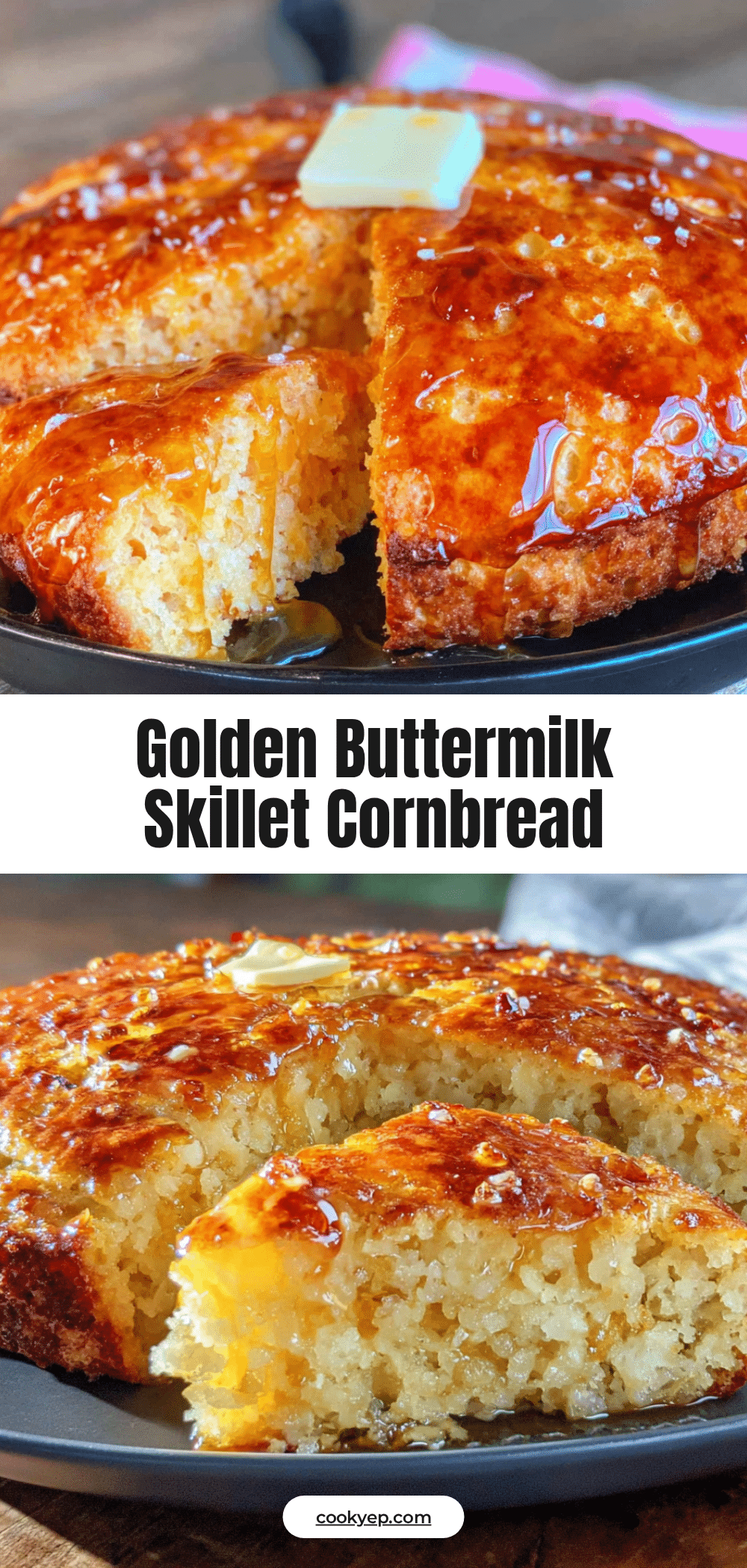
Best Homemade Buttermilk Skillet Cornbread Recipe
This homemade buttermilk skillet cornbread is crispy on the outside, tender on the inside, and packed with tangy, buttery flavor. Made with simple pantry ingredients and a foolproof method, it’s ready in under 30 minutes and perfect alongside chili, soup, barbecue, or breakfast.
- Prep Time: 10 minutes
- Cook Time: 20 minutes
- Total Time: 30 minutes
- Yield: 8 servings 1x
- Category: Side Dish
- Cuisine: American
Ingredients
- 1 cup (160g) yellow cornmeal
- 1 cup (125g) all-purpose flour
- 1/3 cup (65g) granulated sugar
- 1 tablespoon baking powder
- 1/2 teaspoon baking soda
- 1 teaspoon fine sea salt
- 1 cup (240ml) buttermilk
- 1 large egg
- 1/4 cup (57g) unsalted butter, melted and cooled slightly
- 1 tablespoon honey (optional)
- 2 tablespoons unsalted butter (for the skillet)
Instructions
- Preheat the oven to 425°F (220°C). Place a 10-inch cast iron skillet inside the oven while it preheats.
- In a large bowl, whisk together cornmeal, flour, sugar, baking powder, baking soda, and salt.
- In a medium bowl, whisk together buttermilk, egg, melted butter, and honey (if using) until smooth.
- Pour the wet ingredients into the dry ingredients. Stir gently with a rubber spatula until just combined (a few lumps are fine).
- Carefully remove the hot skillet from the oven. Add the remaining 2 tablespoons of butter and swirl until melted and sizzling.
- Immediately pour the batter into the hot skillet. Spread evenly if needed.
- Bake for 18-22 minutes, until golden brown and a toothpick inserted in the center comes out clean or with a few moist crumbs.
- Let cool in the skillet for 5-10 minutes before slicing. Serve warm.
Notes
For extra crispy edges, broil the cornbread for the last 1-2 minutes of baking. Watch closely to avoid burning. Let ingredients come to room temperature for best results. Do not overmix the batter.
Nutrition
- Serving Size: 1 wedge (1/8 of skil
- Calories: 285
- Sugar: 10
- Sodium: 480
- Fat: 14
- Saturated Fat: 8
- Carbohydrates: 36
- Fiber: 2
- Protein: 5
Keywords: cornbread, buttermilk cornbread, skillet cornbread, homemade cornbread, easy cornbread, southern cornbread, cast iron cornbread